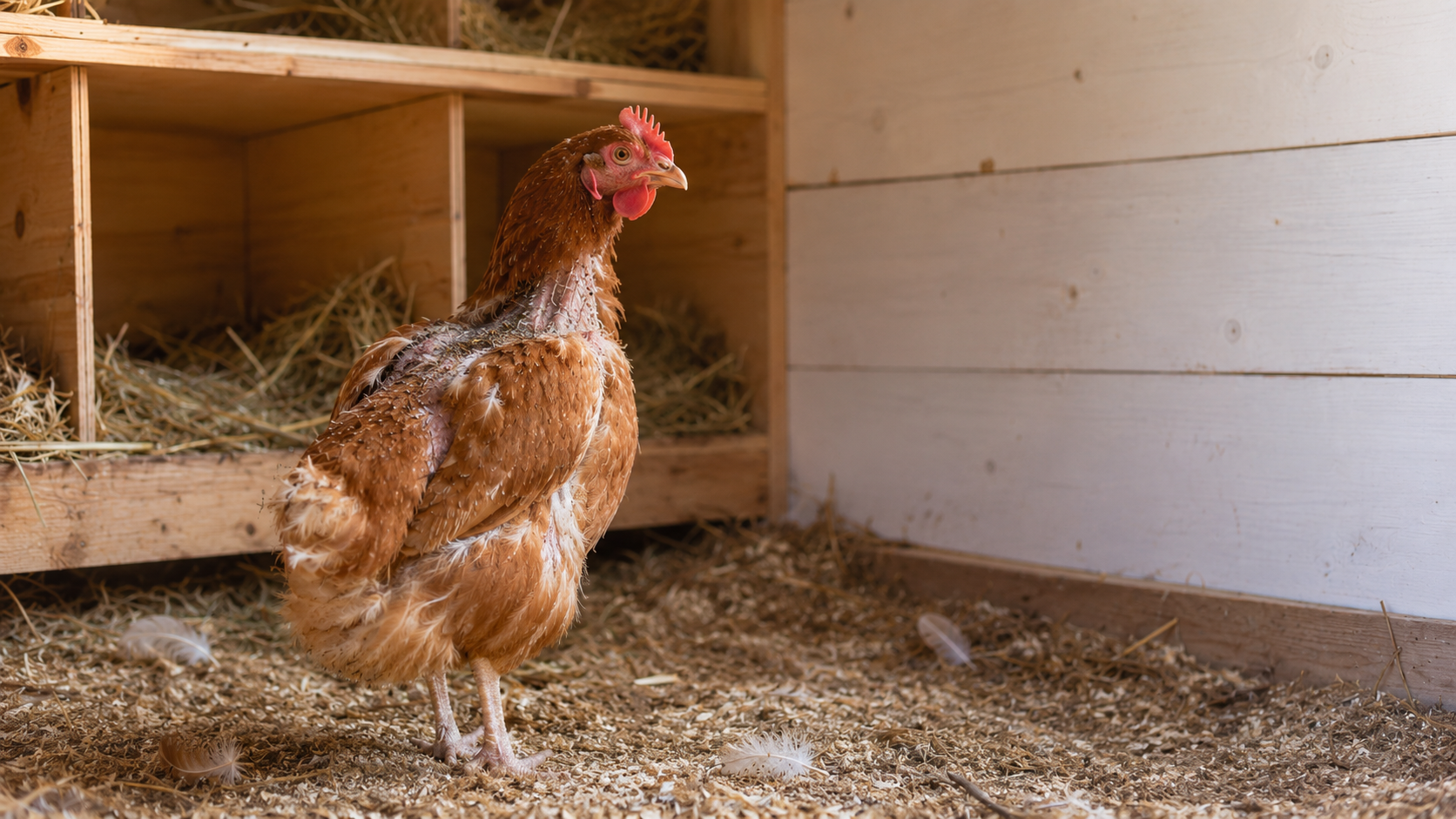
You walk out to the coop one morning and there are feathers everywhere.
Under the roost.
Across the run.
Stuck to the fence.
And one of your normally fluffy hens suddenly looks like she has been having a very difficult week.
Before assuming something is wrong, take a look at the calendar.
She may simply be molting.
Most adult hens molt once a year, usually in late summer or early fall as daylight hours begin getting shorter. During this time, chickens shed old feathers and replace them with new ones. Egg production usually slows considerably or stops while the new feathers grow. University of Arizona Cooperative Extension places the typical adult molt around August through October, although timing varies between individual birds.
For many backyard chicken keepers, the first molt can look a little alarming.
It is usually completely normal.
Here is how to recognize a chicken molt, how long it lasts and what you can do to help your flock through it.
What Is Molting in Chickens?
Molting is the natural process of shedding older feathers and growing a new set.
Chickens depend on their feathers for insulation and protection, so replacing worn feathers is a normal part of their life cycle.
Adult hens generally go through this process annually. Mississippi State University Extension describes molting as the yearly loss of old feathers followed by the growth of new ones.
It also takes a surprising amount of resources to grow all those new feathers.
That is one reason laying hens commonly reduce or stop egg production during a molt. Instead of putting resources toward producing eggs, the hen's body is focused heavily on replacing feathers.
So if your egg basket suddenly gets lighter at the same time your coop looks like somebody opened a pillow inside it, the two things are probably related.
When Do Chickens Molt?
For most backyard hens, the big annual molt happens as summer ends and fall begins.
August through October is a common window, although your chickens did not receive a calendar and may decide to do things differently. Shortening daylight is one of the major seasonal cues associated with the natural molt.
Some birds start earlier.
Some start later.
And occasionally a hen seems determined to molt at the least convenient time possible.
The timing of a molt can be influenced by the individual bird, her laying cycle, physical condition, nutrition and environmental conditions. Molting can also occur outside the typical fall season, particularly when birds experience significant stress.
Typical Chicken Molting Timeline
- Late summer to early fall: Daylight begins decreasing and many adult hens start molting
- Early molt: Loose feathers appear around the coop; egg production may decline
- Active molt: More obvious feather loss, patchy appearance and new pin feathers
- Feather regrowth: New feathers gradually open and fill back in
- After molt: Plumage looks fresh again and egg production may gradually resume
Not every chicken in your flock will molt at exactly the same time.
You may have one hen looking brand new while another looks like she has been caught in a wind tunnel.
Both can be normal.
What Age Do Chickens Start Molting?
Young chickens replace feathers as they grow, but the first major adult molt generally occurs much later.
Texas A&M's College of Veterinary Medicine notes that hens typically experience their first full molt at around 18 months old and then continue molting annually.
This is why chickens you purchased as spring chicks often will not go through a dramatic full-body molt during their first fall.
University of Arizona Extension specifically notes that pullets hatched during the spring or summer may not molt during that first autumn.
So if your six-month-old pullets look beautiful while the older hens beside them seem to be falling apart feather by feather, don't be surprised.
The younger birds may simply not be ready for their first full adult molt.
What Causes Chickens to Molt?
The most familiar trigger for a natural molt is the seasonal decrease in daylight.
As days shorten toward fall and winter, the change in photoperiod is associated with the end of a laying cycle and the beginning of feather replacement.
This is also why molting and a decrease in egg production often happen at the same time.
The two processes are closely connected.
University of Minnesota Extension notes that backyard egg production commonly drops during the early-fall molt while daylight hours are also decreasing.
There can be other contributors to abnormal or out-of-season feather loss, however, including:
- Nutritional problems
- Significant stress
- Parasites
- Feather picking
- Health problems
That is why it is important not to automatically label every bald chicken as "molting."
More on that in a minute.
What Are the Signs of a Molting Chicken?
Sometimes the first sign is not actually the chicken.
It is the coop.
Feathers suddenly seem to be everywhere.
1. Feathers All Over the Coop
Finding a noticeable increase in loose feathers around roosts, bedding and the run is one of the easiest signs to recognize.
University of Arizona Extension specifically notes the dramatic increase in discarded feathers around the coop and roosting areas during molting season.
You may briefly wonder how the chicken still has any feathers left.
Apparently she has more than you thought.
2. Patchy or Scruffy-Looking Feathers
Some hens molt rather gracefully.
Others do not.
A chicken can look patchy, thin-feathered or generally disheveled during an active molt. Some hens lose many feathers within a relatively short period, while others replace them much more gradually.
The result is that one molting hen may look almost normal while another looks like she has been partially plucked.
3. New Pin Feathers
Once new feathers start growing, you may notice little pointed shafts sticking through the skin.
These are pin feathers.
Pin feathers are developing feathers that still have a blood supply while they are growing. They eventually open into the familiar feathers covering the bird.
A hen covered in pin feathers can look slightly like a porcupine.
That is usually a good sign.
It means the replacement feathers are coming.
4. Fewer Eggs
A major decrease in egg production is extremely common during a molt.
Most hens either stop laying or produce far fewer eggs until molting is complete.
If your hens stopped laying but you aren't seeing signs of molt, work through the other possibilities in our guide to why chickens stop laying eggs.
There are plenty of reasons for an empty nesting box besides feathers.
5. Your Hen May Not Want to Be Handled
That friendly hen who normally doesn't mind being picked up may suddenly want absolutely nothing to do with you.
Give her some space.
New pin feathers are fragile and can be sensitive. Texas A&M recommends limiting unnecessary handling during the molt because developing feathers can be easily damaged.
This is not the ideal time for extended chicken cuddling.
She has enough going on.
What Order Do Chickens Lose Their Feathers?
Molting usually follows a recognizable pattern.
Mississippi State University Extension says feather loss generally begins around the head, followed by the:
- Neck
- Breast
- Body
- Wings
- Tail
That pattern can help distinguish a normal molt from some other types of feather loss.
It does not mean every hen will look exactly the same.
Some chickens shed so gradually that you barely notice.
Others seem to wake up one morning and leave half their wardrobe underneath the roost.
What Is a Hard Molt vs. a Soft Molt?
Chicken keepers sometimes describe molts as either hard or soft.
These aren't different biological processes so much as different descriptions of how noticeable the molt is.
A Soft Molt
A chicken experiencing a softer or slower molt may:
- Lose only a few feathers at a time
- Never develop large bald patches
- Continue looking fairly normal
- Take much longer to complete the entire process
Mississippi State notes that slower "early molters" may lose only a few feathers at a time and can take several months to complete the molt.
You might not even realize the hen is molting until you notice feathers accumulating around the coop.
A Hard Molt
A harder, faster molt is much more obvious.
The hen may suddenly shed a large number of feathers and look pretty rough for a while.
Faster-molting hens can lose and replace feathers at the same time, allowing the overall molt to finish sooner. Mississippi State reports that these faster molts may take around two to three months.
It can look worse.
But it may actually be over sooner.
How Long Do Chickens Molt?
A good rule of thumb is around eight weeks, but chicken molt length varies considerably.
Fast vs. Slow Chicken Molts
| Fast / Harder Molt | Slow / Softer Molt |
|---|---|
| More noticeable feather loss | Feathers replaced more gradually |
| Many feathers shed over a shorter period | Chicken may never look very bare |
| Can look dramatic | Can be easy to miss |
| Often finishes sooner | May continue for several months |
Texas A&M says most molts take around eight weeks from feather loss through replacement, with a range of roughly one to three months depending on the bird and environment.
Some hens take longer.
Extension guidance describes slower molts that can stretch several months, particularly when birds are replacing only a few feathers at a time.
So don't panic if your hen is not completely feathered out on Day 56.
There is no countdown timer attached to her.
What matters more is whether you continue seeing healthy feather regrowth and whether the bird otherwise appears healthy.
Do Chickens Stop Laying Eggs When They Molt?
Usually, yes.
Some hens may continue producing a few eggs, but most experience a major reduction or complete pause in laying during the molt.
Producing feathers and producing eggs are both nutritionally demanding processes.
During molting, the reproductive system also goes through physiological changes while resources are redirected toward feather replacement.
That can create a pretty dramatic seasonal change.
In August, you may have more eggs than you know what to do with.
A couple of months later, you're opening the nesting box and wondering whether the hens have gone on strike.
Molting, shorter daylight hours and normal seasonal changes can all be happening at the same time.
When Will Chickens Start Laying Again After Molting?
Egg production generally begins returning after the molt is complete, although the exact timing varies between birds.
University of Arizona Extension notes that hens should resume laying after completing the molting process.
There is another factor working against you during fall, though.
Daylight.
Even after a hen has grown her feathers back, shorter winter days can naturally keep egg production lower than it was during spring and summer.
So don't assume something is wrong because the feathers are back and the eggs are not immediately coming at their previous rate.
Your hen just finished rebuilding an entire coat.
Give her a minute.
How to Help Chickens Through a Molt
You do not need to "fix" molting.
It is a normal process.
The best thing you can do is give your chickens the environment and nutrition they need to work through it comfortably.
1. Keep a Complete, Balanced Feed Available
This is the most important place to start.
Feathers require significant nutritional resources, and your chickens still need a properly balanced diet while they are growing them.
A complete commercial poultry ration is designed to provide nutrients in the correct proportions. Extension guidance warns that adding too many supplemental foods can dilute the nutritional value of an otherwise balanced feed.
In other words:
Do not turn molting season into an all-you-can-eat treat buffet.
Your chickens need real nutrition more than they need snacks.
2. Pay Attention to Protein
You'll hear chicken keepers talk about protein constantly during molting season.
There is a reason.
Feathers contain a substantial amount of protein, and adequate protein and amino acids are important for feather growth.
University of Arizona Extension suggests that owners may consider a higher-protein balanced ration or an appropriate protein supplement during molt.
The key word is balanced.
Dumping endless handfuls of mealworms into the run is not automatically better than feeding your chickens an appropriate complete ration.
If you are considering a significant feed change, choose a feed formulated for poultry and make sure it still meets the nutritional needs of your particular flock.
3. Keep Fresh Water Available
Molting does not change the basic rules of good flock care.
Your chickens should always have reliable access to fresh, clean water.
Check waterers regularly and make sure every bird can drink comfortably.
This is especially important if your hens happen to begin molting while summer temperatures are still hanging around.
If hot weather is affecting your flock at the same time, our guide to keeping chickens cool in summer covers the signs of heat stress and ways to help.
Molting chicken plus 100-degree afternoon is not the combination anyone ordered.
4. Limit Unnecessary Handling
Those little pin feathers coming in are delicate.
Texas A&M specifically recommends reducing handling during molting because replacement pin feathers can be easily damaged.
You can still handle a chicken when necessary for a health check.
Just be gentle.
Avoid pressing or rubbing heavily across areas covered in new pin feathers.
If your hen suddenly seems much less interested in being picked up, respect the hint.
5. Keep Stress Low
A molt is already a demanding period.
There is no need to make life harder.
If possible, avoid unnecessary flock disruptions while several birds are actively molting.
Keep food and water locations consistent, provide enough space for the flock and maintain a secure environment.
Texas A&M recommends limiting additional stressors during molt and watching the flock for problematic pecking behavior.
Sometimes the most helpful thing you can do is maintain the normal routine.
6. Watch for Feather Picking
Exposed skin and delicate new feathers can attract unwanted attention from flock mates.
Watch for chickens aggressively pecking at a molting bird, especially if you notice blood or injuries.
Severe feather picking can damage skin and lead to wounds, and the presence of blood can encourage additional pecking.
An injured bird may need to be temporarily separated while the problem is addressed.
There is a difference between a flock mate casually investigating a feather and repeatedly attacking someone's back.
You will know it when you see it.
7. Keep the Coop Clean and Comfortable
Molting produces an impressive amount of feather debris.
Add normal manure, bedding and spilled feed, and the coop can get messy quickly.
Keep the coop dry, remove heavily soiled bedding and maintain normal sanitation.
If you need a simple routine, follow our daily, weekly and deep-clean chicken coop schedule rather than waiting until everything becomes overwhelming.
This is also a good opportunity to actually look at your chickens while you clean.
Feathers everywhere during fall? Probably molt. Bare skin with insects crawling through the feathers? Different conversation.
Is It Molting or Mites?
This is an important distinction.
Not all feather loss is molting.
External parasites such as lice and mites can also cause feather problems, irritation and poor condition.
When examining a bird, Merck Veterinary Manual recommends checking around the feather shafts and skin for parasites, including lice, mites and nits. It also notes that unusual-looking feather loss is more consistent with molt when it is not accompanied by parasites, reddened or damaged skin, poor nutrition or open wounds.
Signs More Consistent With a Normal Molt
- It is late summer or fall
- Several hens are losing feathers
- Loose feathers are everywhere
- New pin feathers are appearing
- Egg production has decreased
- The birds otherwise seem healthy
- Feather loss follows a fairly normal pattern
Signs You Should Look More Closely
- Feather loss is concentrated around the vent
- You see mites, lice or eggs attached to feathers
- Skin looks red, irritated or damaged
- Feathers look broken or chewed
- Another chicken is pulling them out
- There are open wounds
- The bird is losing weight or behaving abnormally
North Carolina Cooperative Extension notes that feather loss around the vent or feathers with chewed or debris-covered appearances can be associated with lice or mites rather than a normal seasonal molt.
When in doubt, physically examine the bird.
Do not diagnose a parasite problem from across the yard.
And don't diagnose every weird-looking chicken as "just molting" either.
If your chicken's feather loss does not look like a normal seasonal molt, see our guide to why chickens lose feathers and the other common causes to check.
Can Chickens Molt in Summer?
They can.
Late summer is actually a completely normal time for some hens to begin their annual molt.
University of Arizona Extension describes the common molting season as approximately August through October.
Depending on where you live, August may feel nothing like fall.
Your chickens are paying attention to changing daylight, not your definition of sweater weather.
That means you can absolutely have a molting chicken while temperatures are still very hot outside.
Can Chickens Molt in Winter?
A molt can extend into winter, particularly if it began later in the season or the individual bird molts slowly.
Domestic hens can also molt outside the typical fall period under certain circumstances.
If a chicken suddenly starts losing feathers at an unusual time of year, don't immediately assume anything is wrong.
But do pay closer attention.
Check for parasites, injuries, feather picking, nutritional problems and other signs of illness before deciding that unusual feather loss is simply a normal molt.
Should You Put a Sweater on a Molting Chicken?
Usually, no.
It is tempting.
Especially when your hen looks half naked and slightly embarrassed about it.
But attaching clothing around delicate developing feathers can create rubbing and interfere with the bird's ability to manage those feathers naturally.
The better approach is to provide a dry, draft-protected but properly ventilated coop and allow the feathers to grow normally.
If unusual cold weather coincides with severe feather loss and you are worried about an individual bird, focus on the environment and the bird's condition rather than turning her into a tiny knitted chicken.
Cute and useful are not always the same thing.
Should You Force Chickens to Molt?
For backyard flocks, there is generally no reason to intentionally force a healthy hen through a molt.
Historically, commercial poultry management sometimes used feed restriction to induce molting. Extension guidance notes that feed-withdrawal methods became controversial from an animal-welfare standpoint and have been prohibited in some places.
Your backyard hen does not need you manipulating her natural cycle.
Let the seasons do their thing.
Provide good nutrition, water and care, and allow the molt to happen naturally.
When Should You Worry About a Molting Chicken?
A normal molting hen can look terrible while still behaving perfectly normally.
That distinction matters.
Texas A&M notes that feather loss and decreased laying are expected during molt, but significant changes in eating, drinking or behavior can indicate that something else may be going on.
Pay closer attention if you notice:
- Not eating
- Not drinking
- Significant lethargy
- Difficulty walking
- Respiratory symptoms
- Weight loss
- Diarrhea
- Open wounds
- Bleeding
- Severe skin irritation
- Heavy parasite activity
- No evidence of new feather growth over time
Molting should explain the feathers.
It should not automatically explain every other health problem your chicken develops at the same time.
If a bird appears sick or continues declining, contact a veterinarian experienced with poultry.
Quick Chicken Molting Checklist
If you think your flock has started molting, run through this:
- Look at the season. Late summer and fall are normal times for an adult molt.
- Look around the coop. Lots of loose feathers are a good clue.
- Check for pin feathers. New feather growth helps confirm what is happening.
- Watch egg production. A decrease is common during molt.
- Keep complete feed available. Good nutrition matters while feathers regrow.
- Don't overdo treats. They can dilute a balanced diet.
- Handle gently. Developing pin feathers are fragile.
- Watch flock mates. Make sure exposed birds aren't being aggressively pecked.
- Check for parasites. Not all feather loss is molting.
- Watch behavior. A healthy molting chicken should still generally eat, drink and act like a chicken.
And then prepare yourself for feathers.
Lots and lots of feathers.
The Bottom Line: When Do Chickens Molt?
Most adult chickens molt once a year, usually in late summer or early fall as daylight begins to decrease.
A hen's first full adult molt often happens at around 18 months of age, and the process commonly takes somewhere around one to three months, although individual birds can finish sooner or take considerably longer.
During that time, expect:
- Feather loss
- New pin feathers
- A temporarily scruffy-looking flock
- Reduced egg production
- A lot more feathers around the coop
You do not need a complicated molting protocol.
Keep your flock eating a balanced diet.
Provide fresh water.
Keep the coop comfortable.
Avoid unnecessary handling.
Watch for pecking and parasites.
And give them time.
One day you'll walk outside and realize that the hen who looked completely ridiculous a few weeks earlier suddenly has a beautiful new set of feathers.
That's the molt.
Messy for a while.
Completely normal.
And just another part of keeping chickens.
Take care of the flock. They'll take care of the feathers.
Raising a slower-maturing heavy breed? Buff Orpington Chickens: Egg Production, Temperament & Care
Want an earlier-maturing heritage breed? Australorp Chickens: Egg Production, Temperament & Care