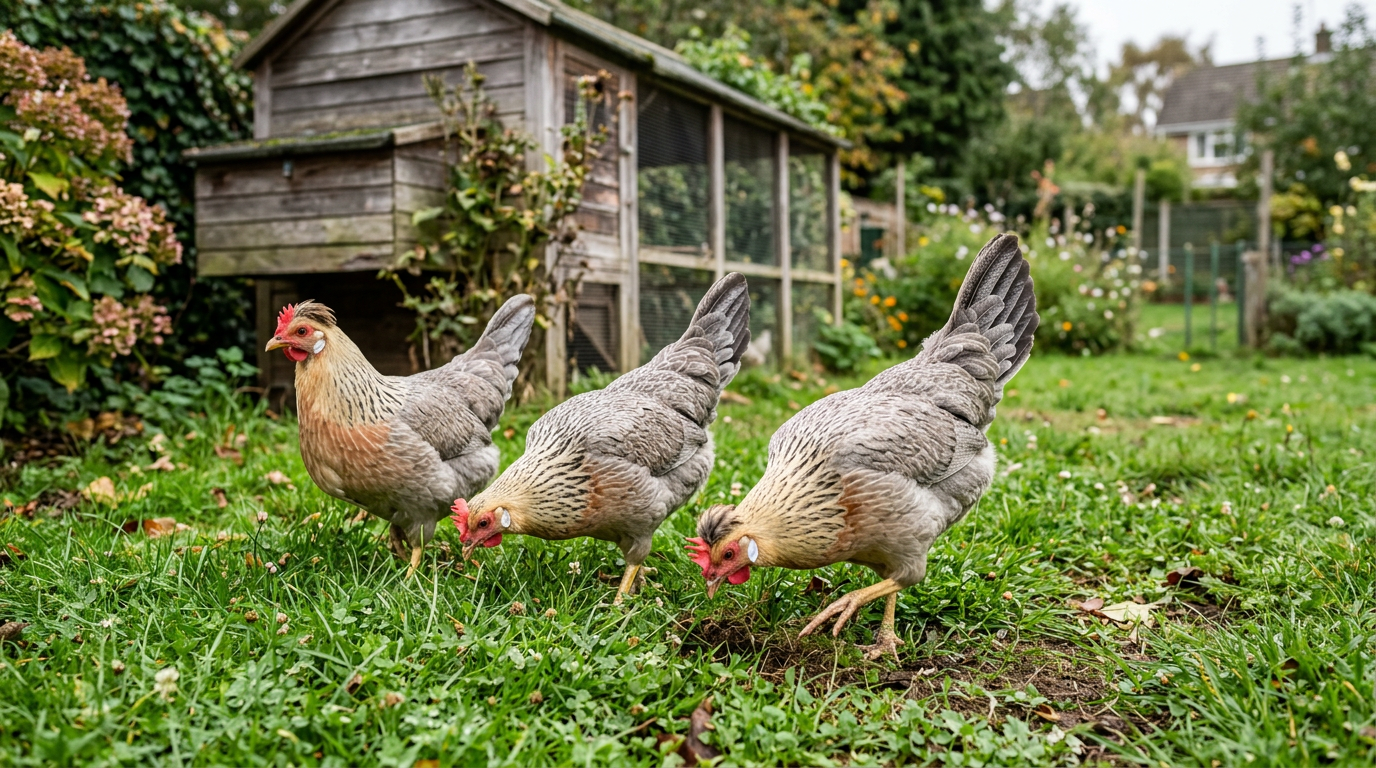
Most backyard chicken keepers know Cream Legbars for their beautiful blue eggs.
But there's something just as interesting about this breed, and it happens long before a hen lays her first egg.
With Cream Legbar chicks, you can often tell the males from the females on the day they hatch.
Female chicks typically have dark, clearly defined stripes running down their backs, almost like tiny chipmunks. Males are usually lighter, with less distinct striping and a pale spot on the head.
That trait is called *autosexing*, and it's one of the reasons Cream Legbars are so unusual.
Add their soft gray-and-cream plumage, small feather crests, active personalities, and blue eggs, and it's easy to understand why they've become popular with backyard chicken enthusiasts.
But are they good layers? Are they friendly? And how reliable is that hatch-day sex identification?
Here's what to know before adding Cream Legbars to your flock.
Cream Legbar Chicken Quick Facts
| Trait | Cream Legbar Chicken |
|---|---|
| Origin | United Kingdom |
| Developed | Mid-20th century |
| British standardization | 1958 |
| Breed type | Standardized British autosexing breed |
| Primary purpose | Eggs, autosexing, backyard breeding |
| Hen weight | Approximately 5–5.5 lb |
| Rooster weight | Approximately 7–7.5 lb |
| Egg color | Primarily blue; blue-green shades occur |
| Egg size | Usually medium to large |
| Annual egg production | Approximately 180–200 |
| First laying age | Often around 20–24 weeks in hatchery lines |
| Temperament | Active, curious, alert |
| Broodiness | Generally uncommon, but variable |
| Foraging ability | Very good |
| Comb type | Single |
| Crest | Small feather crest |
| Feathered feet | No |
| Cold tolerance | Adaptable; large comb needs frostbite protection |
| Heat tolerance | Generally good with appropriate care |
| Autosexing | Yes, when the trait is maintained in the breeding line |
| Beginner-friendly | Yes, with adequate space and secure housing |
| Main appeal | Blue eggs combined with autosexing |
The most important thing to remember is that Cream Legbars are not simply blue-egg layers.
Their inherited ability to produce visually different male and female chicks makes them especially interesting to people who plan to hatch or breed chickens.
What Does Autosexing Mean in Cream Legbar Chickens?
Autosexing means that male and female chicks hatch with recognizable differences in their appearance, allowing their sex to be estimated without waiting for adult feathers or other sexual characteristics to develop.
In Cream Legbars, those differences appear primarily in their down color and pattern.
The trait was deliberately developed through poultry genetics research at Cambridge University.
For backyard keepers, the practical benefit is straightforward.
Instead of raising a group of chicks for several weeks before discovering which are roosters, you can often identify the likely males and females almost immediately.
That can be particularly useful when you only want laying hens.
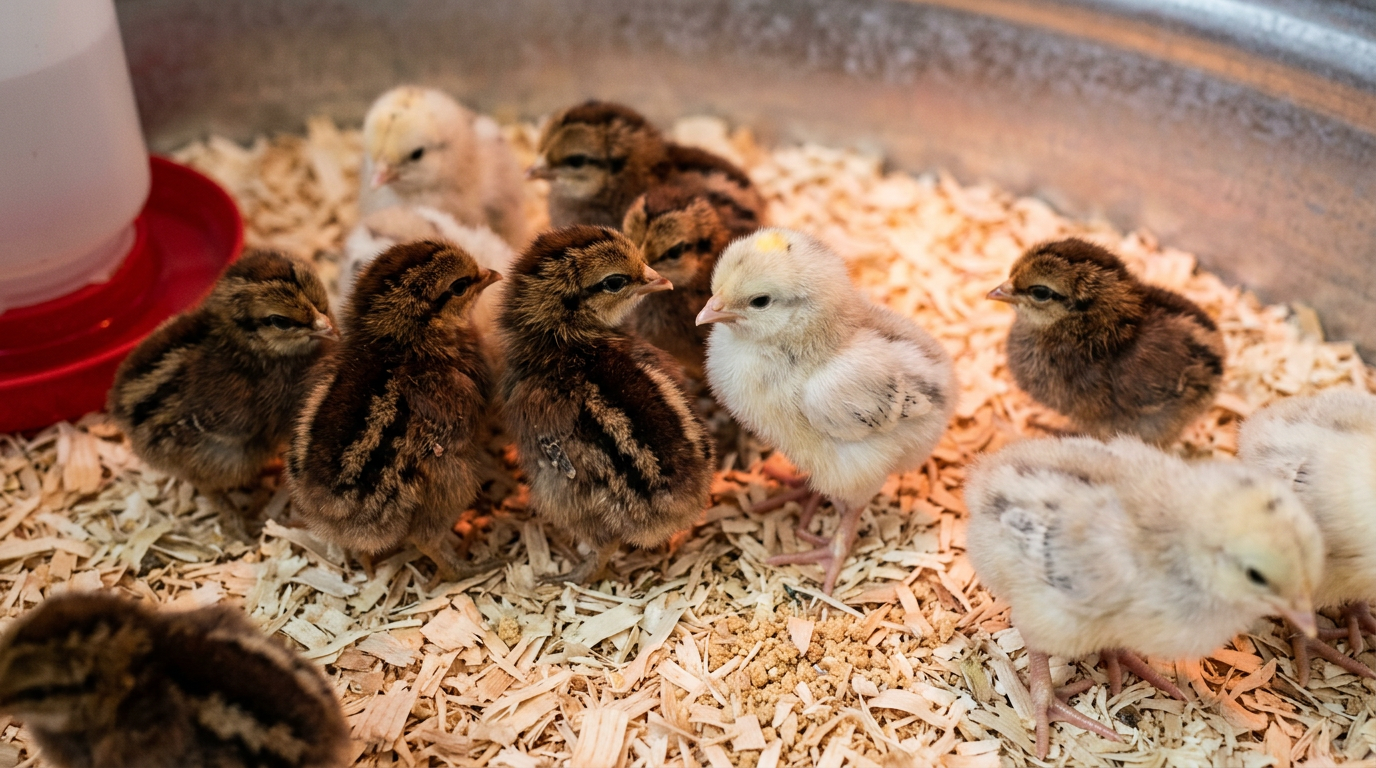
Male vs. Female Cream Legbar Chicks
Female Cream Legbar chicks tend to have darker, more clearly defined markings.
Male chicks generally have lighter down with softer, less distinct patterns.
| Feature | Female Chick | Male Chick |
|---|---|---|
| Overall down color | Darker brown | Lighter brown or grayish |
| Back stripes | Dark and clearly defined | Fainter or less distinct |
| Pattern edges | Sharp and noticeable | Often blurred or washed out |
| Eye markings | Darker, more prominent stripes | Usually less prominent |
| Head markings | Dark central pattern; sometimes a small light spot | Often a more noticeable pale head spot |
| Typical appearance | Chipmunk-like striping | Paler, softer pattern |
These differences are described by the Rare Breeds Survival Trust, the Cream Legbar Club, and hatcheries that specialize in autosexing breeds.
What Do Female Cream Legbar Chicks Look Like?
Female chicks commonly have a dark brown stripe running from the head along the back.
Additional lighter stripes may run along either side.
They often have darker markings around their eyes.
Viewed from above, this creates the familiar chipmunk-like appearance.
What Do Male Cream Legbar Chicks Look Like?
Males usually hatch with lighter-colored down.
The stripes along their backs tend to be less distinct, with softer transitions between light and dark areas.
Many have a noticeable pale or yellowish spot on the head.
That combination of lighter overall color and blurred striping helps distinguish them from the darker females.
Are Cream Legbars Always Easy to Sex at Hatch?
Not always.
Autosexing is a useful inherited characteristic, but it isn't the same thing as a guarantee that every chick will be perfectly obvious.
Some chicks have markings that are difficult to interpret.
And the clarity of those markings can vary between breeding lines.
Cackle Hatchery advertises approximately 85–90% sexing accuracy for its own Cream Legbar line.
That is a hatchery-specific figure, not a scientifically established accuracy rate for every Cream Legbar flock.
Meyer Hatchery also notes that some autosexing chicks may not display clearly distinguishable patterns.
For the most reliable assessment, compare several chicks from the same hatch and look at the complete pattern rather than relying on one marking.
Roosted Note
A pale spot on a chick's head isn't enough by itself to guarantee that it's male.
Look at the overall down color, back stripes, and eye markings together.
If a chick is difficult to identify, don't force a confident answer. Some birds simply need more time.
Autosexing vs. Sex-Link Chickens: What's the Difference?
This is one of the most commonly misunderstood parts of chicken genetics.
Autosexing and sex-link chickens are related concepts, but they aren't exactly the same thing.
Autosexing Chickens
An established autosexing breed has inherited characteristics that allow males and females to be distinguished at hatch.
When appropriate, true-breeding birds are mated within the breed and those characteristics are maintained, their offspring can continue to show the autosexing pattern across generations.
Cream Legbars are an example.
Sex-Link Chickens
Sex-link hybrids are commonly produced by crossing parent chickens with particular sex-linked color genetics.
The resulting male and female chicks have different colors or markings.
However, breeding two sex-link hybrids together generally doesn't reproduce the original commercial cross or its predictable hatch-day sex differences.
Autosexing vs. Sex-Link Comparison
| Characteristic | Autosexing Breed | Sex-Link Hybrid |
|---|---|---|
| Hatch-day sex identification | Yes, when the trait is expressed clearly | Yes, in the intended cross |
| How it works | Established inherited breed characteristics | Specific genetic combination from parent lines |
| Can the characteristic persist across generations? | Yes, with appropriate breeding | The original F1 sex-link pattern generally doesn't breed true |
| Example | Cream Legbar | Golden Comet |
| Traditional standardized breed possible? | Yes | Commercial hybrids aren't generally traditional standardized breeds |
This distinction matters if you plan to hatch your own chicks.
A properly bred Cream Legbar flock can maintain the breed's autosexing characteristics across generations.
But randomly crossing a Cream Legbar with another chicken doesn't guarantee that the offspring will remain reliably autosexing.
The genetics of the other parent matter.
How Does Autosexing Work Genetically?
The visible differences in Cream Legbar chicks are associated with inherited pigmentation and sex-linked barring characteristics.
In chickens, males have two Z sex chromosomes, while females have one Z and one W.
The barring gene is carried on the Z chromosome.
Because males can inherit two copies while females have only one Z chromosome, the expression of barring can differ between the sexes.
That contributes to the differences seen in the chicks' down patterns.
The exact visible result also depends on the other feather-color genes present in the breeding line.
You don't need to understand every genetic combination to keep Cream Legbars.
But the basic principle explains why these markings are an inherited characteristic rather than a coincidence.
Why Do Cream Legbars Lay Blue Eggs?
Cream Legbars inherited their blue-egg characteristics through Araucana ancestry during the breed's development.
The blue shell is a genetic trait.
It's not caused by special feed, herbs, supplements, or anything the chicken eats to change the eggshell color.
Scientific research has identified a genetic mechanism associated with blue eggshell formation involving increased expression of the SLCO1B3 gene in the hen's shell gland.
That expression is associated with the transport and deposition of the pigment biliverdin, which contributes to blue shell coloring.
The blue eggshell trait is commonly called *oocyan*.

How Blue Eggshells Are Different From Brown Eggshells
The distinction comes down to how the pigments are incorporated into the shell.
Blue eggs: Biliverdin is incorporated into the developing shell, creating blue coloring through much of the shell structure.
Brown eggs: Brown pigments are deposited primarily onto the outside of the shell.
Green eggs: A blue shell receives additional brownish surface pigment, producing a green appearance.
That's why a hen with blue-egg genetics may produce greenish eggs if other shell-color genetics contribute a brown overlay.
Are Cream Legbar Eggs Always Bright Blue?
No.
Cream Legbars are known for blue eggs, but there can be variation between breeding lines.
The Cream Legbar Club explains that breeders often aim for a distinctive, saturated blue.
However, some lines produce lighter blue, blue-green, or greener eggs.
The Rare Breeds Survival Trust also documents variation in egg color.
So although blue is the traditional goal, you shouldn't assume every bird sold as a Cream Legbar will lay the exact same shade.
Can a Cream Legbar Lay Green Eggs?
Yes.
Some Cream Legbar lines produce eggs with greenish coloring.
That doesn't automatically mean the chicken is unhealthy or that someone has dyed the eggs.
However, if maintaining a particular breed standard or breeding specifically for blue shells matters to you, ask the breeder about the egg colors produced by its breeding hens.
The genetics and selection of the flock are more useful than a photograph of one especially blue egg.
Does One Cream Legbar Lay Different-Colored Eggs?
A Cream Legbar hen generally maintains a characteristic shell color.
The shade may change somewhat with age or the laying cycle, but a hen doesn't normally alternate between completely unrelated shell colors each day.
If you want a basket containing blue, green, and brown eggs, that variety usually comes from keeping hens with different egg-color genetics.
For a broader look at colored eggs, read our Easter Egger Chicken Guide.
How Many Eggs Do Cream Legbar Chickens Lay?
Cream Legbar hens commonly produce approximately 180–200 eggs annually, although actual production depends on the breeding line, age, and management.
Both the Rare Breeds Survival Trust and Cackle Hatchery report figures in this general range.
Meyer Hatchery describes many Legbars as producing approximately three to four eggs weekly.
That makes Cream Legbars useful backyard layers.
However, they're not typically selected for the extreme production associated with some modern commercial egg-laying strains.
How Many Eggs Do Cream Legbars Lay Per Week?
Three to four eggs per week is a reasonable broad expectation during productive periods.
Some hens may exceed that temporarily.
Others may lay less, particularly during winter, molting, or later in life.
Don't expect every week to look identical.
How Many Eggs Would Four Cream Legbars Lay?
Using a planning estimate of 180–200 eggs per hen annually:
| Hens | Estimated Annual Eggs | Average Weekly Eggs |
|---|---|---|
| 2 | 360–400 | About 7–8 |
| 4 | 720–800 | About 14–15 |
| 6 | 1,080–1,200 | About 21–23 |
| 8 | 1,440–1,600 | About 28–31 |
These are mathematical planning examples, not guaranteed production totals.
Actual weekly collection will fluctuate.
Four Cream Legbar hens could provide a useful household supply of blue eggs, particularly when they're young, healthy, and receiving appropriate nutrition.
Use our Chicken Egg Production Calculator to estimate production for your flock.
Are Cream Legbars Better Layers Than Leghorns?
Generally, no.
Leghorns, particularly high-producing White Leghorn strains, have been selected heavily for egg production.
Cream Legbars have Leghorn ancestry, but their development emphasized additional traits, including autosexing and blue eggs.
That creates a different balance.
A White Leghorn may be a better choice if maximum egg output is your only priority.
A Cream Legbar may be more appealing if you want productive hens that also lay blue eggs and can produce autosexing chicks.
When Do Cream Legbars Start Laying Eggs?
Many Cream Legbar pullets begin laying at approximately 20–24 weeks old, although some take longer.
McMurray Hatchery lists approximately 22 weeks to maturity for its Cream Legbar line.
Other hatcheries provide ranges around five to six months.
These are hatchery expectations rather than a precise breed-wide biological deadline.
Individual maturity can vary.
Signs Your Cream Legbar Is Getting Ready to Lay
Watch for:
- A redder and more developed comb
- Increased interest in nesting boxes
- Squatting behavior
- A more mature body shape
- Changes in vocalization
- Spending additional time investigating nesting areas
Young hens may also begin with smaller or irregular eggs.
That's normal during the transition into laying.
Can Season Delay the First Egg?
Yes.
Daylight influences egg production.
A pullet reaching maturity during fall or winter may begin laying later than one maturing during increasing spring daylight.
Nutrition, health, and environmental stress also matter.
Our First Egg Calculator can help you estimate the expected first-egg window.
For the broader laying timeline, see When Do Chickens Start Laying Eggs?.
What Do Cream Legbar Chickens Look Like?
Adult Cream Legbars are slender, active-looking chickens with soft cream, gray, and brown feather patterns.
They don't have the broad, rounded appearance of a Wyandotte or the heavy body of a Brahma.
Their appearance reflects their lighter egg-laying ancestry.
The distinctive features include:
- A small crest of feathers behind the comb
- A single red comb
- White earlobes
- Yellow legs
- Clean, unfeathered feet
- Cream and gray feather coloring
- Barred or patterned plumage
- A relatively slender body
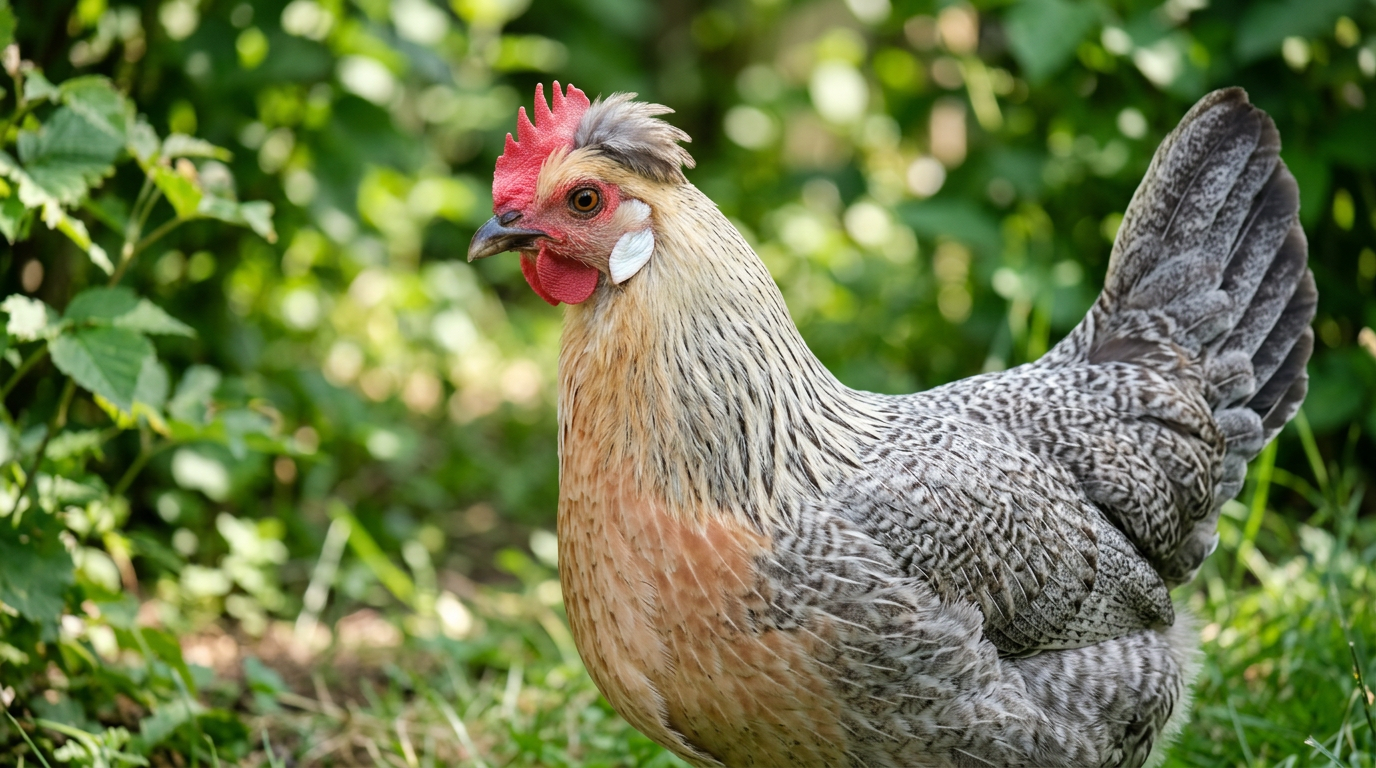
What Does a Cream Legbar Hen Look Like?
Hens typically have soft gray or silver-gray bodies, cream-colored neck feathering, and salmon-colored breasts.
A small crest sits behind the comb.
The exact shade varies between breeding lines.
Some hens have more noticeable gold or chestnut tones than others.
What Does a Cream Legbar Rooster Look Like?
Roosters generally have more contrasting colors.
Their neck and saddle feathers may be cream-colored, while their breasts, wings, and tails display gray barring.
The rooster's appearance is usually more dramatic than the hen's.
Do Cream Legbars Have Big Crests Like Polish Chickens?
No.
Cream Legbars have a relatively small crest, not the enormous rounded head feathering associated with Polish chickens.
Their crests are typically positioned behind the comb.
They usually don't require the same degree of visibility-related grooming associated with heavily crested ornamental breeds.
However, any unusual feather growth should still be inspected if it appears to obstruct the eyes or cause irritation.
How Big Do Cream Legbar Chickens Get?
Cream Legbars are medium-sized chickens.
The Cream Legbar Club's published proposed American standard lists:
| Bird | Standard Weight |
|---|---|
| Adult rooster | 7 lb |
| Adult hen | 5.5 lb |
| Cockerel | 6 lb |
| Pullet | 4.5 lb |
These are proposed standard weights for American recognition, not existing APA standard weights.
Hatcheries report slightly different mature weights.
For example, Cackle Hatchery lists hens at approximately 5 pounds and roosters at 7.5 pounds.
Those variations aren't especially surprising.
Breeding lines can differ in size and conformation.
For everyday backyard planning, consider the Cream Legbar a medium-sized laying chicken rather than a heavy dual-purpose bird.
Are Cream Legbar Chickens Friendly?
Cream Legbars are generally described as curious, active chickens that can become comfortable around their keepers.
The Cream Legbar Club describes them as friendly and good foragers.
However, other sources note that Legbars can be somewhat flighty.
Both descriptions can be accurate.
A chicken can be comfortable around people while still preferring to explore rather than be picked up.
Do Cream Legbars Like Being Held?
Some tolerate handling well, particularly when raised with gentle human interaction.
Others are more independent.
Cream Legbars aren't generally selected specifically for lap-pet behavior.
If you're looking for especially calm companion chickens, temperament should be part of your decision rather than assuming blue eggs mean a relaxed personality.
Are Cream Legbars Flighty?
They can be.
Legbars are active, alert birds with good mobility.
The Rare Breeds Survival Trust describes traditional Legbars as active and potentially flighty, while Cream Legbar breeders emphasize their foraging ability.
Individual temperament varies.
A relaxed hen from one line may behave differently from a particularly nervous bird from another.
Are Cream Legbars Noisy?
Cream Legbars can be vocal, but there isn't enough standardized breed-specific evidence to assign a reliable noise rating.
Expect ordinary chicken sounds, including social calls, egg announcements, and alarm vocalizations.
Roosters crow.
If you're keeping chickens in a neighborhood, don't rely on unsupported claims that one breed is guaranteed to be quiet.
Do Cream Legbars Go Broody?
Some Cream Legbar hens become broody, but the tendency is generally considered relatively low and varies by line.
The Rare Breeds Survival Trust describes broodiness as unusual.
Cackle Hatchery lists it as variable, while Meyer Hatchery notes that some Legbar hens become capable mothers.
That means there isn't one answer that applies to every individual hen.
Are Cream Legbars Good Mothers?
Some can be good mothers when they become broody.
However, if your main objective is naturally hatching and raising chicks, don't assume every Cream Legbar will sit on eggs.
You may need an incubator or a hen with stronger broody instincts.
Can You Breed Cream Legbars at Home?
Yes.
A Cream Legbar rooster and appropriately bred Cream Legbar hens can produce offspring with the breed's established characteristics.
However, maintaining those characteristics requires more than putting two birds with the same hatchery label together.
Responsible breeding should consider:
- Parentage and line purity
- Consistent autosexing chick markings
- Blue eggshell genetics
- Adult conformation
- Health and vigor
- Appropriate feather color
- Genetic diversity
Some American flocks have more gold or chestnut feather coloring than the British Cream Legbar standard calls for.
The Rare Breeds Survival Trust also notes that some birds sold as Cream Legbars do not fully meet the cream-color standard.
For casual backyard egg keeping, this may not be particularly important.
For breeding or exhibition, it matters considerably.
Roosted Note
If you're buying Cream Legbars because you eventually want to hatch your own chicks, ask the breeder two questions:
Do your breeding birds consistently produce recognizable male and female chick markings?
What colors of eggs do your breeding hens actually lay?
Those answers tell you more than the breed name alone.
Are Cream Legbars a Real Breed or a Hybrid?
Cream Legbars are an established autosexing breed that was standardized by the Poultry Club of Great Britain in 1958.
Although multiple breeds contributed to their original development, that doesn't make a properly maintained Cream Legbar equivalent to a modern first-generation commercial hybrid.
The distinction is important.
Most established chicken breeds were developed through selective breeding involving other populations.
What makes a recognized breed meaningful is the development and maintenance of consistent inherited characteristics.
Are Cream Legbars Recognized by the APA?
The Cream Legbar is recognized through British breed standards.
However, it is not currently listed in the American Poultry Association's published accepted-breeds directory.
American breeders have worked toward recognition using proposed standards.
This distinction matters primarily if you intend to breed or exhibit birds under official American poultry-show standards.
For backyard ownership, the more immediate priorities are healthy birds, reliable parentage, and the traits you're buying them for.
Cream Legbar vs. Easter Egger: What's the Difference?
This is an especially useful comparison if your main interest is blue eggs.
Cream Legbars and Easter Eggers can both produce blue eggs, but they're not the same type of chicken.
Cream Legbar
A Cream Legbar is an established breed developed around specific characteristics, including autosexing and blue eggs.
Its typical appearance includes a small crest, single comb, and cream-and-gray feather pattern.
Easter Egger
An Easter Egger is not one standardized breed.
It's a broad category of chickens with colored-egg genetics that don't conform to a recognized blue-egg breed standard.
Easter Eggers may vary substantially in appearance, egg color, and other traits.
Cream Legbar vs. Easter Egger Comparison
| Trait | Cream Legbar | Easter Egger |
|---|---|---|
| Standardized breed | Yes, in Britain | No |
| Egg color | Primarily blue; some greenish variation | Blue, green, olive, tinted, or other colors depending on line |
| Autosexing | Yes, in appropriately bred lines | Not a standard defining trait |
| Crest | Small crest characteristic | Highly variable |
| Comb | Single | Variable |
| Appearance | Defined breed characteristics | Highly variable |
| Egg production | Approximately 180–200 annually | Depends heavily on genetics and hatchery line |
| Best reason to choose | Blue eggs + autosexing | Egg-color variety and diverse appearance |
| Breeding predictability | Greater with carefully maintained lines | Depends on parentage |
Which Is Better for Blue Eggs?
If you specifically want blue eggs from an established breeding line, Cream Legbars are a strong option.
If you want a mixed basket with potentially several shell colors, Easter Eggers can be appealing.
But remember that an individual Easter Egger doesn't normally lay a different color every day.
The variety comes from the genetics of different hens.
Read our Easter Egger Chicken Guide for a closer look at the differences.
Cream Legbar vs. Ameraucana
Both Cream Legbars and Ameraucanas are associated with blue eggs.
The difference lies in their history, appearance, and breeding characteristics.
| Trait | Cream Legbar | Ameraucana |
|---|---|---|
| Main appeal | Blue eggs and autosexing | Blue eggs and established American breed characteristics |
| Crest | Small crest | Beard and muffs |
| Comb | Single | Pea |
| Egg color | Primarily blue | Blue |
| Autosexing | Characteristic trait | Not a standard breed trait |
| APA recognition | Not currently listed | Recognized |
| Typical behavior | Active and curious | Varies by line and individual |
| Best fit | Blue-egg keepers interested in autosexing | Blue-egg keepers seeking an APA-recognized breed |
Neither breed is automatically better.
If hatch-day sex identification is particularly important, Cream Legbars have a distinctive advantage.
If American exhibition standards matter, Ameraucanas may be more appropriate.
Are Cream Legbars Good Free-Range Chickens?
Yes.
Cream Legbars have a strong reputation for foraging.
Their active temperament makes them well suited to exploring safe outdoor spaces.
You may see them spending much of the day scratching, investigating vegetation, and searching for insects.
That activity is part of their appeal.
Do Cream Legbars Need to Free-Range?
No.
They can live in a properly designed coop and run.
However, because they're active birds, they benefit from adequate space and opportunities to explore.
If your flock won't free-range, consider:
- A generously sized run
- Safe dust-bathing areas
- Dry ground for scratching
- Natural perches
- Shade and shelter
- Multiple areas to explore
- Opportunities for appropriate enrichment
Avoid an overcrowded, bare run that gives the birds little opportunity to express natural behaviors.
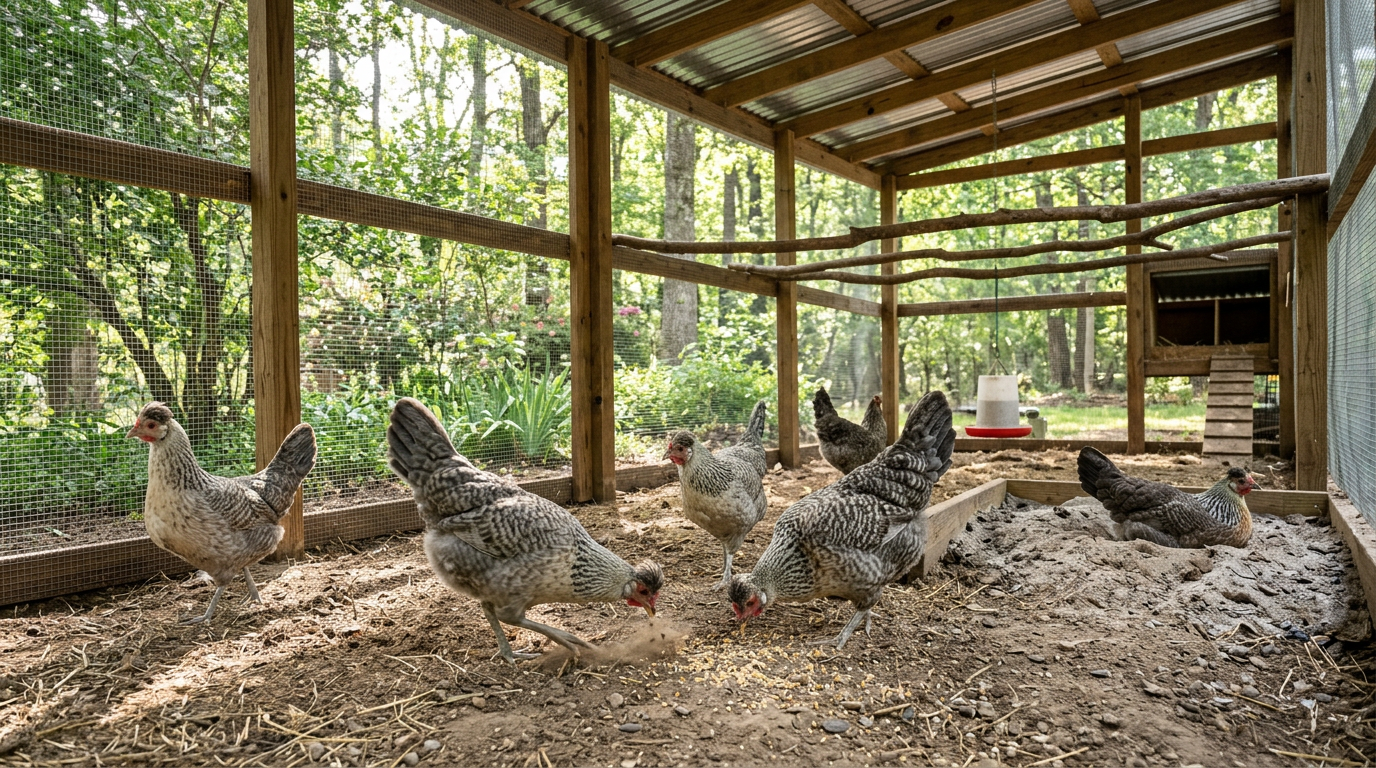
Can Cream Legbars Fly?
They are relatively agile chickens and can be capable flyers.
Don't assume that a low fence will contain every bird.
A secure, covered run can help prevent escapes while providing protection from hawks and other predators.
Are Cream Legbars Cold Hardy?
Cream Legbars can be kept in colder environments, but their single comb deserves particular attention.
Large single combs have more exposed tissue than compact rose or pea combs.
That increases the potential for frostbite during freezing weather.
The breed may be hardy overall, but that doesn't mean its comb is immune to injury.
Winter Care for Cream Legbars
Prioritize:
- A dry coop
- Consistent ventilation without direct drafts across roosting birds
- Protection from rain, snow, and freezing wind
- Dry bedding
- Unfrozen drinking water
- Adequate nutrition
- Regular comb and wattle inspection
Our Chicken Coop Ventilation Guide explains how to keep the coop dry without sealing it completely.
Do Cream Legbars Lay Eggs in Winter?
They can, although shorter daylight hours can reduce production.
Cold tolerance and winter egg production are two different traits.
A healthy hen may tolerate winter temperatures well while laying fewer eggs because the days are shorter.
Age, molt, diet, and individual genetics also affect winter production.
Are Cream Legbars Good for Hot Climates?
Cream Legbars are generally considered suitable for relatively warm climates when managed appropriately.
McMurray Hatchery rates the heat tolerance of its line favorably.
Their lighter, active body type can be a practical advantage compared with very heavy chickens, but heat tolerance should never be treated as immunity to heat stress.
During hot weather:
- Provide shade throughout the day.
- Keep plenty of clean drinking water available.
- Maintain airflow through the coop.
- Avoid overcrowding.
- Provide protected resting areas.
- Monitor birds for persistent panting, weakness, or other signs of overheating.
A chicken that handles ordinary summer weather can still become dangerously overheated during extreme conditions.
Housing and Space Requirements for Cream Legbars
Cream Legbars don't require specialized housing, but their activity level should influence your design.
For standard backyard chickens, Roosted uses a general planning target of approximately:
- 4 square feet of usable indoor coop space per hen
- 10 square feet of outdoor run space per hen
These are comfortable starting targets, not universal biological minimums.
Because Cream Legbars are active foragers, more outdoor space is beneficial when practical.
Cream Legbar Coop and Run Space
| Number of Hens | Indoor Coop Space | Outdoor Run Space |
|---|---|---|
| 3 | 12 sq ft | 30 sq ft |
| 4 | 16 sq ft | 40 sq ft |
| 6 | 24 sq ft | 60 sq ft |
| 8 | 32 sq ft | 80 sq ft |
For four hens, I'd start with approximately 16 square feet indoors and 40 square feet in a secure run.
If you have the room, build the run larger.
Use our Chicken Coop Size Calculator to estimate the right dimensions for your flock.
Nesting Boxes
Standard nesting boxes are suitable for Cream Legbars.
A box around 12 inches in each dimension is a useful starting size for many standard backyard hens.
For a small flock, you typically don't need one nesting box per chicken.
Keep boxes relatively private, dry, and easy to access.
Our Chicken Nesting Boxes Guide covers size, placement, and how many boxes your flock needs.
Roosting Bars
Provide sturdy roosts that are easy to reach and spaced to reduce crowding.
Cream Legbars are relatively agile birds, but roosts should still have safe landing areas.
Predator Protection
For an active breed that enjoys exploring, a covered and predator-resistant run is especially useful.
Use sturdy fencing and secure openings rather than relying solely on lightweight chicken wire.
Lock the coop securely at night.
Feeding Cream Legbar Chickens
Cream Legbars don't need a special breed-specific diet.
Their nutritional needs are determined primarily by age, growth, and egg production.
A complete poultry ration should be the foundation of their diet.
Feeding by Life Stage
| Life Stage | Feeding Approach |
|---|---|
| Chicks | Complete chick starter |
| Growing pullets | Appropriate grower ration |
| Approaching laying age | Transition according to the chosen feed program |
| Laying hens | Complete layer feed or an appropriately managed all-flock ration with calcium support |
| All stages | Fresh water and suitable grit when needed |
Because Cream Legbars can be active foragers, they may obtain some supplemental nutrition while exploring.
But free-ranging should not replace a balanced feed program.
How Much Do Cream Legbars Eat?
Food intake varies with body size, season, age, laying activity, and access to forage.
Roosted generally uses approximately one-quarter pound of complete feed per standard adult laying hen daily as a practical planning estimate.
For a flock of four hens, that's about one pound per day, before allowing for individual variation.
Use our Chicken Feed Calculator to estimate daily use, monthly requirements, and feed-bag costs.
Are Cream Legbar Chickens Good for Beginners?
Yes, Cream Legbars can make a good choice for beginners, particularly those interested in colored eggs and active backyard chickens.
They don't require unusual feeding systems or especially complicated daily care.
Their main considerations are manageable with good planning.
These include:
- Providing a secure run
- Allowing sufficient space for activity
- Monitoring normal flock behavior
- Managing winter exposure around the single comb
- Understanding that egg production varies by line
- Recognizing that autosexing isn't guaranteed to be perfect
Are Cream Legbars Good With Children?
They can be suitable family chickens.
However, their active and sometimes flighty temperament means they may not enjoy frequent handling.
A calm, well-socialized individual may become comfortable with children.
Another bird may prefer to keep its distance.
Supervise children around chickens and teach gentle handling.
If having especially calm lap chickens is your main priority, consider that individual temperament matters more than the novelty of blue eggs.
Cream Legbar Chicken Pros and Cons
| Pros | Cons |
|---|---|
| Beautiful blue eggs | Not every line produces identical shades |
| Autosexing chicks | Hatch-day sex identification isn't foolproof |
| Useful annual egg production | Usually not as productive as specialized commercial layers |
| Active foraging ability | Can be flighty |
| Distinctive small crest | Not usually selected for cuddly temperament |
| Attractive cream-and-gray plumage | Breed quality varies between breeders |
| Established British breed | Not currently APA-recognized |
| Medium body size | Single comb can be vulnerable to frostbite |
| Can be bred for consistent inherited traits | Requires careful breeding to maintain autosexing and egg-color characteristics |
Who Should Choose Cream Legbar Chickens?
Cream Legbars are an especially good match for people who want blue eggs and are interested in the genetics behind their chickens.
I'd consider them if:
- You want a flock that produces blue eggs.
- You're interested in hatching chicks in the future.
- You like the advantage of autosexing.
- You have enough outdoor space for active chickens.
- You enjoy watching chickens forage.
- You're comfortable with birds that may be more independent.
- You appreciate established breeds with unusual characteristics.
Who Might Prefer Another Breed?
Another chicken may be more suitable if you:
- Want maximum annual egg production
- Prefer very calm birds that enjoy handling
- Have limited or unsecured outdoor space
- Want a strong, predictable broody breed
- Need a breed currently accepted under APA exhibition standards
- Expect every chick to be sexed perfectly at hatch
Cream Legbars aren't meant to satisfy every possible backyard chicken priority.
Their appeal is the unusual combination of traits they offer.
The Bottom Line: Are Cream Legbar Chickens Worth Raising?
Cream Legbars are one of the more interesting choices for a backyard flock.
Their beautiful blue eggs are certainly part of the attraction.
But what makes them genuinely distinctive is their combination of blue eggs, autosexing chicks, and recognizable breed characteristics.
They're active chickens that enjoy foraging, can produce a useful number of eggs, and offer something different from the standard brown-egg backyard flock.
They aren't the highest-producing layers, the calmest companion chickens, or the easiest birds to contain behind a low fence.
And not every breeding line produces equally clear autosexing markings or identical shades of blue.
But if you want a practical blue-egg layer and appreciate the opportunity to identify male and female chicks from their hatch-day markings, Cream Legbars are absolutely worth considering.
The blue eggs might be what first catches your attention. The autosexing genetics are what make this breed truly distinctive.
Cream Legbar Chicken FAQ
What color eggs do Cream Legbars lay?
Cream Legbars primarily lay blue eggs. Some breeding lines produce lighter blue, blue-green, or greenish shells. The exact shade depends on the bird's genetics and breeding line.
Are Cream Legbars autosexing?
Yes. Properly bred Cream Legbars have inherited down-color differences that can help distinguish male and female chicks at hatch. However, some chicks have ambiguous markings, so autosexing isn't a perfect guarantee.
What does autosexing mean in chickens?
Autosexing means male and female chicks have inherited visual differences at hatch that can help identify their sex. In established autosexing breeds, the characteristic can be maintained through appropriate breeding across generations.
How can you tell male and female Cream Legbar chicks apart?
Female chicks usually have dark, distinct stripes along their backs and prominent eye markings. Males are generally lighter, with blurred striping and often a noticeable pale head spot. Use the complete pattern rather than a single marking.
How many eggs do Cream Legbars lay?
Many Cream Legbar hens produce around 180–200 eggs annually, depending on strain and management. That's roughly three to four eggs weekly when averaged across the year, although actual production fluctuates.
Are Cream Legbar chickens friendly?
Cream Legbars are often described as curious, active, and capable of becoming comfortable around people. Some are relatively independent or flighty, so individual temperament varies.
Are Cream Legbars good for beginners?
Yes. They're suitable for beginners who can provide secure housing, adequate space, and ordinary poultry care. Their active behavior and autosexing characteristics are worth understanding before purchasing.
When do Cream Legbars start laying?
Many hatchery Cream Legbars begin laying around 20–24 weeks of age. Some may begin earlier or later depending on breeding line, nutrition, season, and individual development.
Are Cream Legbars rare?
They are less common than major commercial egg-laying breeds, but availability has increased through specialty breeders and hatcheries. Their rarity depends on location and the particular breeding line.
Do Cream Legbars go broody?
Some do, but broodiness is generally considered uncommon or variable. They aren't usually chosen primarily as reliable natural incubators.
Are Cream Legbars the same as Easter Eggers?
No. Cream Legbars are an established British autosexing breed, while Easter Eggers are a broad category of chickens with variable colored-egg genetics and no single standardized breed description.
Can Cream Legbars breed true?
Yes, when correctly bred within established lines. Their distinctive traits, including autosexing, can be maintained across generations. Crossbreeding or poorly selected lines can reduce predictability.
Want to estimate what your flock could produce? Try the Chicken Egg Production Calculator →
Raising Cream Legbar pullets? Estimate when they may lay their first egg →
Not sure whether this breed is right for you? Try the Chicken Breed Finder →
Keep Reading
Planning a flock with colorful eggs? These Roosted resources can help:
- Chicken Breed Finder — Compare breeds based on egg color, temperament, climate, and backyard suitability.
- Easter Egger Chickens: Egg Colors, Temperament & Care — Compare Cream Legbars with another popular colored-egg chicken.
- Chicken Egg Production Calculator — Estimate how many eggs your flock might produce.
- First Egg Calculator — Estimate when your pullets could begin laying.
- Chicken Coop Size Calculator — Plan indoor and outdoor space.
- Chicken Feed Calculator — Estimate daily and monthly feed requirements.
- When Do Chickens Start Laying Eggs? — Learn the signs that your pullets are approaching their first eggs.
- Chicken Coop Ventilation — Keep your coop properly ventilated throughout the year.
Sources & Further Reading
- The Poultry Club of Great Britain — Autosexing: Cream Legbar — British breed development, autosexing background, and blue-egg ancestry.
- Rare Breeds Survival Trust — Cream Legbar — Physical characteristics, chick markings, egg production, broodiness, and breed history.
- Oklahoma State University — Legbar Chickens — Legbar development, autosexing patterns, ancestry, and breed traits. Note that its APA-recognition statement conflicts with the current APA directory.
- Cream Legbar Club — Breed Overview — Temperament, breeding goals, egg color, and flock characteristics.
- Cream Legbar Club — Proposed Standard of Perfection — Proposed American standard, body weights, plumage, comb, and conformation.
- American Poultry Association — Accepted Breeds and Varieties — Current American standardization status.
- Meyer Hatchery — Autosexing vs. Sex-Linked Breeds — Autosexing compared with first-generation sex-link crosses.
- Meyer Hatchery — Identifying the Gender of Sex-Linked and Autosexing Breeds — Male and female Cream Legbar chick patterns.
- Small and Backyard Poultry Extension — Sexing Day-Old Chicks — Sex-linked barring genetics and hatch-day sex identification.
- Wang et al., PLOS Genetics — Blue Eggshell Genetics — Peer-reviewed research connecting blue eggshell formation with SLCO1B3 gene expression.
- Cackle Hatchery — Cream Legbar Chicken — Hatchery-specific egg production, weights, sexing accuracy, and egg colors.
- Murray McMurray Hatchery — Cream Legbars — Hatchery-specific maturity, body size, egg characteristics, and management traits.