Chicken Breed Finder
Choosing a chicken breed gets overwhelming fast. One lays more eggs, another handles cold better, another is calmer around children, and almost every guide ends with “this is a great backyard chicken.” That doesn't help you decide.
Answer eight quick questions about your climate, egg goals, backyard, family and flock preferences, and we'll compare them with the Roosted Breed Database to show which chickens may fit your setup best.
What's most important to you?
Choose up to two priorities. These receive the most weight in your results.
0 of 2 selected
Rankings are deterministic weighted matches against sourced breed tendencies, not guarantees. Individual birds and breeder lines vary.
Quick Answer
There is no single “best chicken breed.” The best breed for your backyard depends on what you actually want from your flock. Someone looking for lots of eggs + hot-weather tolerance + colorful shells may get completely different recommendations from someone prioritizing cold hardiness + quiet temperament + broodiness.
The finder returns several strong matches rather than declaring one chicken universally perfect, and every result explains why it matched and what you should know before choosing it.
How the Match Percentage Works
The match score compares your answers with the traits stored in the Roosted Breed Database. A 92% matchdoesn't mean a 92% chance you'll love the chicken. It means the breed aligns strongly with the preferences you told us matter.
matchScore =
sum(breedTraitScore × yourImportanceWeight)
÷ sum(maxTraitScore × yourImportanceWeight)
- Your top two prioritiescarry the most weight. Say egg production doesn't matter and it contributes nothing.
- Egg color can be a must-have.Require blue or green eggs and breeds that can't lay them are removed, not just ranked lower.
- Weakly sourced traits count less. Quietness, for example, rests on broad descriptions, so it gets less influence than Extension-backed egg ranges or cold hardiness.
- No AI picks your breed. The same answers always produce the same ranking.
On This Page
- How do I choose a chicken breed?
- Best chicken breeds for beginners
- Best egg-laying chickens
- Best chickens for hot weather
- Best chickens for cold weather
- Best chickens for families
- Best chickens for colorful eggs
- Best quiet chicken breeds
- Best chickens for small backyards
- Heritage vs. hybrid chickens
- Does breed affect egg production?
- Can different chicken breeds live together?
- Frequently asked questions
How Do I Choose a Chicken Breed?
Start with your actual priorities, not which chicken is getting the most likes online. Ask:
- What do I want from the flock? Eggs, companionship, broodiness, foraging, colorful eggs?
- What climate will they live in? Long hot summers, harsh winters or both?
- How much room do I have? Permanent run, large backyard or free range?
- Who interacts with them? Adults only, or young children too?
- Do I care about egg color? Wanting blue eggs immediately narrows your choices.
- Do I want a standardized breed? Or are hybrids and nonstandard chickens perfectly fine?
Those questions usually matter more than “What's the most popular chicken breed?”
Best Chicken Breeds for Beginners
Easier first-flock breeds combine manageable temperament, useful production, ordinary housing needs and broad adaptability. Utah State specifically highlights ISA Brown, Golden Comet and Plymouth Rock among useful beginner picks.
Calm, practical, dependable.
Gentle with excellent laying potential.
Calm, heavy, family-friendly.
Interesting egg colors and generally straightforward care.
Hardy and productive, though often more confident or assertive.
ISA Brown & Golden Comet
Hybrids worth a look if high egg production is the goal.
Best Chicken Breeds for Egg Production
Representative planning ranges from Utah State University Extension:
| Chicken | Approx. eggs / year |
|---|---|
| ISA Brown | 300–320 |
| Leghorn | 280–320 |
| Golden Comet | 280–320 |
| Australorp | 250–300 |
| Rhode Island Red | 250–300 |
| Sussex | 250–300 |
| Easter Egger | 200–280 |
| Plymouth Rock | 200–250 |
| Ameraucana | 200–250 |
| Marans | 150–200 |
These are planning ranges, not guarantees. Production still varies with bloodline, age, season, daylight, molt, health and nutrition. And more eggs isn't automatically better: you may prefer lower production with a calmer temperament, stronger broodiness, better climate fit or different egg colors.
Best Chickens for Hot Weather
Utah State highlights several breeds for warm conditions, including Leghorn, Ancona, Easter Egger and Minorca. Body type, feathering, comb size, activity and ancestry all influence how chickens handle heat.
Even heat-tolerant breeds still need shade, fresh water, ventilation and space. No breed turns 100°F + full sun + an empty waterer into acceptable flock management. See How to Keep Chickens Cool in Summer.
Best Chickens for Cold Weather
Cold-weather picks tend to have heavier bodies, dense feathering and smaller combs. Utah State and the University of Minnesota identify Australorp, Plymouth Rock, Rhode Island Red, Sussex, Orpington, Ameraucana and Wyandotte as useful cold-weather choices.
Cold hardiness doesn't eliminate winter management. Birds still need dry housing, unfrozen water, ventilation and protection from direct drafts. See Chicken Coop Ventilation.
Best Chickens for Families
When children regularly interact with the flock, look for calmer behavior, lower flightiness, easier handling and a manageable body size. Potential family-flock options include Australorp, Buff Orpington, Plymouth Rock, Easter Egger and Sussex.
But don't turn family friendly into guaranteed child safe. Individual birds vary, and roosters in particular deserve individual evaluation regardless of breed.
Best Chickens for Colorful Eggs
Egg color is one of the easiest preferences to use as a strong filter.
Blue
Ameraucana
Blue / green / variable
Easter Egger
Dark chocolate brown
Marans
Dark / speckled brown
Welsummer
White
Leghorn
Brown
Rhode Island Red, Buff Orpington, Plymouth Rock, Australorp
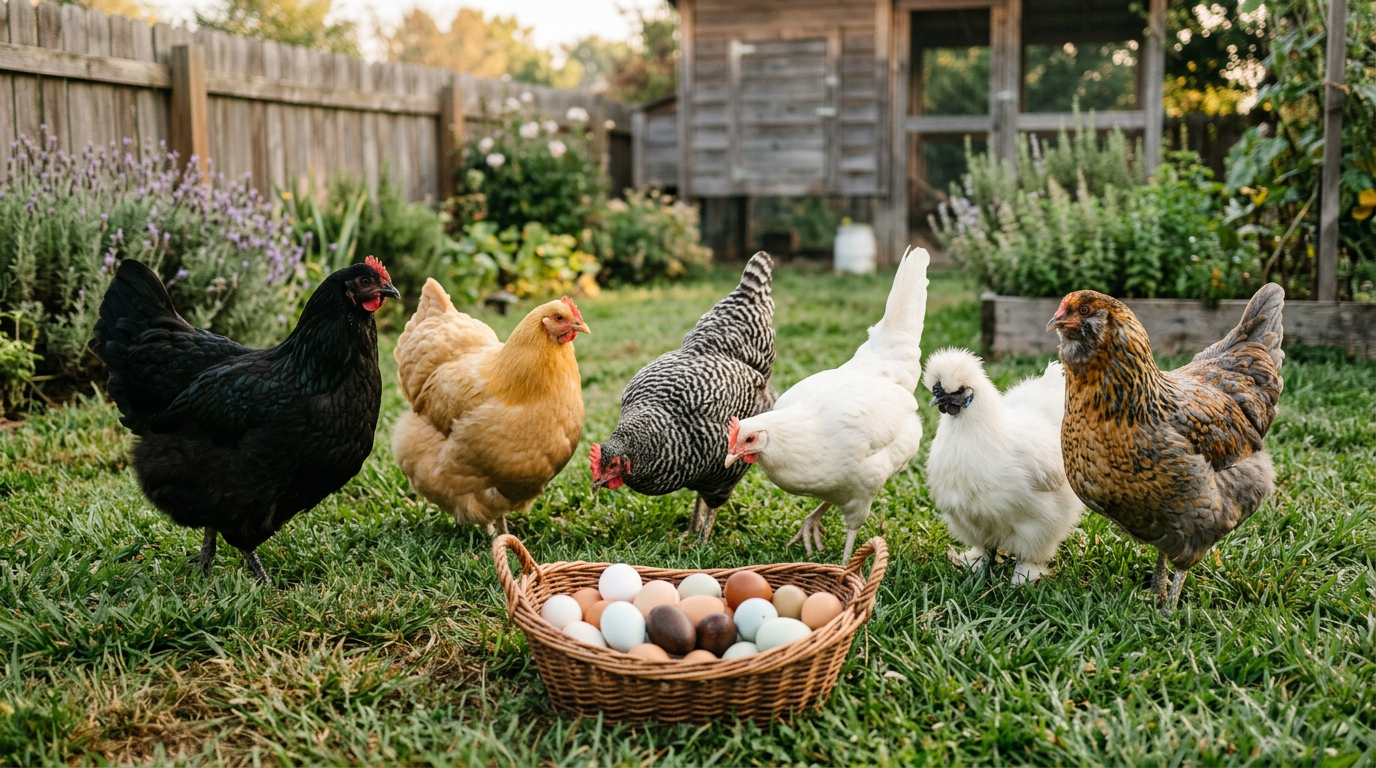
Exact shell color still varies by strain and individual hen, but the finder can intentionally help you build a rainbow basket.
Best Quiet Chicken Breeds
Noise is one of the hardest breed traits to quantify responsibly, so Roosted uses broad tendencies rather than claims like “42% quieter.” Breeds often described as calmer or quieter include Australorp, Ameraucana and Barnevelder, while Leghorns are generally characterized as more active and flighty. Quietness carries less ranking weight because the evidence is thinner.
Best Chickens for Small Backyards
Focus less on one magical “small-yard breed” and more on bird size, activity level, confinement tolerance, temperament and flock size. A calm standard breed in a properly sized run can be easier than a lightweight active breed constantly trying to explore beyond it.
Bantams reduce physical space needs, but they still need adequate run space, predator protection, enrichment and ventilation. Use How Much Space Do Chickens Need? for the actual flock calculation.
Heritage vs. Hybrid Chickens
This is less about good versus bad and more about breeding goal.
Heritage / standardized breeds
- Predictable breed identity
- Established body type
- Recognizable temperament tendencies
- Can breed true when properly bred
Rhode Island Red, Plymouth Rock, Australorp, Orpington
Commercial hybrids
- Very high early egg production
- Production efficiency
- Rarely broody
- Won't breed true
ISA Brown, Golden Comet
A hybrid isn't automatically worse, and a heritage breed isn't automatically better. Choose based on what you want your flock to do.
Does Breed Affect Egg Production?
Absolutely. Compare ISA Brown at ~300–320 eggs a year with Marans at ~150–200. If your household wants three dozen eggs a week, breed choice can significantly change how many hens you need. Run the numbers in the Chicken Egg Production Calculator.
Can Different Chicken Breeds Live Together?
Usually, yes. Mixed flocks are extremely common. The bigger compatibility factors are body size, temperament, activity level, resource access, flock density and how introductions are handled. A very small, docile bird may have a harder time among large assertive hens. That doesn't make breeds incompatible; it means manage the chickens in front of you.
The Bottom Line: Which Chicken Breed Is Right for You?
There isn't one answer. A hot-climate first-timer who wants blue eggs and has children may see Easter Egger near the top. Someone facing severe winters who wants calm birds and brown eggs might see Buff Orpington or Plymouth Rock. Someone who just wants a lot of eggs may see ISA Brown, Leghorn or Australorp rise quickly.
Answer the questions, review your top matches, read the tradeoffs and compare the finalists. Then use the rest of Roosted to work out how many hens, eggs, space, feed and water you'll actually need. That's when breed research turns into a real flock plan.
Chicken Breed Finder FAQ
What is the best chicken breed for beginners?
There isn't one universal best beginner breed. Strong candidates often include Plymouth Rocks, Australorps, Buff Orpingtons, Easter Eggers and productive hybrids such as ISA Browns or Golden Comets. Your climate, egg goals, space and family situation still matter.
Which chicken breed lays the most eggs?
High-production hybrids such as ISA Browns and Golden Comets can produce very high annual totals, while Leghorns are famous high-output traditional layers. Actual production varies by strain and management.
What chickens lay blue eggs?
True Ameraucanas are known for blue eggs. Some Easter Eggers can also lay blue eggs, although their shell colors are more variable.
What chickens lay green eggs?
Easter Eggers can produce green eggs depending on genetics. Olive Eggers are specifically developed to produce olive-toned eggs.
What chicken lays dark brown eggs?
Marans are particularly well known for dark brown eggs. Welsummers may also produce attractive darker or speckled brown shells.
What are good chickens for hot climates?
Leghorns, Anconas, Easter Eggers and Minorcas are among breeds identified in Extension guidance as useful warm-weather choices. Good summer management is still required.
What chickens are best for cold weather?
Breeds commonly identified as useful cold-weather choices include Plymouth Rocks, Australorps, Rhode Island Reds, Orpingtons, Sussex, Ameraucanas and Wyandottes.
What are the friendliest chicken breeds?
Breeds such as Buff Orpingtons, Australorps, Plymouth Rocks and some Sussex lines have strong reputations for calm or friendly temperament. Individual chickens still vary.
Can I keep several chicken breeds together?
Yes. Mixed-breed backyard flocks are common. Focus on compatible temperament, body size, adequate resources and enough space.
Are heritage chickens better than hybrids?
Not automatically. Heritage breeds and commercial hybrids are often selected toward different goals. Choose whichever better matches your priorities.
How accurate is the Chicken Breed Finder?
The finder is a planning tool, not a biological guarantee. It compares your preferences against sourced breed characteristics and returns several likely matches. Individual birds and breeder lines can differ.
Does Roosted use AI to choose my chicken breed?
No. The ranking comes from deterministic scoring using the structured Roosted Breed Database. Your preferences determine the weighting, so the same answers always produce the same results.
Keep Planning Your Flock
Sources & Further Reading
- Utah State University Extension — Managing Chickens From Chicks to Peak Egg Production
Primary source for breed characteristics used in the finder, including egg-production ranges, egg colors, temperament descriptions, climate considerations and beginner-oriented selections.
- University of Minnesota Extension — Caring for Chickens in Cold Weather
Supporting guidance identifying heavier breeds such as Plymouth Rocks, Wyandottes, Ameraucanas and Orpingtons as useful cold-weather choices.
- Penn State Extension — Management Requirements for Laying Flocks
Supporting information on temperament differences among common poultry types and practical small-flock management.
Breeds without an Extension egg range use Roosted planning ranges, which are tracked with lower confidence in the database.