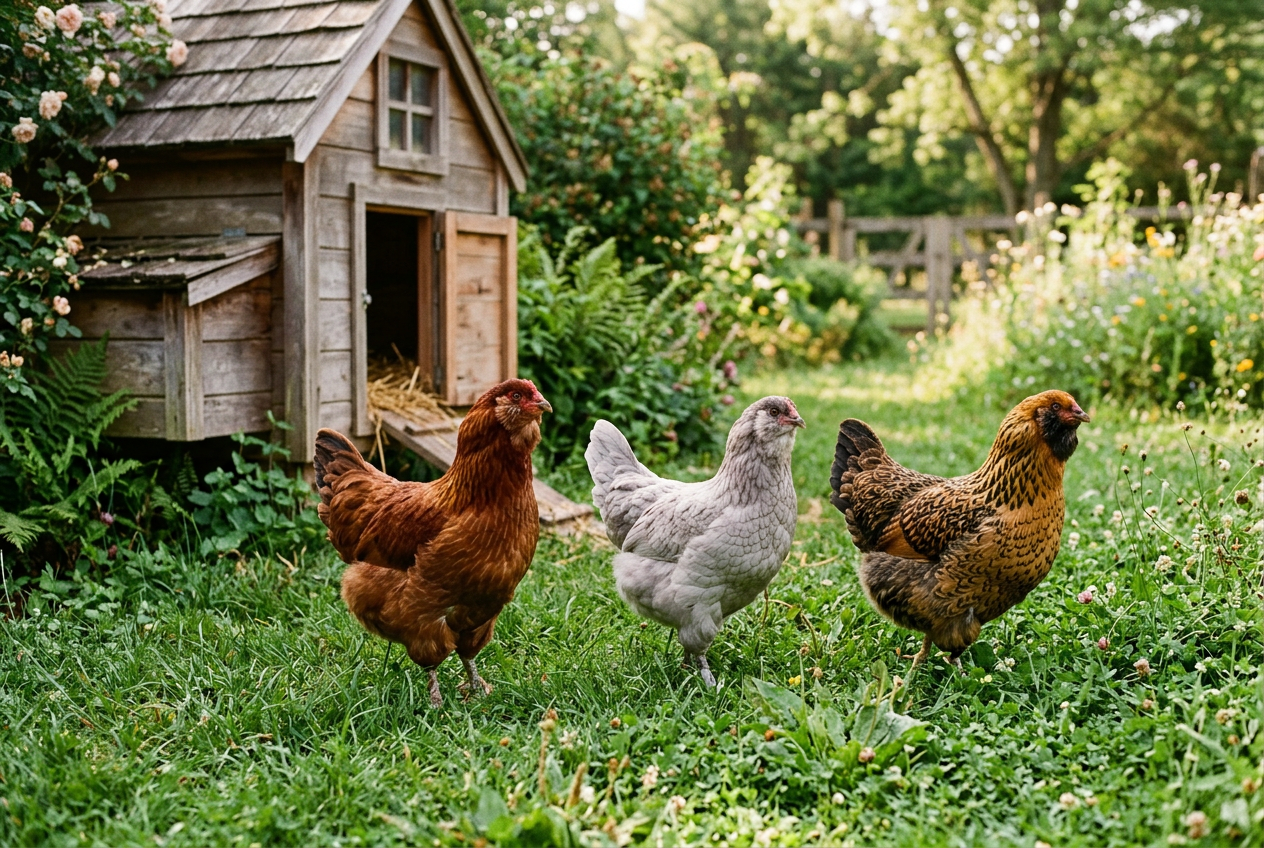
Easter Eggers are some of the most recognizable backyard chickens — not because they all look the same, but because they don't.
One Easter Egger may be reddish-brown with a beard and slate-colored legs. Another may be gray, black, gold, or patterned. Some have pea combs. Some don't. Some have muffs around the face. Others look almost nothing like the bird standing beside them.
Then the eggs begin appearing: blue, green, olive, and sometimes light brown or pinkish-tinted.
That unpredictability is part of the appeal, but it also creates a lot of confusion about what an Easter Egger actually is.
Easter Egger Quick Facts
| Trait | Easter Egger |
|---|---|
| Breed? | No — nonstandard colored-egg chicken type |
| APA recognized? | No |
| Primary appeal | Colorful eggs and varied appearance |
| Egg colors | Blue, green, olive, light brown or pinkish/tinted depending on genetics |
| Egg size | Commonly medium to large in production strains |
| Egg production | Often good to excellent; highly line-dependent |
| Adult size | Variable; many standard-size hatchery lines are medium-sized |
| Temperament | Variable; many lines are active and manageable |
| Broodiness | Variable |
| Appearance | Highly variable |
| Common traits | Muffs, beard and pea comb may occur, but aren't guaranteed |
| Best for | Colorful egg baskets, family flocks, beginners, mixed flocks |
| Biggest thing to understand | An Easter Egger is not the same as an Ameraucana |
The variability isn't a flaw. It's the defining feature.
What Is an Easter Egger Chicken?
This is the most important part of the entire guide: Easter Egger is not a recognized breed.
The Ameraucana Breeders Club defines an Easter Egger as a chicken that possesses the blue-egg gene but does not meet the established breed standard for an Ameraucana or another standardized blue-egg breed.
Because there is no Easter Egger Standard of Perfection, there is also no official requirement for body weight, feather color, leg color, comb type, beard or muffs, temperament, or annual egg production.
That explains why researching Easter Eggers can feel confusing. Two reputable hatcheries can sell birds labeled Easter Egger that look noticeably different as adults — and neither bird necessarily has to be wrong. They're different genetic lines sold under the same general category.
Easter Egger vs. Ameraucana vs. Araucana
These three names are frequently used as though they mean the same thing. They don't.
Ameraucana
The Ameraucana is a recognized standardized breed. Large-fowl Ameraucanas were admitted to the American Poultry Association Standard in 1984. Recognized birds have specific requirements for characteristics including body shape, pea comb, beard and muffs, leg color, and accepted feather varieties. They are specifically bred for blue eggs.
Araucana
The Araucana is another distinct standardized breed. In the American standard, Araucanas are known for ear tufts, rumplessness, and blue eggs — traits that distinguish them from Ameraucanas.
Easter Egger
An Easter Egger does not have to conform to either breed standard. It may inherit traits associated with blue-egg breeds, such as a beard, muffs, a pea comb, or colored legs — but none of those traits alone makes the chicken an Ameraucana. The blue egg doesn't either.
That distinction matters particularly when you're buying chicks advertised as "Ameraucana," "Americana," or "Araucana/Americana." If you specifically want a standardized Ameraucana, buy from someone breeding birds to the actual breed standard. If you simply want fun backyard chickens that may lay colorful eggs, Easter Eggers can be excellent.
What Do Easter Egger Chickens Look Like?
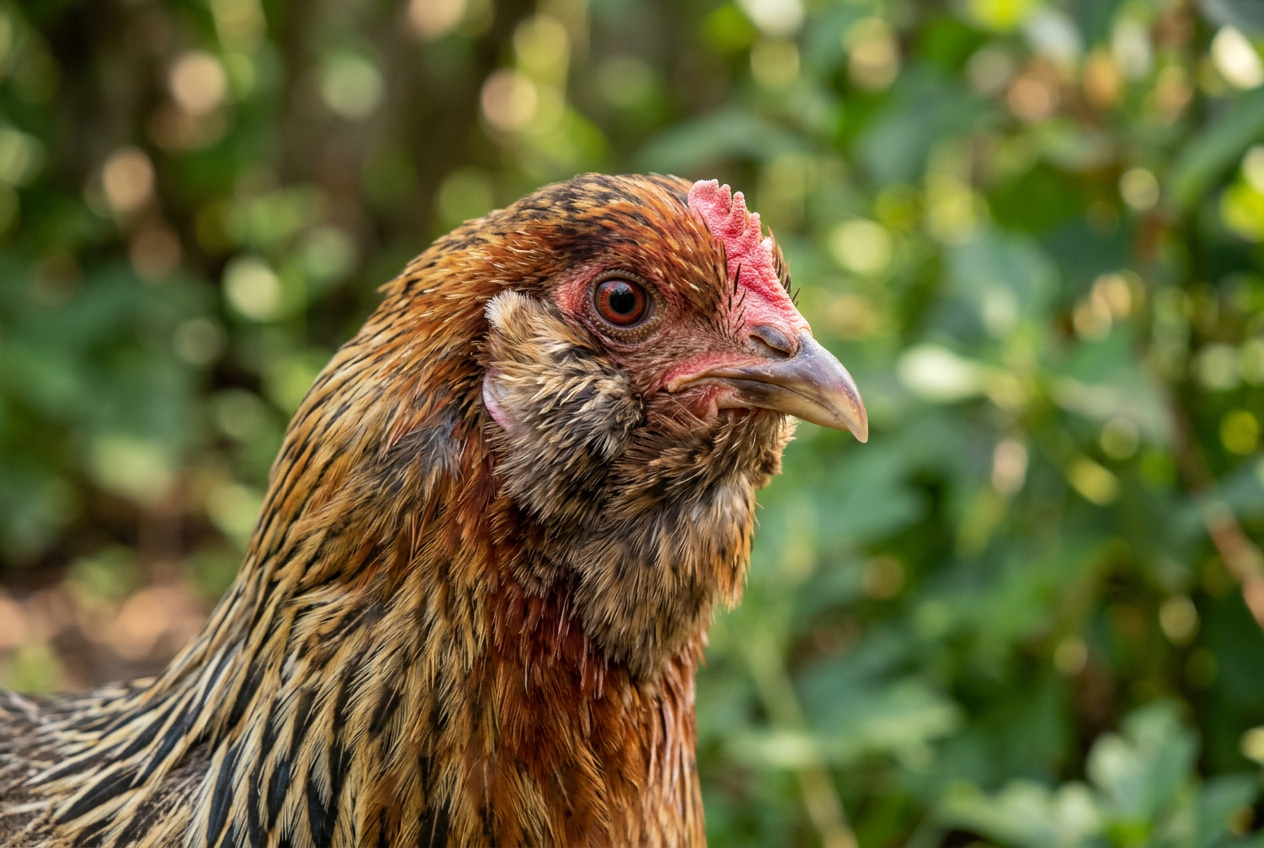
There is no one Easter Egger appearance — and that's one of the things that makes them interesting.
You may see birds with beards and muffs or clean faces; pea combs or single combs; slate, greenish, or yellowish legs; and brown, gray, black, buff, or patterned plumage. Sometimes chicks from the same group mature into birds that barely look related. That's expected from a nonstandard population.
How Big Do Easter Eggers Get?
There is no official Easter Egger weight. One established production line from Cackle Hatchery lists approximately 5½-pound hens and 6½-pound roosters, while other commercial lines publish somewhat different adult weights.
So I would describe most standard Easter Eggers as medium-sized chickens rather than attach one universal weight to the name. If mature size matters because of your coop or existing flock, check the specifications for the exact hatchery or breeder line you're considering.
What Color Eggs Do Easter Eggers Lay?
This is why most people buy them. Easter Eggers can produce eggs in shades including blue, blue-green, green, olive, light brown, and pinkish or tinted.
University of Kentucky specifically uses the term Easter Egger for birds carrying the blue-egg gene that do not meet the Ameraucana standard, while Small and Backyard Poultry notes that crosses involving blue-egg birds have produced Easter Eggers laying light blue, green, or pink eggs.
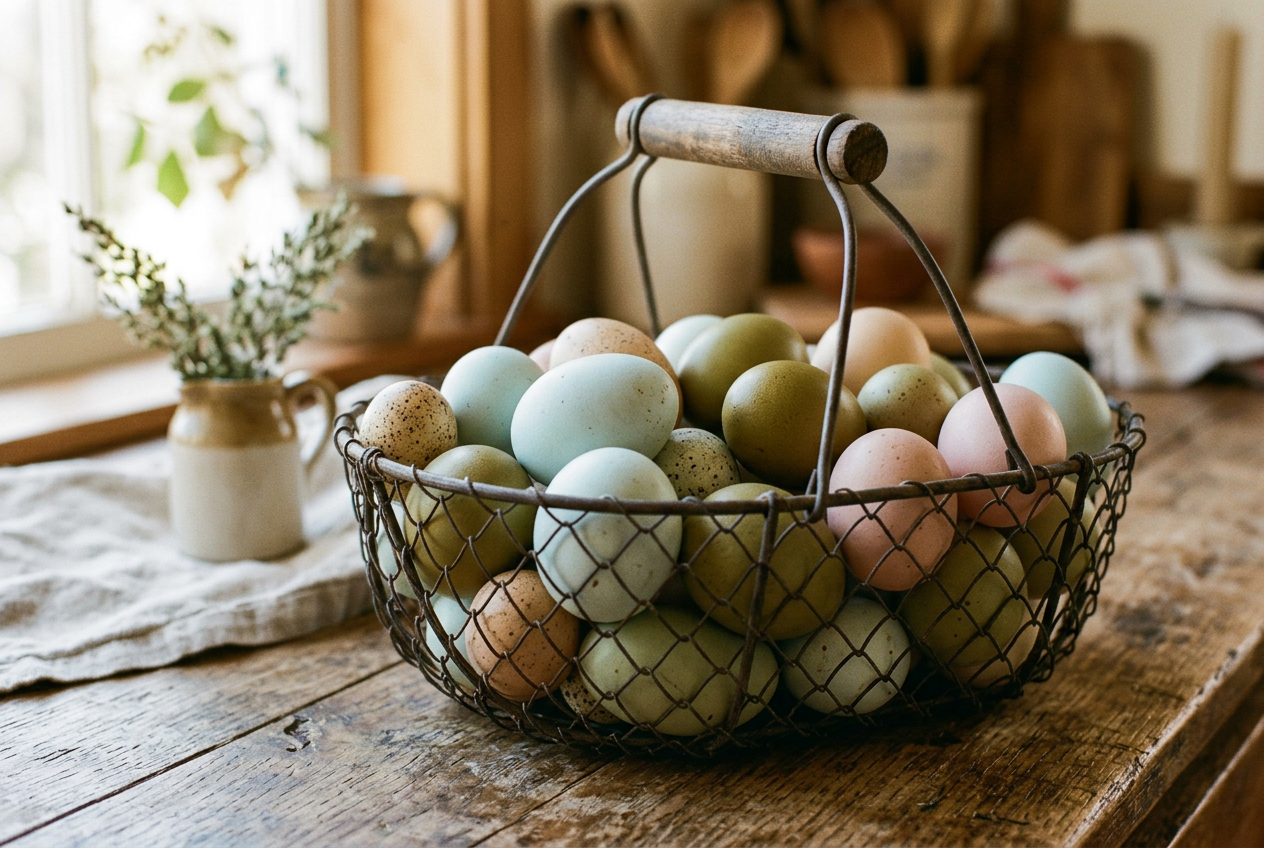
The important word is can. Buying one Easter Egger chick does not automatically guarantee one particular shell color. The line and genetics determine the result.
Does One Easter Egger Lay Different Colored Eggs?
Usually, no. This is one of the most common Easter Egger misconceptions.
A particular hen generally settles into one characteristic shell color once she begins laying. A hen laying green eggs does not normally give you blue on Monday, pink on Tuesday, and olive on Wednesday. The rainbow basket comes from keeping multiple hens that lay different colors — a distinction Cackle Hatchery makes explicitly in its Easter Egger guidance.
The exact shade can vary somewhat through a laying cycle, but the underlying shell-color genetics don't rotate randomly every morning.
Why Do Easter Eggers Lay Blue and Green Eggs?
This is where the genetics get interesting. Blue eggshell is associated with the dominant oocyan trait. Peer-reviewed genetic research identified an insertion associated with increased expression of the SLCO1B3 gene in the shell gland of blue-egg chickens, and research also shows that biliverdin is a major pigment associated with blue shells.
The easiest practical way to think about egg color:
- Blue egg: blue pigment is incorporated throughout the shell.
- Brown egg: brown pigment is deposited primarily onto the shell surface.
- Green egg: a genetically blue shell receives a brownish surface coating.
The Ameraucana Alliance describes green eggs essentially as blue eggs with brown tinting layered over them. That's why colored-egg crosses can create such a wide range of greens: a lighter brown overlay might produce a pale green, while a heavier overlay can push the appearance toward olive.
Are Blue or Green Eggs Healthier?
No convincing evidence shows that the shell color itself makes an egg more nutritious. The Ameraucana Alliance specifically addresses the old claim that blue eggs contain less cholesterol and notes that the claim was disproven. Penn State likewise states that eggshell color does not determine nutritional value or taste.
The shell is prettier and the chicken may be more interesting — but the color isn't a nutritional upgrade.
Easter Egger Egg Production
Because Easter Eggers aren't a breed, this section needs more caution than it would for a standardized chicken.
UF/IFAS rates Easter Egger laying ability as excellent in its backyard-chicken breed comparison. Commercial production lines commonly estimate around 200–280 eggs per year with medium-to-large eggs — Cackle Hatchery publishes that range for its own production strain. That works out roughly to 4–5 eggs per week during stronger production periods.
But don't turn that into "every Easter Egger lays 250 eggs annually." There is too much genetic variation for that claim. A productive hatchery line selected for laying is very different from a random backyard cross that happens to carry colored-egg genetics.
Are Easter Eggers Good Layers?
They can be very good layers. If I were buying Easter Eggers specifically because I wanted colored eggs plus useful production, I would choose birds from a hatchery or breeder that publishes information about the performance of its line. That's more useful than trying to apply one universal Easter Egger production number. For how laying rhythm works across the year, see How Often Do Chickens Lay Eggs?
What Size Eggs Do Easter Eggers Lay?
Many standard-size commercial Easter Egger lines produce medium to large eggs. Cackle lists medium-to-large eggs for its production line, while other hatchery strains advertise large eggs. Again, line matters — and Easter Egger bantams also exist, producing much smaller eggs.
When Do Easter Eggers Start Laying?
General small-flock guidance places the beginning of egg production around 20–22 weeks under good conditions, with plenty of variation between chickens. For a standard Easter Egger, a practical expectation is roughly 5–6 months, with some birds earlier or later.
Season matters too. A pullet reaching maturity as winter daylight declines may take longer to produce her first egg. Watch the chicken rather than the calendar: signs of approaching lay include comb development, nesting-box interest, squatting, pelvic changes, and increased vocalization.
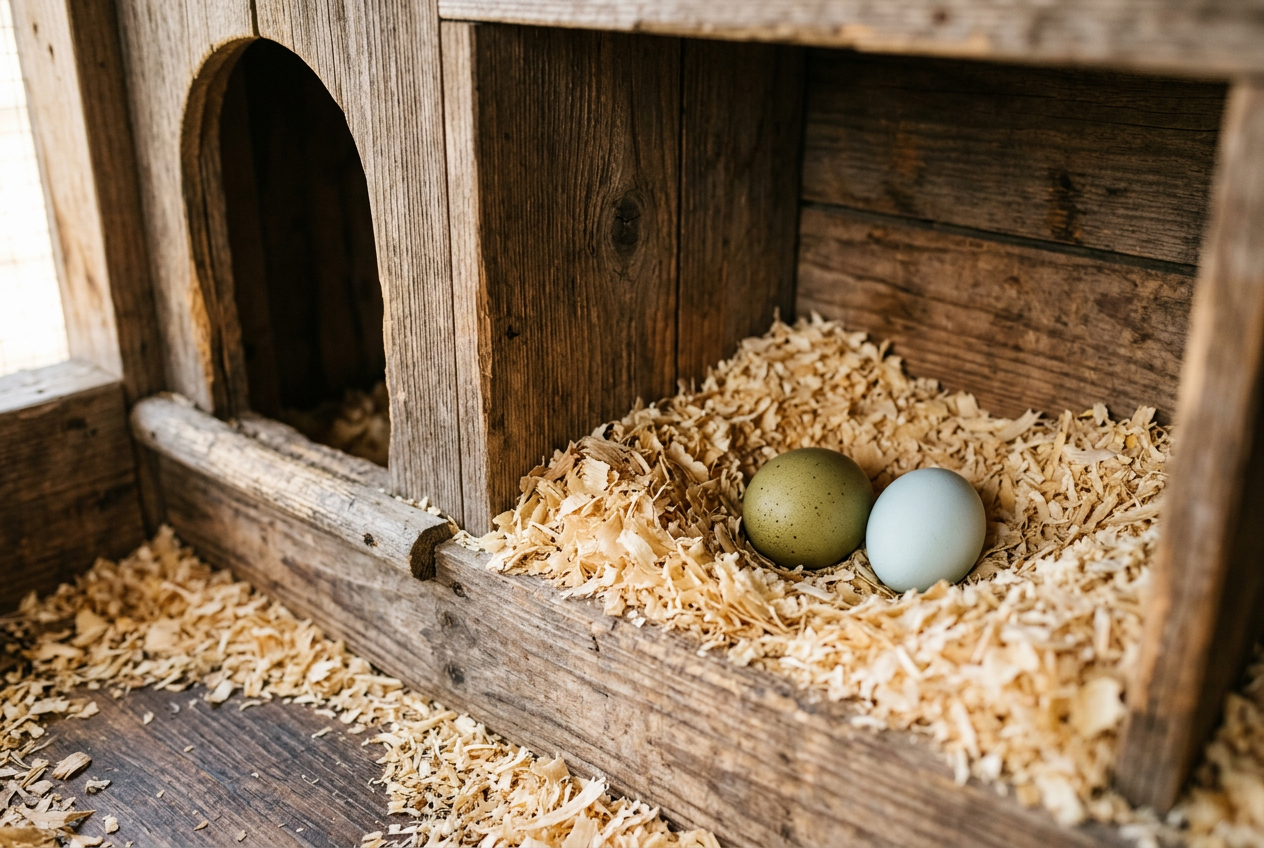
And then comes the fun part: finding out what color she lays. For the complete timeline, see When Do Chickens Start Laying Eggs? Age, Signs & What to Expect.
Easter Egger Temperament & Flock Compatibility
This is another category where I would avoid treating Easter Eggers like a standardized breed. There is no official Easter Egger temperament — their ancestry varies too much.
Commercial lines are often described as active, curious, manageable, and backyard-friendly. Cackle describes its line as active, while Hoover's describes its Easter Egger line as both docile and active. That's probably the right way to think about them: many are engaging backyard chickens without being unusually aggressive or unusually sedentary. But individual personality and genetic line matter more than they would in a tightly standardized breed.
Are Easter Eggers Friendly?
Many are. But rather than "Easter Eggers are always friendly," a better expectation is: many established backyard lines are selected for manageable temperament, but individuals vary. A hen that follows you around the yard and another that prefers keeping six feet between you can both legitimately be Easter Eggers.
Are Easter Eggers Good With Children?
They can be excellent family flock birds. I'd evaluate individual temperament, handling history, and rooster behavior rather than relying solely on the Easter Egger label. Children should still learn to approach calmly, avoid chasing, support the chicken when holding it, and wash their hands afterward.
Can Easter Eggers Live With Other Breeds?
Yes. Their medium size and commonly moderate temperament make many Easter Eggers easy to incorporate into a mixed backyard flock. As always, watch feeder access, roosting conflicts, repeated chasing, feather pulling, and lower-ranking birds hiding. Compatibility is ultimately about the birds you actually own.
Broodiness & Mothering Ability
Broodiness in Easter Eggers is variable — exactly what we should expect from a nonstandard chicken type. One hatchery line may contain hens that rarely sit; another may produce birds that readily go broody. Cackle currently describes broodiness as variable in its standard Easter Egger line.
So I would not buy an Easter Egger specifically because you need a guaranteed broody hen. If natural hatching is your priority, a breed with a stronger broodiness reputation — such as a Silkie — makes more sense. If your Easter Egger does go broody, she may still make a perfectly capable mother.
Easter Egger Lifespan & Long-Term Production
Because Easter Eggers aren't standardized, there isn't a meaningful breed-specific lifespan number. General small-flock guidance is much more defensible: Oklahoma State says 6–8 years is a reasonable lifespan for chickens kept under good small-flock conditions.
That makes roughly 6–8+ years a useful planning horizon without pretending the label itself determines longevity. Factors that matter more include genetics, predator exposure, nutrition, disease, housing, accidents, and veterinary care.
Egg Production Changes With Age
Like other laying hens, Easter Eggers generally produce most heavily when younger. University of Minnesota notes that laying hens are typically most productive during their first two years and then gradually decline with age. So an Easter Egger may remain part of your flock for years after peak production has passed — worth considering before building a flock exclusively around egg numbers.
Housing, Roosts & Space Requirements
Easter Eggers don't require a special colored-egg coop. Give them good normal chicken housing: predator protection, ventilation, dry bedding, roosts, nest boxes, and sufficient floor and run space.
Coop Space
For Roosted's backyard planning system, I would use about 4 square feet of usable coop floor per standard-size Easter Egger. That's deliberately a comfortable planning target rather than the smallest number you'll find published. Because individual lines vary in size, confirm the mature body size of the birds you're buying.
Run Space
Our standard planning target remains about 10 square feet of outdoor run per standard bird — and more is welcome. Easter Eggers can be active birds, and extra outdoor room gives them space to forage, scratch, dust bathe, avoid flockmates, and explore. Use the full calculator: How Much Space Do Chickens Need? Coop & Run Size Chart + Calculator.
Roosts
Most standard Easter Eggers use normal chicken roosts without difficulty. Unlike Silkies, they generally don't have a breed-level flight limitation, and some lines can be relatively agile. Use stable wooden roosts with sufficient perch length, sensible height, and easy access — and make sure the roost remains the most attractive sleeping location.
Feeding Easter Egger Chickens
Easter Eggers don't need special feed because they lay colored eggs. Feed them according to age and production stage rather than shell color. Oklahoma State recommends commercial balanced poultry rations appropriate to the bird's life stage and cautions against diluting those diets excessively with scratch, corn, or table scraps.
| Life Stage | What to Feed |
|---|---|
| Chicks | Complete chick starter |
| Growing pullets | Appropriate grower ration |
| Laying hens | Complete layer ration or properly managed flock ration |
| All birds | Constant fresh water |
Colored eggs do not require colored supplements, and no feed additive turns a brown-egg hen into a blue-egg layer. Egg color is genetic.
Cold Weather & Summer Heat
Because Easter Eggers vary genetically, I would avoid declaring the entire category "cold hardy" or "heat hardy" without qualification. An Easter Egger with a small pea comb may have different cold-weather considerations from one with a larger single comb, and body size and feathering vary as well. Your best approach is good general poultry management.
In cold weather, provide dry bedding, fresh unfrozen water, ventilation without direct drafts, dry shelter, and appropriate roosting space. For more on balancing airflow, see Chicken Coop Ventilation.
In hot weather, provide shade, abundant fresh water, ventilation, airflow, and adequate outdoor room. Watch the individual bird rather than assuming the label tells you how she'll handle every climate.
Free-Ranging & Foraging
Many Easter Eggers make active backyard birds. Commercial lines are frequently described as active, and their generally moderate body size can make them capable foragers. That makes them enjoyable in larger runs, supervised free-range setups, and backyard garden areas where chickens are allowed.
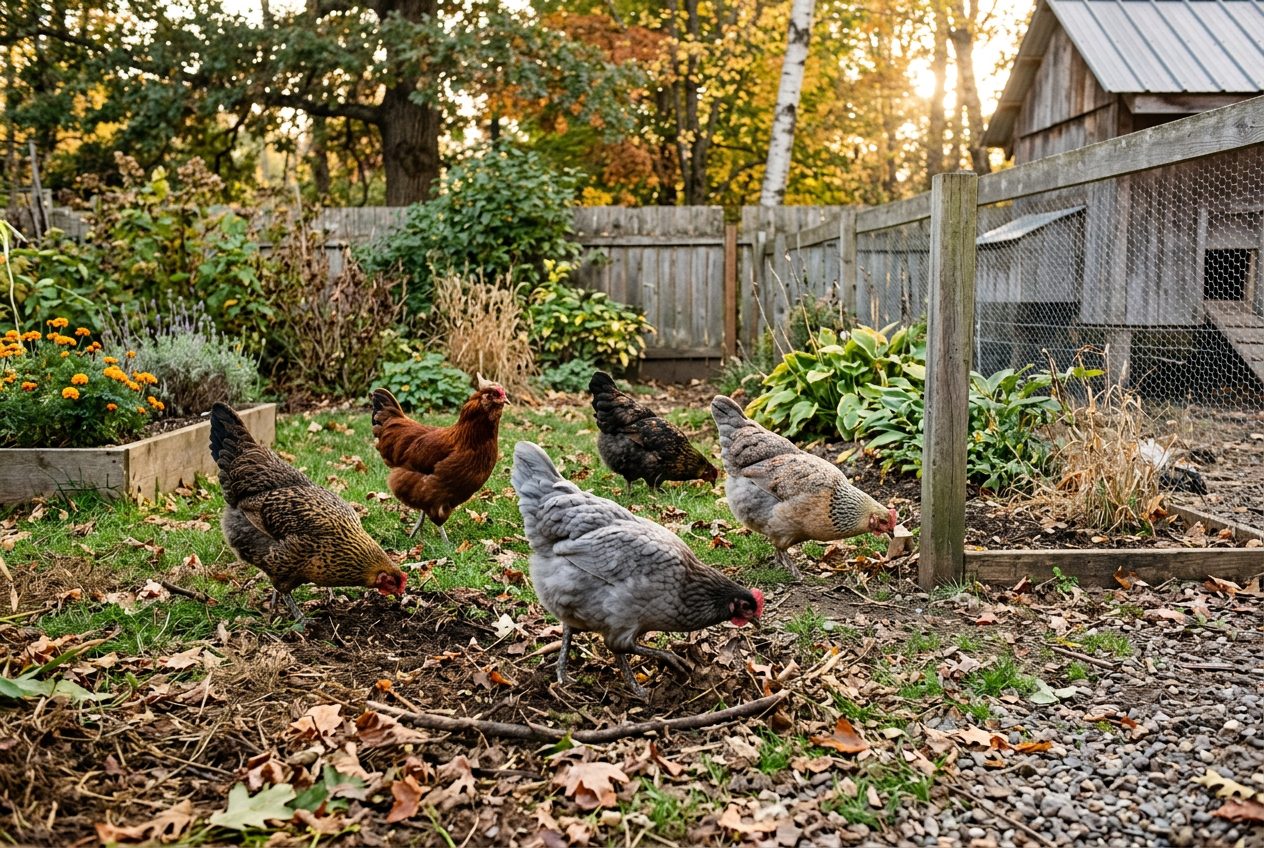
But free-ranging also increases predator exposure. An alert chicken still isn't predator-proof. If you free-range, provide a secure nighttime coop and think carefully about your local predator pressure.
Easter Egger vs. Similar Chickens
| Characteristic | Easter Egger | Ameraucana | Araucana | Olive Egger |
|---|---|---|---|---|
| Standardized breed? | No | Yes | Yes | No |
| Main appeal | Varied colorful eggs | True breed + blue eggs | Distinctive true breed + blue eggs | Olive-colored eggs |
| Egg color | Blue, green, olive, tinted/brown depending on line | Blue | Blue | Olive/green |
| Appearance | Highly variable | Standardized traits | Standardized traits | Variable |
| Muffs/beard | Common but not required | Required under standard | No; has ear tufts instead | Depends on cross |
| Tail | Usually present | Present | Rumpless in American standard | Variable |
| Production | Often good in hatchery lines | Moderate/general-purpose | Variable | Depends heavily on cross |
| Best for | Backyard color + variety | Keepers wanting a true blue-egg breed | Breed enthusiasts | Dark olive egg goals |
Easter Egger vs. Ameraucana
This is the comparison most buyers need to understand. Choose an Easter Egger if you want a colorful egg basket, varied appearance, and backyard utility with no concern about breed standard. Choose an Ameraucana if you want a recognized breed, predictable breed characteristics, birds that conform to an exhibition and breeding standard, and true blue eggs.
The Ameraucana Breeders Club's definition makes the distinction straightforward: Easter Eggers possess blue-egg genetics but do not meet the standardized Ameraucana description.
Easter Egger vs. Araucana
The Araucana is another standardized blue-egg breed. American Araucanas are distinctive because of their ear tufts and rumplessness — and an Easter Egger may have neither. Buying a colored-egg layer with a beard and a tail does not automatically mean you've purchased an Araucana.
Easter Egger vs. Olive Egger
This distinction is more about breeding goal. An Easter Egger may produce green or occasionally olive-toned eggs depending on genetics. An Olive Egger is specifically created to target olive-colored eggs by combining blue-shell genetics with genetics for substantial brown shell pigment. Neither is one standardized APA breed — they're breeding categories built around egg-color outcomes.
Are Easter Eggers Good for Beginners?
Yes. I think Easter Eggers make a lot of sense for a first backyard flock — as long as the owner understands the variability. UF/IFAS rates Easter Eggers as excellent layers for backyard egg production, and the category is widely available through commercial hatcheries.
They're especially appealing because you can combine good production, interesting personalities, varied plumage, and colorful eggs without requiring specialized care.
Easter Egger Pros & Cons
| Pros | Cons |
|---|---|
| Colorful eggs | Exact egg color isn't always predictable |
| Often productive layers | Not a standardized breed |
| Many attractive feather patterns | Appearance varies widely |
| Commonly available | Temperament varies by line |
| Often good mixed-flock birds | Broodiness is unpredictable |
| Normal chicken care requirements | Some sellers use confusing breed labels |
| Great egg-basket variety | One hen doesn't lay every color |
| Good beginner potential | Hard to generalize weight or performance |
Easter Eggers are a good fit if you want colorful eggs, a visually varied flock, useful backyard production, medium-sized chickens, a beginner-friendly flock, and personality and surprise over breed uniformity.
Consider another chicken if you want guaranteed exhibition-standard traits, a guaranteed pure blue egg, a specific adult appearance, predictable breeding results, or a flock that breeds true generation after generation. For a classic standardized alternative, see Buff Orpington Chickens.
Recommended Setup for Four Easter Eggers
For four standard-size Easter Eggers, I'd use the same comfortable backyard infrastructure we recommend for most medium standard hens.
| Area | What I'd Provide |
|---|---|
| Coop | Dry, secure and well ventilated |
| Indoor space | Around 16 sq ft using Roosted's planning target |
| Run | Around 40 sq ft or more |
| Roosts | Stable wooden perches with enough room for everyone |
| Nest boxes | 1–2 comfortable boxes is plenty for four hens |
| Feeder | Enough access to minimize competition |
| Water | Constant clean fresh water |
| Shade | Reliable summer shade |
| Ground | Dry, well-drained surface |
| Dust bath | Dry soil/sand area |
| Predator protection | Secure coop and run |
Nothing about blue or green eggs requires special housing. The chickens need good chicken care — the genetics take care of the shell color. Not sure four is the right number? See How Many Chickens Should I Get?
Easter Egger Care Checklist
Daily: provide complete feed, provide clean fresh water, collect eggs, check flock behavior, and confirm predator security.
Regularly: check bedding moisture, clean feeders and waterers, monitor body condition, check feet and legs, watch mixed-flock dynamics, keep nest boxes clean, and inspect roosts and the enclosure.
During summer: provide shade, maintain plenty of water, maximize safe airflow, and watch for panting or weakness.
During winter: keep bedding dry, maintain ventilation, prevent drinking water from freezing, watch larger combs for cold injury, and keep direct drafts off the roost.
The Bottom Line: Are Easter Egger Chickens Right for You?
Easter Eggers are unusual because their biggest strength comes from not being standardized. There isn't one correct Easter Egger color, one official body shape, one exact weight, or even one guaranteed egg color.
What holds the category together is colored-egg genetics — particularly the blue-egg gene — and the fact that these chickens don't meet a standardized Ameraucana or Araucana breed description. That unpredictability is exactly why many backyard keepers love them. You may get a bearded brown hen laying green eggs, a gray hen laying pale blue, and a reddish hen laying tinted eggs — and all three can be Easter Eggers.
If you're interested in exhibition poultry or predictable breeding, I'd choose a standardized breed such as an Ameraucana. But if your priorities are colorful eggs, useful production, interesting chickens, and normal backyard care, it's easy to understand the appeal of Easter Eggers.
Easter Egger Chicken FAQ
Are Easter Eggers a real breed?
No. Easter Egger is a nonstandard term for chickens carrying blue-egg genetics that do not meet a recognized Ameraucana or Araucana breed description.
What color eggs do Easter Eggers lay?
Depending on their genetics, Easter Eggers may produce blue, green, olive, light-brown or pinkish/tinted eggs.
Does one Easter Egger lay multiple egg colors?
Generally no. Each individual hen typically produces one characteristic shell color, although the exact shade may vary somewhat through the laying cycle. A rainbow basket comes from several hens laying different colors.
How many eggs do Easter Eggers lay?
Productive hatchery lines may be estimated around 200–280 eggs per year, and UF/IFAS rates Easter Eggers as excellent backyard layers. Because Easter Egger isn't a standardized breed, production varies substantially by line.
When do Easter Eggers start laying?
Many begin around 5–6 months, although individuals can start earlier or later. General Extension guidance places first production around 20–22 weeks under ideal conditions.
Are Easter Eggers friendly?
Many commercial lines are described as active, manageable backyard chickens, but temperament is not standardized and can vary with ancestry and the individual bird.
What is the difference between an Easter Egger and an Ameraucana?
The Ameraucana is a recognized standardized breed with defined physical characteristics and blue eggs. An Easter Egger carries blue-egg genetics but doesn't meet that breed standard.
Are Easter Eggers good for beginners?
Yes. They're generally straightforward backyard chickens, and UF/IFAS rates them as excellent egg layers. Their biggest beginner challenge is simply understanding that appearance and egg color are less predictable than in a standardized breed.
Want to estimate what your flock could produce? Try the Chicken Egg Production Calculator →
Raising an Easter Egger pullet? Estimate when her first colored egg may arrive →
Not sure whether this breed is right for you? Try the Chicken Breed Finder →
Keep Reading
Comparing a standardized backyard breed? Buff Orpington Chickens: Egg Production, Temperament & Care
Want something smaller and extremely broody? Silkie Chickens: Eggs, Temperament, Lifespan & Complete Care Guide
Deciding how many hens to start with? How Many Chickens Should I Get? A Practical Flock Size Guide for Beginners
Planning your coop and run? How Much Space Do Chickens Need? Coop & Run Size Chart + Calculator
Wondering when the colored eggs will start? When Do Chickens Start Laying Eggs? Age, Signs & What to Expect
Want a hardy, productive brown-egg layer? Rhode Island Red Chickens: Eggs, Temperament & Complete Care Guide
Sources & Further Reading
- Ameraucana Breeders Club — Frequently Asked Questions
- Ameraucana Alliance — Ameraucana Chickens
- University of Kentucky Cooperative Extension — Selecting the Right Chicken Breed
- Small and Backyard Poultry — Raising Chickens for Egg Production
- UF/IFAS Extension — Raising Backyard Chickens for Eggs
- PLOS Genetics — An EAV-HP Insertion in the 5′ Flanking Region of SLCO1B3 Causes Blue Eggshell in the Chicken
- Cackle Hatchery — Easter Egger Chicken