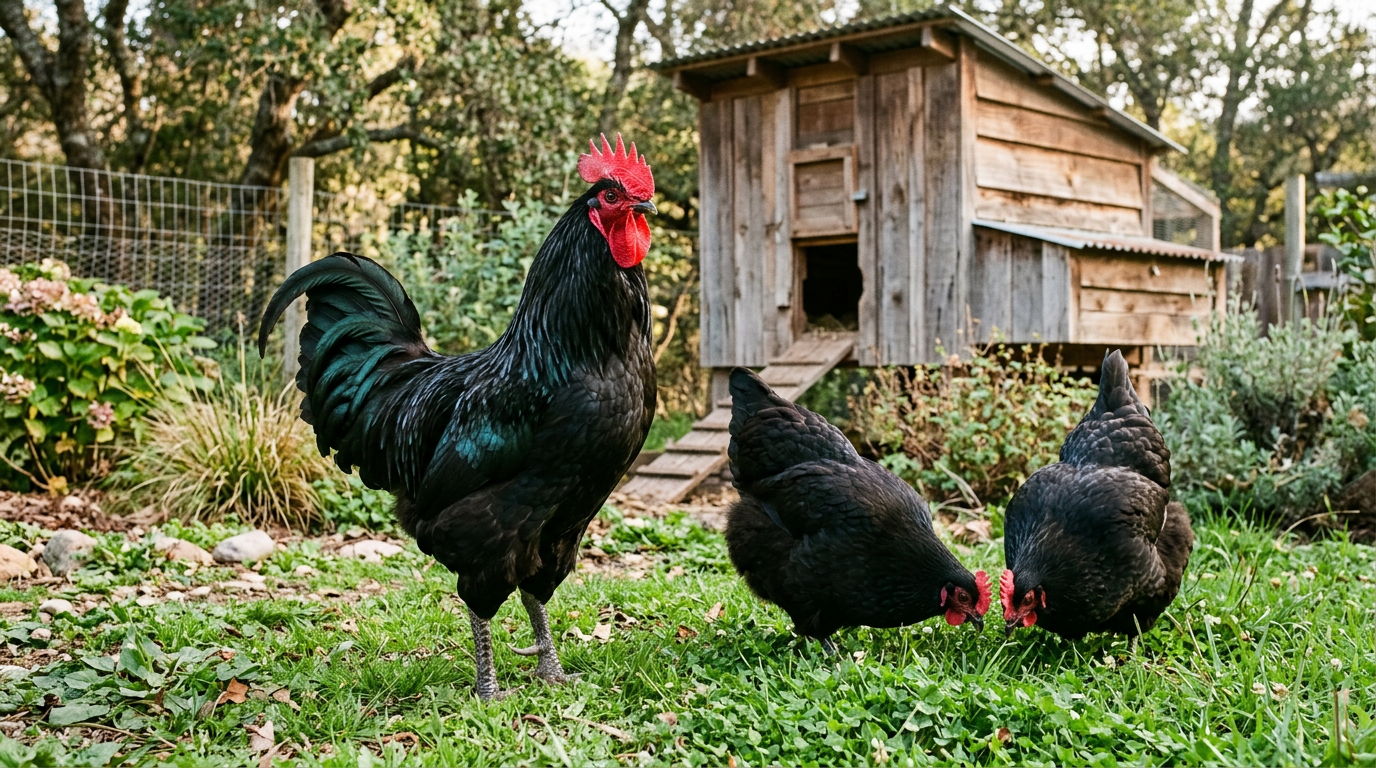
Some chickens are big.
And then there are Jersey Giants.
A fully grown Jersey Giant rooster can weigh 13 to 15 pounds, with a tall, powerful frame that makes ordinary backyard chickens look surprisingly small. Even the hens are enormous, often weighing around 10 to 11 pounds.
But what's especially interesting about Jersey Giants isn't just how big they get.
It's how much their size changes the way you need to care for them.
A nesting box that comfortably fits a Rhode Island Red might be cramped for a Jersey Giant. A high roost that works for a lightweight chicken can become a landing hazard for a much heavier bird. And feeding a flock of slow-growing giants is a different commitment from feeding ordinary backyard layers.
Fortunately, Jersey Giants have another characteristic working in their favor: they're generally calm, friendly chickens.
They also produce large brown eggs, enjoy foraging, and have a fascinating history as an American breed developed to rival the turkey as a table bird.
So how big do Jersey Giant chickens actually get, how much space do they need, and are they worth raising in a backyard flock?
Here's what to know before bringing home these gentle giants.
Jersey Giant Chicken Quick Facts
| Trait | Jersey Giant Chicken |
|---|---|
| Origin | New Jersey, United States |
| Developed | Late 1800s |
| Breed type | Traditional American dual-purpose breed |
| APA class | American |
| Standard rooster weight | 13 lb |
| Standard hen weight | 10 lb |
| Mature weight reported by The Livestock Conservancy | Roosters 13–15 lb; hens 10–11 lb |
| Egg color | Brown, ranging from light cream-brown to darker brown |
| Egg size | Large to extra-large |
| Annual egg production | Approximately 150–200 |
| Weekly eggs | Around 3–4 on average, with seasonal variation |
| First laying age | Variable; often later than common production breeds |
| Temperament | Calm, docile, generally friendly |
| Broodiness | Variable |
| Cold hardiness | Very good |
| Heat tolerance | Requires careful summer management |
| Foraging | Good |
| Flight ability | Generally limited compared with lightweight breeds |
| Comb type | Single |
| Feathered feet | No |
| Recognized varieties | Black, White, Blue |
| Beginner-friendly | Yes, if housing and feed needs are accommodated |
| Conservation status | Recovering |
| Main consideration | Exceptional body size and slow maturity |
The important distinction is that Jersey Giants aren't simply oversized egg layers.
Their large frames and traditional meat-bird development influence nearly every part of their care.
How Big Do Jersey Giant Chickens Get?
A standard Jersey Giant rooster weighs approximately 13 pounds, while a standard hen weighs around 10 pounds.
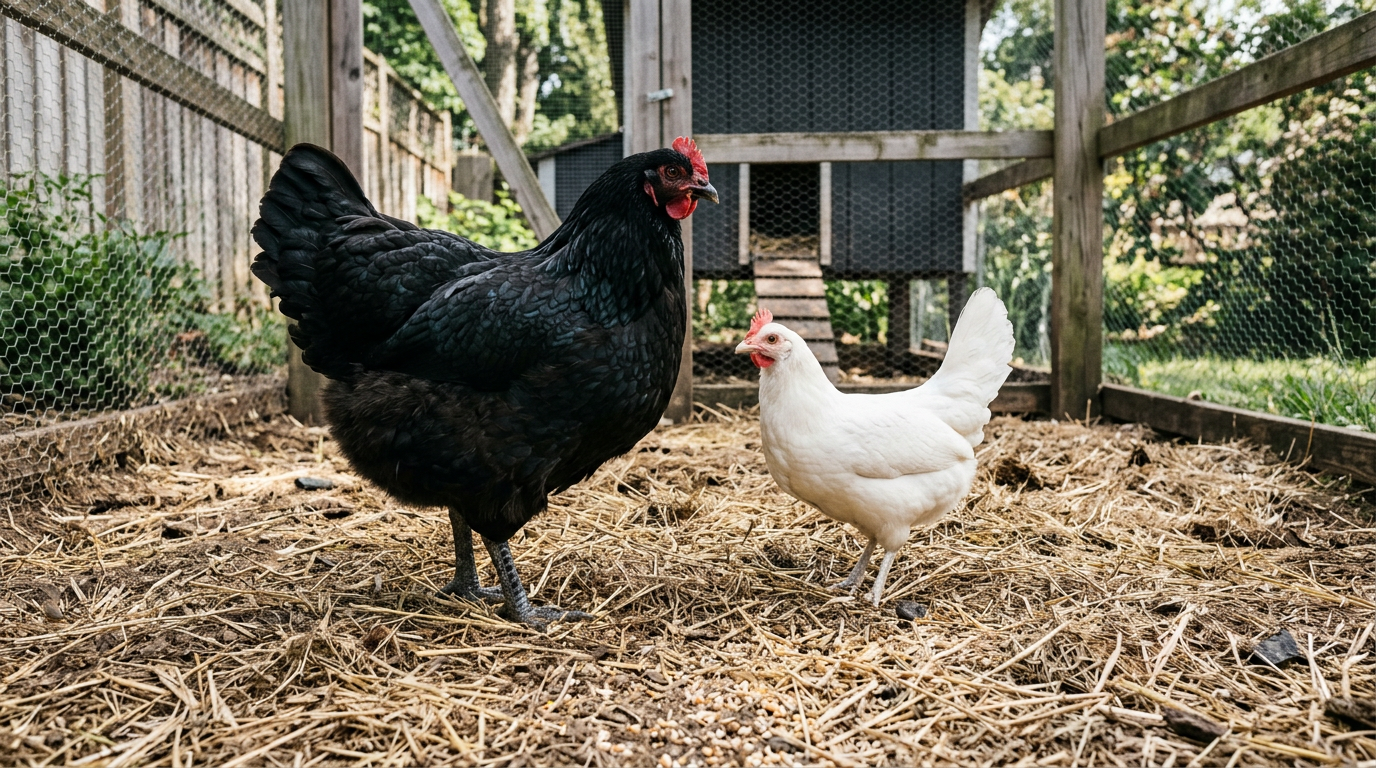
Those are the established breed-standard weights published by the University of Wisconsin Extension and Oklahoma State University.
The Livestock Conservancy reports that mature birds can be somewhat heavier, with roosters commonly reaching 13–15 pounds and hens around 10–11 pounds.
That's a substantial amount of chicken.
For comparison, a standard Barred Plymouth Rock hen weighs approximately 7.5 pounds, while a standard Leghorn hen weighs only about 4.5 pounds.
Jersey Giant Size Chart
| Bird | Standard Weight |
|---|---|
| Adult rooster | 13 lb |
| Adult hen | 10 lb |
| Cockerel | 11 lb |
| Pullet | 8 lb |
These are standardized weights rather than guaranteed weights for every individual bird.
Some breeding lines may grow larger or smaller.
Jersey Giant vs. Other Chicken Breeds
| Breed | Standard Hen Weight | Standard Rooster Weight |
|---|---|---|
| Leghorn | 4.5 lb | 6 lb |
| Rhode Island Red | 6.5 lb | 8.5 lb |
| Barred Plymouth Rock | 7.5 lb | 9.5 lb |
| Buff Orpington | 8 lb | 10 lb |
| Brahma | Around 9.5 lb | Around 12 lb |
| Jersey Giant | 10 lb | 13 lb |
These are representative standard large-fowl weights. Individual birds and varieties may differ.
A Jersey Giant hen can weigh more than a rooster from several other common breeds.
That's the kind of difference worth thinking about when you're building nesting boxes, selecting roosts, or choosing a coop.
How Tall Are Jersey Giant Chickens?
The Livestock Conservancy describes mature males standing approximately 22–26 inches tall, with females around 16–20 inches.
These are descriptive adult-size ranges rather than a standardized measurement every bird will reach.
They help explain why Jersey Giants look so imposing.
Their height comes from a combination of substantial body size, long legs, and an upright overall appearance.
A large rooster standing near an ordinary laying hen can look almost like a different category of poultry.
Are Jersey Giants the Largest Chicken Breed?
Jersey Giants are among the heaviest recognized chicken breeds and are widely described as the largest breed developed in the United States.
Oklahoma State University identifies them as the largest chickens in the American class.
But "largest" can mean different things.
Some breeds, including Malays, may have impressive height without matching the same average body weight.
Other heavy breeds, such as Brahmas, can also reach considerable sizes.
For practical backyard purposes, Jersey Giants belong among the very largest chickens you're likely to encounter.
Can Jersey Giant Roosters Weigh 20 Pounds?
Exceptionally heavy individual birds have been reported, but 20 pounds is not a normal breed-standard rooster weight.
I'd be cautious about treating extreme individual examples as something you should expect from a typical hatchery chick.
Use the established 13-pound standard and the Livestock Conservancy's 13–15-pound mature range for ordinary planning.
What Do Jersey Giant Chickens Look Like?
Jersey Giants have a long, broad, deep body.
They're substantial birds with an overall shape that appears powerful without being excessively round or fluffy.
The Livestock Conservancy describes the body as having a relatively flat back, deep frame, and shorter-looking tail.
Typical physical characteristics include:
- Long, broad body
- Deep breast
- Strong legs
- Red single comb
- Red wattles
- Clean, unfeathered legs
- Yellow skin and foot soles
- Four toes
- Substantial overall body size
Unlike Brahmas and Cochins, Jersey Giants do not have feathered feet.
That makes everyday leg and foot inspection easier, particularly in muddy conditions.
Black Jersey Giant Chickens
Black Jersey Giants are the original variety.
Their feathers are predominantly black, often with a beautiful green iridescent sheen visible in sunlight.
That shiny coloring is sometimes described as beetle green.
Black Jersey Giants have dark legs with yellow soles and a striking appearance when fully mature.
White Jersey Giant Chickens
White Jersey Giants have white plumage with the same general large body type.
The white variety was recognized by the American Poultry Association in 1947.
They still lay brown eggs.
White feathers don't mean white eggs.
Blue Jersey Giant Chickens
Blue Jersey Giants have slate-blue or blue-gray feathering, often with darker feather edging.
The American Poultry Association recognized the blue variety in 2003, according to The Livestock Conservancy.
Jersey Giant Color Varieties
| Variety | Appearance | APA Recognition |
|---|---|---|
| Black | Black plumage with green iridescence | 1922 |
| White | White plumage | 1947 |
| Blue | Blue-gray plumage | 2003 |
These are recognized varieties of the same breed rather than separate breeds.
While color and breeding-line differences may affect individual characteristics, all three retain the Jersey Giant's defining large body type.
Why Were Jersey Giant Chickens Developed?
The Jersey Giant has one of the more interesting origin stories among American poultry breeds.
During the late 1800s, brothers John and Thomas Black began developing exceptionally large chickens in Burlington County, New Jersey.
Their goal was ambitious.
They wanted to produce a chicken large enough to compete with turkeys as a premium table bird.
The Livestock Conservancy identifies Black Javas, Black Langshans, and Dark Brahmas among the breeds used during development.
The result was a massive bird with a large frame and substantial meat potential.
Eventually, the breed became known as the Jersey Giant.
Why Didn't Jersey Giants Replace Turkeys?
The biggest problem was efficiency.
Jersey Giants grow a large skeletal frame before developing the body condition expected of a mature meat bird.
That requires time.
It also requires feed.
Oklahoma State University explains that Jersey Giants develop their frame first and don't produce substantial meat yield until around six months or later.
The Livestock Conservancy notes that many birds require approximately eight to nine months to develop desirable body proportions for harvest.
Modern commercial broilers grow much faster.
So although Jersey Giants can become impressive table birds, they never became the efficient commercial meat solution their original developers had hoped for.
Today, that slow maturity is one of the most important considerations for backyard owners.
How Long Do Jersey Giant Chickens Take to Grow?
Jersey Giants are slow-maturing chickens. They develop their large frames over many months, and their substantial body size takes longer to fill out than that of fast-growing commercial meat birds.
Don't expect a Jersey Giant chick to become a fully developed 13-pound rooster within a few months.
Jersey Giant Growth Timeline
| Stage | What to Expect |
|---|---|
| Newly hatched | Ordinary-looking chicks that need appropriate brooder care |
| First several months | Rapid skeletal and feather development; still far from mature body size |
| Around 6 months | Substantial frame developing, but many birds have not filled out fully |
| Around 8–9 months | Some birds reach useful traditional meat-bird body proportions |
| Later maturity | Additional development and body filling may continue, depending on line |
This is a general developmental outline, not a scientifically established month-by-month Jersey Giant weight chart.
Growth depends on genetics, nutrition, health, sex, and the breeder's selection goals.
Do Jersey Giants Grow Faster Because They're Bigger?
Not necessarily.
That's the surprising part.
A chicken that ultimately becomes much larger can take longer to reach mature body condition than a smaller, more production-focused chicken.
Jersey Giants are a good example of why final adult size and growth rate shouldn't be confused.
A large final weight doesn't mean a fast-growing bird.
Roosted Note
If you're buying Jersey Giants as chicks, don't use the size of a young pullet to decide whether your coop is large enough.
She may still have substantial growing left to do.
Design for her adult size from the beginning.
How Much Space Do Jersey Giant Chickens Need?
For Jersey Giant hens, Roosted recommends starting with approximately 5 square feet of usable indoor coop space and 12 square feet of outdoor run space per bird.
These are Roosted's large/heavy-breed comfort targets rather than scientifically established minimum space requirements.
I'd treat them as a starting point, especially because Jersey Giants are exceptionally large.
Additional space is beneficial when practical.
Jersey Giant Coop and Run Size Chart
| Jersey Giant Hens | Indoor Coop Space | Outdoor Run Space |
|---|---|---|
| 2 | 10 sq ft | 24 sq ft |
| 3 | 15 sq ft | 36 sq ft |
| 4 | 20 sq ft | 48 sq ft |
| 6 | 30 sq ft | 72 sq ft |
| 8 | 40 sq ft | 96 sq ft |
| 10 | 50 sq ft | 120 sq ft |
For six Jersey Giant hens, I'd start with around 30 square feet of usable indoor floor space and at least 72 square feet in the secure outdoor run.
That could mean a 5 × 6-foot coop and a 9 × 8-foot run.
If the birds spend nearly all their time confined rather than free-ranging, I'd build the run larger.
Use our Chicken Coop Size Calculator and choose the Large / Heavy Breed setting.
Why Do Jersey Giants Need More Space?
Their larger bodies affect how they use a coop.
Think about an ordinary doorway.
A six-pound hen might comfortably move through it, turn, and walk past another chicken.
A ten-pound Jersey Giant needs more clearance.
The same issue appears around:
- Coop entrances
- Nesting boxes
- Roosting bars
- Feeders
- Waterers
- Ramps
- Corners and narrow passages
Square footage is important, but so is how that space is arranged.
Check the Coop Door
This is something I'd pay particular attention to.
A small pop door may technically be large enough for a chicken to squeeze through without being comfortable for a Jersey Giant.
Choose an entrance that allows the mature bird to walk through naturally without forcing its body through a narrow opening.
Avoid unnecessarily high thresholds.
And if there's a ramp, make sure it's wide, stable, and provides secure footing.
Don't Trust Prefab Coop Capacity Labels
A prefabricated coop advertised for eight chickens might not be suitable for eight Jersey Giants.
The manufacturer may have based its capacity on much smaller birds.
Measure the actual usable interior.
Then use the large-breed setting in our calculator.
Our complete guide to How Much Space Chickens Need explains why advertised bird counts can be misleading.
Jersey Giant Roosting Bars: Why Height Matters
This may be the single most important housing consideration for Jersey Giants.
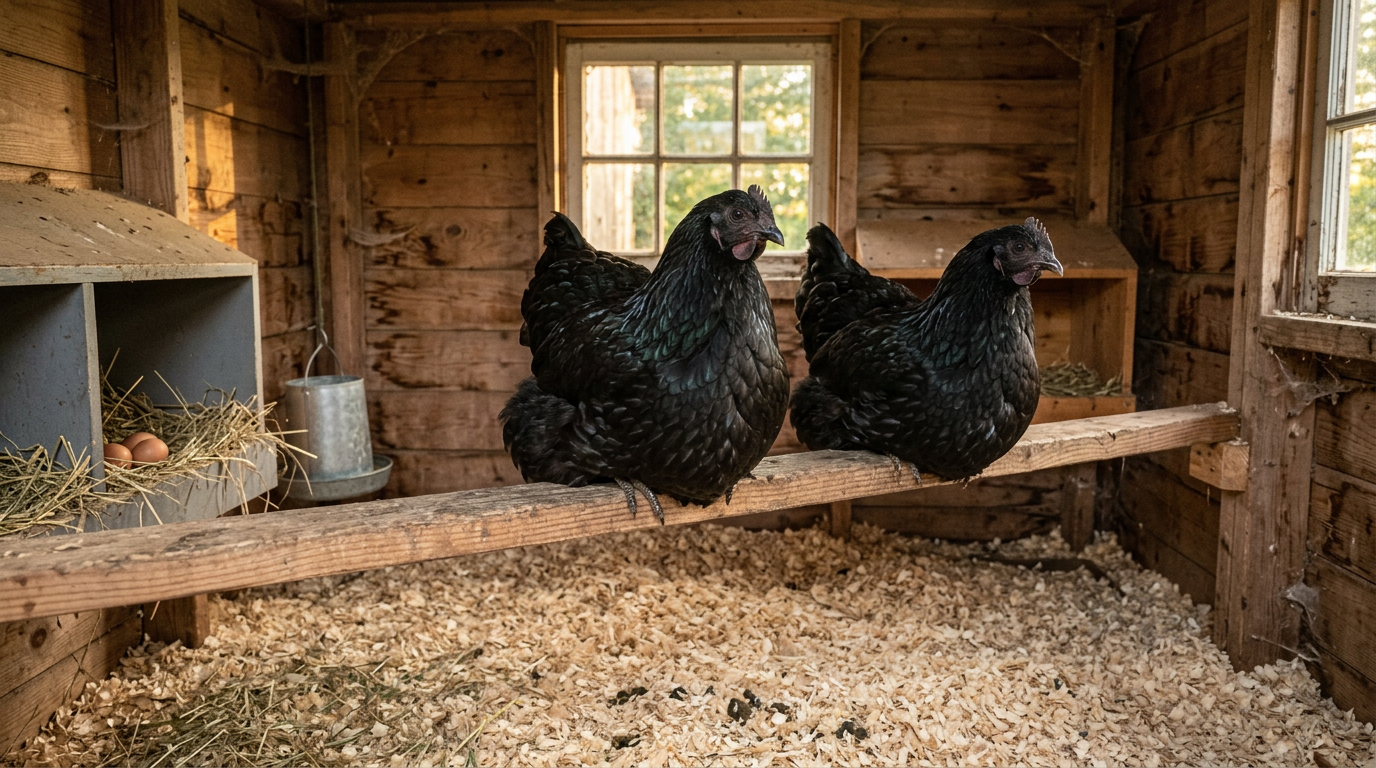
A Jersey Giant's body weight makes jumping down from a high roost more hazardous than it is for a lightweight chicken.
The Livestock Conservancy specifically recommends lower roosting bars for Jersey Giants because high landings can injure their legs and feet.
Penn State Extension also cautions against conventional high perches for heavy meat-type chickens because of leg and joint injury risk.
That doesn't mean every Jersey Giant must sleep on the floor.
It means the roosting arrangement needs to be designed around the bird.
How High Should Jersey Giant Roosts Be?
For ordinary backyard Jersey Giants, I'd favor a low, sturdy roosting setup rather than the tall roost structures often used for lighter breeds.
Something around 12–18 inches above the floor may be a reasonable initial design to evaluate for healthy adult birds, with easy access and safe landings.
That is a practical design suggestion, not a universally validated height requirement.
Some birds may benefit from even lower resting platforms or different arrangements, particularly if they are older, heavier, or have mobility problems.
The important thing is avoiding repeated hard landings.
Choose Wide, Stable Roosts
I'd look for:
- A sturdy wooden roost or resting platform
- Enough width for comfortable footing
- Rounded or smoothed edges
- Secure construction that doesn't wobble
- Room for birds to turn and reposition
- Easy access without major jumps
- Soft, well-maintained landing areas
Don't assume that a narrow perch designed for smaller chickens is automatically suitable.
Roosted's Coop Size Calculator uses approximately 10 inches of linear roost space per large bird as a baseline.
For Jersey Giants, I'd provide even more room where practical, especially if the birds crowd one another at bedtime.
Prevent Foot and Leg Injuries
The Livestock Conservancy specifically warns about injuries caused by heavy birds landing on sharp objects or hard surfaces.
A foot injury can become a serious problem, including the development of bumblefoot.
To reduce risk:
- Keep roosts low and accessible.
- Avoid hard landings from unnecessary height.
- Remove sharp debris from landing areas.
- Keep bedding dry and appropriately cushioned.
- Inspect feet regularly.
- Watch for limping or reluctance to move.
A Jersey Giant that suddenly stops using a roost may be experiencing discomfort rather than simply changing its sleeping preference.
Do Jersey Giants Need Ramps?
A secure, gently sloped ramp can be useful when a coop entrance or sleeping area is elevated.
Provide enough width and traction for a heavy bird.
Avoid steep, narrow ramps that force chickens to balance precariously.
If your Jersey Giants consistently jump instead of using the ramp, consider whether the layout itself needs changing.
Nesting Boxes for Jersey Giant Chickens
An ordinary 12 × 12-inch nesting box may be too cramped for a mature Jersey Giant hen.
These birds need enough room to enter, turn, and settle without squeezing tightly against the walls.
The Livestock Conservancy specifically recommends larger nesting boxes for the breed.
What Size Nesting Box Is Best?
I'd consider a box around 14–16 inches wide and deep, with enough height for the hen to enter and turn comfortably.
These are practical large-bird design suggestions, not official Jersey Giant breed standards.
The right dimensions depend on the hen's size and how the box is constructed.
Nesting Box Priorities
| Feature | What I'd Look For |
|---|---|
| Width | Comfortable turning room for a mature hen |
| Depth | Enough room to settle and position herself |
| Entrance | Wide and low enough for easy access |
| Floor | Stable, with adequate nesting material |
| Bedding | Clean, dry, and cushioned |
| Location | Quiet, accessible, and protected |
| Maintenance | Easy to clean and collect eggs |
Because Jersey Giants are so heavy, I'd be especially careful with nesting boxes mounted high above the coop floor.
If the boxes are elevated, provide safe access.
How Many Nesting Boxes Do Jersey Giants Need?
You don't need one for every hen.
One box for approximately four laying hens is a common starting point.
However, for a small flock of four particularly large hens, I'd be comfortable providing two roomy boxes to reduce waiting and crowding.
Read our Chicken Nesting Boxes Guide for detailed sizing, placement, and nesting-material recommendations.
How Much Do Jersey Giant Chickens Eat?
Jersey Giants generally require more feed than smaller chicken breeds because they have considerably more body mass to grow and maintain.
Mississippi State University Extension specifically notes their substantial feed requirements and slow growth.
But there's an important distinction between the amount of feed needed and the amount actually consumed.
Jersey Giant Daily Feed Requirements
Roosted's Chicken Feed Calculator uses approximately 0.3 pound of complete feed per adult large/heavy bird per day as an initial purchasing estimate.
That is a budget-planning assumption, not a proven fixed daily requirement for every Jersey Giant.
Individual birds may consume more or less.
Actual intake changes with:
- Body size
- Age
- Growth stage
- Laying activity
- Weather
- Feed formulation
- Foraging opportunities
- Health
- Individual metabolism
For Jersey Giants, I'd measure what your flock actually consumes and adjust your purchasing estimates accordingly.
Jersey Giant Feed Planning Chart
Using 0.3 pound per adult bird daily as a starting assumption:
| Jersey Giants | Feed Per Day | Feed Per 30 Days | Approximate 50-lb Bag Life |
|---|---|---|---|
| 2 | 0.6 lb | 18 lb | 83 days |
| 4 | 1.2 lb | 36 lb | 42 days |
| 6 | 1.8 lb | 54 lb | 28 days |
| 8 | 2.4 lb | 72 lb | 21 days |
| 10 | 3.0 lb | 90 lb | 17 days |
These are planning calculations, not feeding limits.
Don't restrict a healthy laying flock to an estimate simply because a calculator produced that number.
How Much Does It Cost to Feed Jersey Giants?
Let's use a simple example.
Suppose a 50-pound bag of complete feed costs $25.
That equals $0.50 per pound.
Using the 0.3-pound daily planning assumption:
| Flock | 30-Day Feed | Estimated Feed Cost |
|---|---|---|
| 4 Jersey Giants | 36 lb | $18 |
| 6 Jersey Giants | 54 lb | $27 |
| 8 Jersey Giants | 72 lb | $36 |
These figures are illustrative and exclude wasted feed, growing birds, supplements, and other flock expenses.
Premium feed can increase the cost.
Actual consumption by mature Jersey Giants may also exceed this starting assumption.
Why Jersey Giants Can Cost More to Raise
It's not just what an adult bird eats every day.
You also have to consider how long the bird takes to mature.
A slow-growing bird requires ongoing feeding and housing throughout its lengthy growth period.
For someone raising chickens primarily for meat, this matters enormously.
A Jersey Giant may eventually provide a substantial carcass, but its feed-to-meat efficiency generally doesn't match a fast-growing commercial broiler.
For a backyard flock kept as pets and egg layers, that may not be a major concern.
For someone making a production decision, it's worth calculating before purchasing chicks.
Can Foraging Reduce Feed Costs?
It may supplement their diet.
Jersey Giants are capable foragers and enjoy searching for insects, vegetation, and other natural foods.
However, don't assume that free-ranging eliminates the need for nutritionally complete feed.
Natural forage varies significantly by season and property.
A balanced ration should remain the foundation of your feeding program.
Roosted Note
If you're comparing Jersey Giants with smaller layers, don't focus only on the price of the chicks.
Compare the complete ownership cost: feed, time to maturity, larger housing, and maintenance.
The extra expense may be worthwhile if you genuinely want a giant breed.
It just shouldn't come as a surprise.
Feeding Jersey Giants at Different Ages
Jersey Giants don't require a magical breed-specific feed.
They need a properly balanced ration suited to their developmental stage.
| Life Stage | General Feeding Approach |
|---|---|
| Chicks | Complete chick starter |
| Growing birds | Appropriate grower feed |
| Slower-maturing pullets | Continue age-appropriate grower nutrition until ready for the laying transition |
| Laying hens | Complete layer feed or properly managed all-flock feed with calcium support |
| Adult non-laying birds and roosters | Appropriate maintenance or all-flock ration |
| All stages | Continuous access to clean water |
The exact feed program depends on the manufacturer, the birds' developmental stage, and whether you're keeping them primarily for eggs, exhibition, or meat.
Because Jersey Giants mature slowly, don't switch a pullet to a high-calcium layer ration simply because smaller breeds of the same age have begun laying.
Follow the feeding program appropriate for her stage of development.
Do Jersey Giants Need Extra Calcium?
Laying hens need adequate calcium to support eggshell formation.
A complete layer feed should provide an appropriate nutritional foundation.
Supplemental oyster shell may be useful, especially in a mixed-age flock using an all-flock ration.
Don't give young chicks or non-laying birds unrestricted high-calcium layer feed simply because they'll eventually become large hens.
Calcium needs depend on reproductive stage, not just body size.
How Many Eggs Do Jersey Giant Chickens Lay?
Jersey Giant hens generally lay approximately 150–200 eggs annually, depending on breeding line, age, season, and management.
The Livestock Conservancy and Oklahoma State University both support this general range.
That's respectable production for a breed developed primarily around exceptional body size.
But Jersey Giants aren't usually the best choice if your main goal is maximizing the number of eggs produced relative to feed consumed.
How Many Eggs Do Jersey Giants Lay Per Week?
Using the 150–200 annual range, a Jersey Giant produces approximately three to four eggs per week when averaged across the year.
However, annual averages shouldn't be mistaken for a weekly schedule.
A productive hen may lay more frequently during favorable seasons and considerably less during molting or short winter days.
How Many Eggs Can Four Jersey Giants Produce?
| Number of Hens | Estimated Annual Eggs |
|---|---|
| 2 | 300–400 |
| 4 | 600–800 |
| 6 | 900–1,200 |
| 8 | 1,200–1,600 |
These are planning examples rather than guarantees.
They assume the birds perform within the general 150–200-egg annual range.
For a small household, four Jersey Giant hens could provide a useful supply of eggs, though a more production-focused breed might produce more from the same number of birds.
Use our Chicken Egg Production Calculator to estimate your flock's output.
Are Some Jersey Giants Better Layers Than Others?
Yes.
Breeding lines can differ considerably.
For example, Cackle Hatchery discusses production-oriented Jersey Giant lines with higher potential egg numbers than traditional breed averages.
That doesn't mean every Jersey Giant should be expected to match a specially selected production line.
Ask the breeder or hatchery about its actual flock performance.
An exhibition-focused line may differ from a line selected for practical egg production.
What Color Eggs Do Jersey Giant Chickens Lay?
Jersey Giants lay brown eggs.

The Livestock Conservancy describes a fairly broad color range, from light cream-brown to darker brown shades.
The exact color depends on the individual hen.
Are Jersey Giant Eggs Huge?
Jersey Giant eggs are generally large to extra-large, particularly once the hen is fully mature.
The Livestock Conservancy classifies them as extra-large, while some hatcheries list large eggs.
That difference can reflect breeding lines and the age of the hens.
A pullet's first eggs may be noticeably smaller than those she produces later.
Do Jersey Giants Lay Bigger Eggs Than Ordinary Chickens?
They can produce larger eggs than many standard laying breeds.
But egg size doesn't increase in direct proportion to body weight.
A 10-pound hen doesn't automatically lay an egg twice the size of one laid by a five-pound hen.
Egg size is influenced by genetics, age, nutrition, and individual reproductive characteristics.
If collecting the absolute largest possible eggs is your only goal, evaluate actual breeder egg-size records rather than choosing a breed solely based on adult body weight.
When Do Jersey Giant Chickens Start Laying Eggs?
Jersey Giants often begin laying later than specialized production breeds.
However, published estimates vary substantially.
Cackle Hatchery describes approximately six to nine months for its Black Jersey Giant line, while The Livestock Conservancy describes a broader eight-month to one-year expectation, with some earlier individual examples.
That variation is too substantial to justify one guaranteed breed-wide laying age.
Why Do Jersey Giants Take Longer to Start Laying?
Their overall maturation is relatively slow.
They spend considerable time developing their frames and body condition.
Genetics, seasonal daylight, health, and nutrition can all influence the onset of laying.
A pullet approaching eight months without an egg isn't necessarily unhealthy.
But if she seems unwell or remains far beyond the expected maturity range for her breeding line, investigate further.
Signs a Jersey Giant Is Getting Ready to Lay
Watch for:
- A redder, more developed comb and wattles
- Increased nesting-box interest
- Squatting behavior
- Changes in vocalization
- More developed body shape
- Time spent inspecting potential nesting areas
Remember that even when a Jersey Giant begins laying, she may continue developing physically.
Starting egg production and reaching full adult body condition are not necessarily the same milestone.
Our First Egg Calculator can help with general maturity planning, but Jersey Giants deserve a wider, breeder-specific expectation than many standard laying breeds.
Are Jersey Giant Chickens Friendly?
Yes. Jersey Giants are generally known for being calm, docile, and friendly chickens despite their enormous size.
That contrast is one of the breed's most appealing traits.
The Livestock Conservancy describes them as calm and approachable, while Mississippi State University Extension includes Jersey Giants among friendly chicken breeds.
Many keepers appreciate the combination of an imposing appearance and relatively relaxed behavior.
Do Jersey Giants Like Being Held?
Some do.
The Livestock Conservancy notes that many Jersey Giants enjoy human interaction.
However, their size creates a practical difference.
Picking up a ten-pound hen requires more care than lifting a small bantam.
Support the bird's body securely and avoid putting unnecessary pressure on her legs or wings.
Don't assume that a calm chicken wants to be carried around regularly.
A Jersey Giant may be perfectly happy following you around the yard without being picked up.
Are Jersey Giants Good With Children?
They can be good family chickens because of their generally gentle temperament.
However, an adult Jersey Giant is a very large animal compared with most backyard chickens.
Young children should be supervised and shouldn't attempt to carry birds they cannot safely support.
Are Jersey Giant Roosters Aggressive?
The breed generally has a calm reputation, but no rooster should be considered automatically safe because of its breed.
A mature Jersey Giant rooster may weigh 13–15 pounds.
That size increases the potential consequences of aggressive behavior.
Evaluate individual roosters carefully and supervise children around them.
Can Jersey Giants Live With Other Chicken Breeds?
Yes.
Their generally calm temperaments often make them suitable for mixed backyard flocks.
However, size differences matter.
A ten-pound Jersey Giant and a two-pound bantam have very different physical capabilities.
Even an accidental collision or forceful peck can have more serious consequences when birds differ greatly in size.
Watch introductions carefully, provide adequate space, and make sure every chicken can reach food and water.
Do Jersey Giant Chickens Go Broody?
Some Jersey Giant hens become broody, while others rarely do.
The Livestock Conservancy specifically notes that broodiness varies within the breed.
That means a Jersey Giant isn't necessarily a reliable natural incubator simply because she's a large heritage chicken.
Are Jersey Giants Good Mothers?
Some hens can be attentive mothers.
However, their great weight creates an additional concern.
Oklahoma State University and The Livestock Conservancy both caution that Jersey Giant hens can accidentally damage or crush eggs when setting.
That doesn't make successful natural hatching impossible.
It means careful selection of the hen and appropriate nesting management are particularly important.
If reliable natural incubation is one of your main goals, a smaller, well-established broody breed may be easier to work with.
Are Jersey Giant Chickens Cold Hardy?
Yes. Jersey Giants are considered very cold-hardy chickens, although their large single combs can still be vulnerable to frostbite.
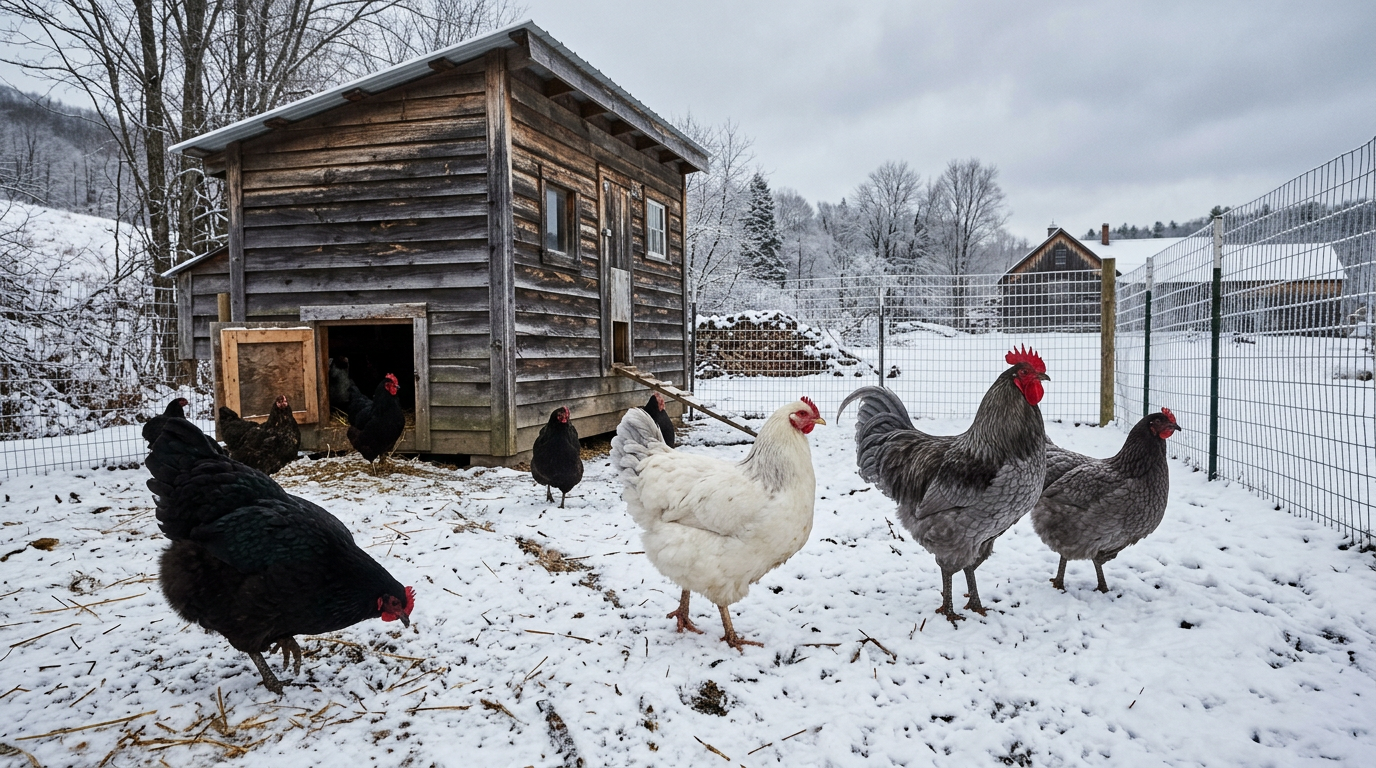
Their substantial bodies help make them suitable for colder environments when housed appropriately.
The Livestock Conservancy specifically identifies strong cold hardiness as a characteristic of the breed.
Winter Care for Jersey Giants
Focus on:
- Dry bedding
- Good ventilation
- Protection from precipitation and strong winds
- Avoiding direct drafts across resting birds
- Unfrozen drinking water
- Adequate nutrition
- Monitoring comb and wattle tissue
Jersey Giant roosters deserve particular attention because their single combs can be substantial.
A cold-hardy breed isn't automatically frostbite-proof.
For winter airflow guidance, read our Chicken Coop Ventilation Guide.
Do Jersey Giants Lay Eggs in Winter?
They can.
The Livestock Conservancy notes that Jersey Giants may continue laying during winter.
However, shorter daylight hours commonly reduce production in backyard flocks.
Winter hardiness and winter egg production are different characteristics.
A bird can handle cold temperatures very well while still taking a seasonal break from laying.
Are Jersey Giants Good for Hot Climates?
Jersey Giants need careful summer management.
The Livestock Conservancy notes that their large bodies make them less comfortable in hot conditions.
That doesn't mean they cannot live in warm climates.
It means heat management shouldn't be an afterthought.
Summer Care for Jersey Giants
Provide:
- Reliable shade throughout the day
- Plenty of cool, clean drinking water
- Good airflow through the coop
- Ventilated outdoor shelter
- Ample room to avoid crowding
- Dry areas where birds can rest
- Regular observation during extreme heat
Watch for persistent panting, wings held away from the body, weakness, unsteadiness, or unusual inactivity.
A severely overheated chicken requires prompt cooling and appropriate veterinary attention.
Roosted Note
If you're keeping Jersey Giants somewhere with long, hot summers, I'd spend extra effort designing shade and ventilation.
A giant chicken built for substantial body mass isn't the bird I'd choose specifically for extreme heat tolerance.
Can Jersey Giants Fly?
Jersey Giants are generally poor flyers compared with lightweight breeds such as Leghorns.
Their considerable weight makes sustained flight less practical.
However, poor flying ability doesn't mean they can never get over a fence.
The Livestock Conservancy notes that some Jersey Giants have been known to fly over barriers.
They can also jump and use objects to gain height.
A secure covered run remains useful for both containment and predator protection.
Do Jersey Giants Need a Large Run?
They benefit from it.
The Livestock Conservancy describes Jersey Giants as birds that enjoy foraging.
A larger run gives them opportunities to:
- Walk and exercise
- Scratch through loose soil
- Search for insects
- Dust bathe
- Explore
- Move away from flockmates
- Spend time in shade
Their larger bodies also benefit from regular movement and appropriate footing.
Use our Chicken Run Builder to plan run dimensions and estimate materials.
How Long Do Jersey Giant Chickens Live?
There isn't enough reliable breed-specific evidence to establish one precise average lifespan for Jersey Giants.
For backyard chickens generally, the University of Wisconsin Extension describes a lifespan of approximately six to eight years in small flocks.
Oklahoma State University Extension gives a similar general estimate.
That provides useful context, but it shouldn't be presented as a verified Jersey Giant-specific lifespan.
Individual longevity depends on:
- Genetics
- Overall health
- Nutrition
- Predator protection
- Housing conditions
- Reproductive health
- Injuries
- Veterinary care
- Environmental conditions
A Jersey Giant may remain part of your backyard flock long after her highest-producing egg years.
Do Jersey Giants Stop Laying as They Age?
Egg production generally declines as chickens grow older.
University of Wisconsin Extension notes that many backyard hens continue living after their most productive laying years.
That means a Jersey Giant kept as a companion may remain in the flock even when her egg production becomes relatively low.
If you're choosing Jersey Giants, plan for their long-term care rather than only their first few years of laying.
Jersey Giant vs. Brahma: Which Is Bigger?
Jersey Giants and Brahmas are among the most impressive large chicken breeds.
Both are substantial, generally calm birds with strong cold-weather credentials.
But they differ in several important ways.
| Characteristic | Jersey Giant | Brahma |
|---|---|---|
| Main appeal | Exceptional body size | Giant body with distinctive feathering |
| Standard rooster weight | Around 13 lb | Around 12 lb |
| Standard hen weight | Around 10 lb | Around 9.5 lb |
| Comb | Single | Pea |
| Feathered feet | No | Yes |
| Egg color | Brown | Brown |
| Egg production | Moderate | Moderate |
| Cold hardiness | Very good | Very good |
| Growth | Slow | Slow |
| Main housing concern | Body weight and safe landings | Size, feathered legs, and footing |
| Primary difference | Heavier standard body | Feathered feet and compact pea comb |
Which Breed Needs More Space?
Both need roomy housing.
Because Jersey Giants are particularly heavy, I'd put extra attention into low roosts, broad entrances, and large nesting boxes.
Brahmas also require careful space planning, but their feathered legs create additional considerations during muddy or wet weather.
Which Breed Is Better for Beginners?
Both can be suitable when their housing needs are understood.
If you want the greatest possible body size, the Jersey Giant is particularly appealing.
If you prefer feathered legs, a pea comb, and a different ornamental appearance, the Brahma may be a better fit.
Read our Brahma Chicken Guide for a closer look.
Jersey Giant vs. Buff Orpington
Buff Orpingtons are another popular large backyard breed.
They share the Jersey Giant's generally calm temperament and traditional dual-purpose background.
However, their average body size is smaller.
A standard Buff Orpington hen weighs approximately 8 pounds compared with 10 pounds for a Jersey Giant.
That's a noticeable difference in an ordinary coop.
Which Is Better for a Family Flock?
Both can be appealing.
Buff Orpingtons generally offer a slightly smaller, heavily feathered chicken with a strong calm-temperament reputation.
Jersey Giants offer a more dramatic size advantage and a similarly approachable overall reputation.
If your coop is already built around ordinary large-fowl dimensions, the Buff Orpington may be easier to accommodate.
If you're designing a new setup and specifically want giant chickens, Jersey Giants deserve consideration.
Read our Buff Orpington Chicken Guide.
Jersey Giant vs. Australorp
Black Jersey Giants and Black Australorps can look similar at first glance.
Both have dark plumage with a greenish sheen.
However, they belong to different breeds with different physical proportions and breeding histories.
Australorps are generally smaller and have been strongly associated with practical egg production.
Jersey Giants emphasize exceptional body size and traditional meat utility.
Jersey Giant vs. Australorp Comparison
| Trait | Jersey Giant | Australorp |
|---|---|---|
| Origin | United States | Australia |
| Standard hen weight | 10 lb | 6.5 lb |
| Standard rooster weight | 13 lb | 8.5 lb |
| Egg color | Brown | Light brown or tinted |
| Egg production | Moderate | Generally stronger |
| Body type | Very large, long and substantial | Smaller, rounded and substantial |
| Primary advantage | Exceptional size | Productive eggs and manageable body size |
If you want a black chicken primarily for egg production, an Australorp may be the more practical option.
If you want an enormous traditional American chicken, the Jersey Giant is the more distinctive choice.
Read our Australorp Chicken Guide.
Are Jersey Giant Chickens Good for Beginners?
Yes, with an important qualification.
Jersey Giants are generally calm and approachable, making their temperament relatively beginner-friendly.
Their housing requirements are another matter.
A beginner who understands the need for larger nesting boxes, low roosts, appropriate feed, and substantial outdoor space can raise Jersey Giants successfully.
But someone starting with a tiny prefabricated coop may find them much more difficult to accommodate than an ordinary laying breed.
Jersey Giants Are a Good Fit If You Want
- Very large chickens
- A calm, traditional backyard breed
- Large brown eggs
- Dual-purpose heritage characteristics
- Strong cold hardiness
- Birds that enjoy foraging
- An unusual, impressive flock
Consider Another Breed If You Want
- Maximum egg production for feed consumed
- Fast-maturing chickens
- Small or compact housing
- Minimal feed expenses
- Lightweight birds
- A breed especially suited to extreme heat
- Birds that are easy for children to lift and handle
Their size is the main attraction.
It's also the main responsibility.
Recommended Coop Setup for Six Jersey Giant Hens
If I were designing a backyard setup for six Jersey Giant hens, I'd start with this arrangement.
| Area | Recommended Setup |
|---|---|
| Coop | Spacious, dry, well-ventilated structure |
| Indoor usable space | Around 30 sq ft or more |
| Outdoor run | At least around 72 sq ft; larger preferred |
| Roosts | Low, broad, stable, and easily accessible |
| Landing area | Clean, cushioned, and free of sharp objects |
| Nesting boxes | Two roomy boxes with easy access |
| Doorways | Wide enough for mature birds |
| Ramp | Wide, stable, gently sloped if needed |
| Feeders | Accessible to all birds without crowding |
| Water | Constant access to clean drinking water |
| Shade | Significant summer shade |
| Bedding | Clean, dry, appropriately cushioned |
| Predator protection | Secure run and nighttime housing |
Notice what's different from the setup for six ordinary layers.
It's not just a few extra square feet.
The entire layout needs to function for large-bodied birds.
Before Buying Jersey Giant Chicks
I'd check five things:
- Will the coop accommodate their mature body size?
- Are the nesting boxes large enough?
- Can the birds reach and leave the roost without hard landings?
- Is the ongoing feed budget realistic?
- Is there enough shaded run space for comfortable movement?
If the answer to those questions is yes, you're starting from a good position.
Jersey Giant Chicken Pros and Cons
| Pros | Cons |
|---|---|
| One of the largest American chicken breeds | Requires more physical space |
| Generally calm and friendly | Heavy body increases landing-injury concerns |
| Large to extra-large brown eggs | Not a high-output commercial layer |
| Very good cold hardiness | Single combs can develop frostbite |
| Distinctive Black, White, and Blue varieties | Slow maturity |
| Traditional dual-purpose heritage | Significant feed requirements |
| Good foraging ability | Higher lifetime and growth-stage feed costs |
| Can fit many mixed flocks | Size differences require careful management |
| Strong backyard novelty and appeal | Needs extra attention during hot weather |
| Good temperament for experienced or prepared beginners | Ordinary small coops may be unsuitable |
The Bottom Line: Are Jersey Giant Chickens Worth Raising?
Jersey Giants are remarkable birds.
Their enormous frames, calm temperaments, traditional American heritage, and large brown eggs make them appealing to anyone who appreciates unusual chicken breeds.
But the best reason to keep Jersey Giants isn't that they're somehow better at everything than smaller chickens.
They aren't.
They grow slowly, consume substantial feed, and need more carefully designed housing.
Their impressive body size can also create challenges around roosting, nesting, and mobility.
If your only goal is maximizing eggs or minimizing feed costs, a different breed may be a more practical choice.
But if you want one of the largest chickens you can raise, enjoy keeping traditional heritage birds, and have enough room to accommodate them properly, Jersey Giants can be a rewarding part of a backyard flock.
The most important thing to remember is simple: Jersey Giants need more than an ordinary chicken coop with a bigger name. They need an environment built for genuinely giant chickens.
Jersey Giant Chicken FAQ
How big do Jersey Giant chickens get?
Standard Jersey Giant hens weigh approximately 10 pounds, while roosters weigh around 13 pounds. The Livestock Conservancy reports mature males reaching 13–15 pounds and females around 10–11 pounds.
Are Jersey Giants the largest chicken breed?
Jersey Giants are among the heaviest recognized chicken breeds and are widely identified as the largest breed developed in the United States. Exact comparisons depend on whether you're measuring standard body weight, individual weight, or height.
How much space do Jersey Giant chickens need?
Roosted recommends starting with approximately 5 square feet of usable indoor coop space and 12 square feet of outdoor run space per mature Jersey Giant. Those are comfort targets, not universal minimums. More space is helpful, particularly for confined flocks.
How much do Jersey Giant chickens eat?
Feed intake varies by age, size, climate, and production. Roosted's large-breed calculator starts with approximately 0.3 pound of complete feed per adult bird daily for purchasing estimates, but individual Jersey Giants may consume more. Measure actual use rather than treating the estimate as a feeding limit.
How many eggs do Jersey Giant chickens lay?
Jersey Giants commonly lay approximately 150–200 eggs annually, or roughly three to four eggs per week when averaged across the year. Production varies with breeding line, age, nutrition, daylight, and season.
What color eggs do Jersey Giants lay?
Jersey Giants lay brown eggs, with shades ranging from light cream-brown to darker brown. Their eggs are usually large or extra-large once hens mature.
When do Jersey Giants start laying eggs?
Jersey Giants tend to mature later than specialized laying breeds. Some hatchery lines begin around six to nine months, while The Livestock Conservancy describes a broader eight- to twelve-month period. Individual birds may start earlier or later.
Are Jersey Giant chickens friendly?
Yes. Jersey Giants generally have calm, friendly, and docile temperaments. However, individual personality varies, and their considerable size should be respected during handling.
Can Jersey Giants fly?
They aren't especially strong flyers because of their weight, but some can still jump or fly over fences. Secure fencing and predator protection remain important.
Are Jersey Giant chickens cold hardy?
Yes. They are generally very cold hardy. However, their large single combs can be vulnerable to frostbite, so dry housing and proper winter ventilation remain essential.
How long do Jersey Giant chickens live?
A reliable breed-specific average lifespan hasn't been established. University Extension sources generally describe backyard hens living approximately six to eight years under suitable conditions, but individual Jersey Giants may live for shorter or longer periods.
Do Jersey Giant chickens go broody?
Some do, while others rarely become broody. Their heavy bodies can make natural incubation more difficult because eggs may be accidentally damaged.
Keep Reading
Planning a flock of large chickens? These Roosted resources can help:
- Chicken Coop Size Calculator — Select the large/heavy-breed setting to plan space, roost length, and nesting capacity.
- Chicken Feed Calculator — Estimate feed purchases, bag life, and feeding costs for large breeds.
- Chicken Run Builder — Calculate run dimensions, fencing materials, and construction estimates.
- Brahma Chickens: Size, Egg Production, Temperament & Care — Compare Jersey Giants with another impressive large breed.
- Buff Orpington Chickens — Explore a calmer, slightly smaller large-fowl alternative.
- Australorp Chickens — Compare large black chickens with a more egg-focused breed.
- How Much Space Do Chickens Need? — Understand coop and run planning, usable space, and common housing mistakes.
- Chicken Nesting Boxes — Plan proper box dimensions, quantity, and placement.
- How Much Do Chickens Cost? — Budget for chicks, housing, feed, and ongoing care.
Sources & Further Reading
- The Livestock Conservancy — Jersey Giant Chicken — Breed history, adult size, eggs, temperament, maturity, cold tolerance, and special housing considerations.
- University of Wisconsin Extension — Chicken Breeds & Varieties — Standard weights, recognized varieties, physical characteristics, and historical uses.
- Oklahoma State University — Jersey Giant Chickens — Breed development, growth, egg production, and dual-purpose characteristics.
- Mississippi State University Extension — Choosing the Right Breed for Your Backyard Flock — Temperament, climate, feed requirements, and breed selection.
- Penn State Extension — Small Scale Poultry Housing — Housing principles, large-bird space considerations, nesting, and roosting injury prevention.
- Utah State University Extension — Housing Backyard Chickens — Ventilation, perch placement, housing, and basic coop management.
- Cackle Hatchery — White Jersey Giant — Hatchery-specific weights, egg estimates, and breeding-line characteristics.
- Cackle Hatchery — Australorp or Black Jersey Giant — Practical breed differences and breeding-line variation in egg production.
- University of Wisconsin Extension — Life Cycle of a Laying Hen — General backyard chicken lifespan and age-related laying decline.
- Roosted — Chicken Coop Size Calculator — Roosted's large/heavy-breed housing and roost-space planning targets.
- Roosted — Chicken Feed Calculator — Large-breed feed purchasing assumptions, bag-life calculations, and estimation limitations.