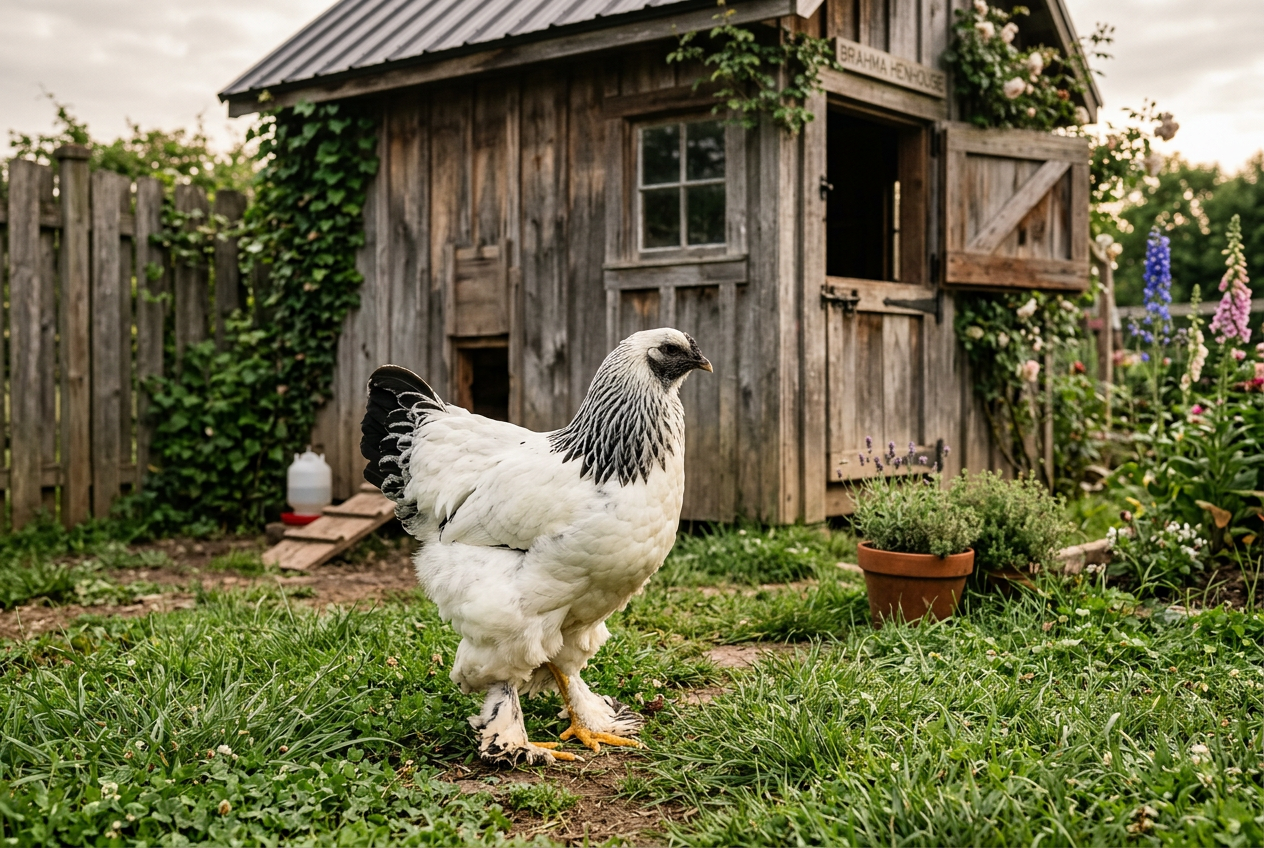
Brahma chickens are difficult to overlook.
They're enormous compared with an average backyard hen, stand tall on heavily feathered legs, and carry so much body mass that even experienced chicken keepers can be surprised by their size in person.
That imposing appearance is paired with almost the opposite personality. Brahmas are widely known as calm, docile chickens. The Livestock Conservancy describes them as one of the largest chicken breeds and notes their gentle temperament, cold hardiness, winter laying ability, and long history as practical meat-and-egg birds.
They're sometimes called the "King of All Poultry." For the right backyard, the nickname makes sense. But a 9- to 12-pound feather-legged chicken also requires some management decisions you wouldn't necessarily make for a lightweight laying breed.
Brahma Chicken Quick Facts
| Trait | Brahma Chicken |
|---|---|
| Primary use | Dual-purpose: eggs and meat |
| Development | Primarily United States from Asian stock |
| APA class | Asiatic |
| Recognized large-fowl varieties | Light, Dark, Buff |
| Hen weight | About 8.5–9.5 lb depending on variety |
| Rooster weight | About 11–12 lb depending on variety |
| Egg color | Brown |
| Egg size | Medium to large |
| Egg production | Moderate; some lines may approach 200/year |
| Temperament | Calm and docile |
| Broodiness | Can go broody |
| Mothering ability | Generally good, with size-related cautions |
| Cold tolerance | Excellent |
| Heat tolerance | Less suited to intense heat |
| Feet | Feathered shanks and toes |
| Flight ability | Limited by size and weight |
| Best for | Calm family flocks, cold climates, large-breed enthusiasts, dual-purpose flocks |
| Main care considerations | Space, feed, low roosts, dry feet, summer heat |
The American Poultry Association currently recognizes Light, Dark, and Buff Brahmas in both large fowl and bantam form.
What Makes Brahma Chickens Unique?
Size gets most of the attention, but Brahmas aren't simply oversized chickens. They combine several traits you don't often see together:
- giant body size
- feathered legs and toes
- pea comb
- dense feathering and down
- calm temperament
- strong cold tolerance
- useful brown-egg production
- traditional meat utility
The Livestock Conservancy describes mature Brahmas as reaching roughly 30 inches tall, with broad heads, dense feathering, yellow shanks, feathered toes, and the characteristic brow shape sometimes called a "beetle brow."
Despite that formidable appearance, their temperament is one of the quietest aspects of the breed. The Livestock Conservancy specifically groups Asiatic breeds such as Brahmas and Cochins among the calmest and quietest chicken types.
That's the contrast that makes Brahmas memorable: giant chicken, surprisingly gentle personality.
Brahma History, Size & Appearance
Where Did Brahma Chickens Come From?
The breed's ancestry traces back to very large Asian poultry imported from China through the port of Shanghai during the mid-1800s. Much of the breed as we know it today was then developed in the United States.
The Livestock Conservancy explains that these imported birds were crossed or influenced to a smaller degree by other Asian stock, eventually producing the Brahma type. The name was shortened to Brahma during the 1850s, referencing the Brahmaputra region.
Brahmas and Cochins helped fuel the mid-1800s poultry craze known as "Hen Fever," when exceptional breeding stock commanded extraordinary prices. The Brahma eventually became one of America's most important large table breeds and remained a leading meat chicken from roughly the mid-1800s into the early 20th century.
How Big Do Brahma Chickens Get?
This question is slightly more complicated than most breed guides because standard weight varies by variety. Oklahoma State gives the following traditional standard weights:
| Variety | Adult Rooster | Adult Hen |
|---|---|---|
| Light Brahma | 12 lb | 9.5 lb |
| Dark Brahma | 11 lb | 8.5 lb |
| Buff Brahma | 11 lb | 8.5 lb |
The Livestock Conservancy simplifies the overall breed description to roughly 12-pound males and 10-pound females. Either way, these are very large chickens.
Historically, some individual Brahmas were even larger. The Livestock Conservancy records early-1900s examples reportedly reaching 13–14 pounds for females and more than 17 pounds for males, although those are not modern standard weights.
What Do Brahma Chickens Look Like?
Across varieties, the breed shares several identifying features: a substantial body, broad head, pea comb, reddish-brown eyes, red earlobes and wattles, yellow skin and shanks, feathers extending down the legs and onto the toes, and dense feathering and underfluff.
Their body is tall and imposing without having the extremely loose, round feathering of a Cochin.
Light vs. Dark vs. Buff Brahmas
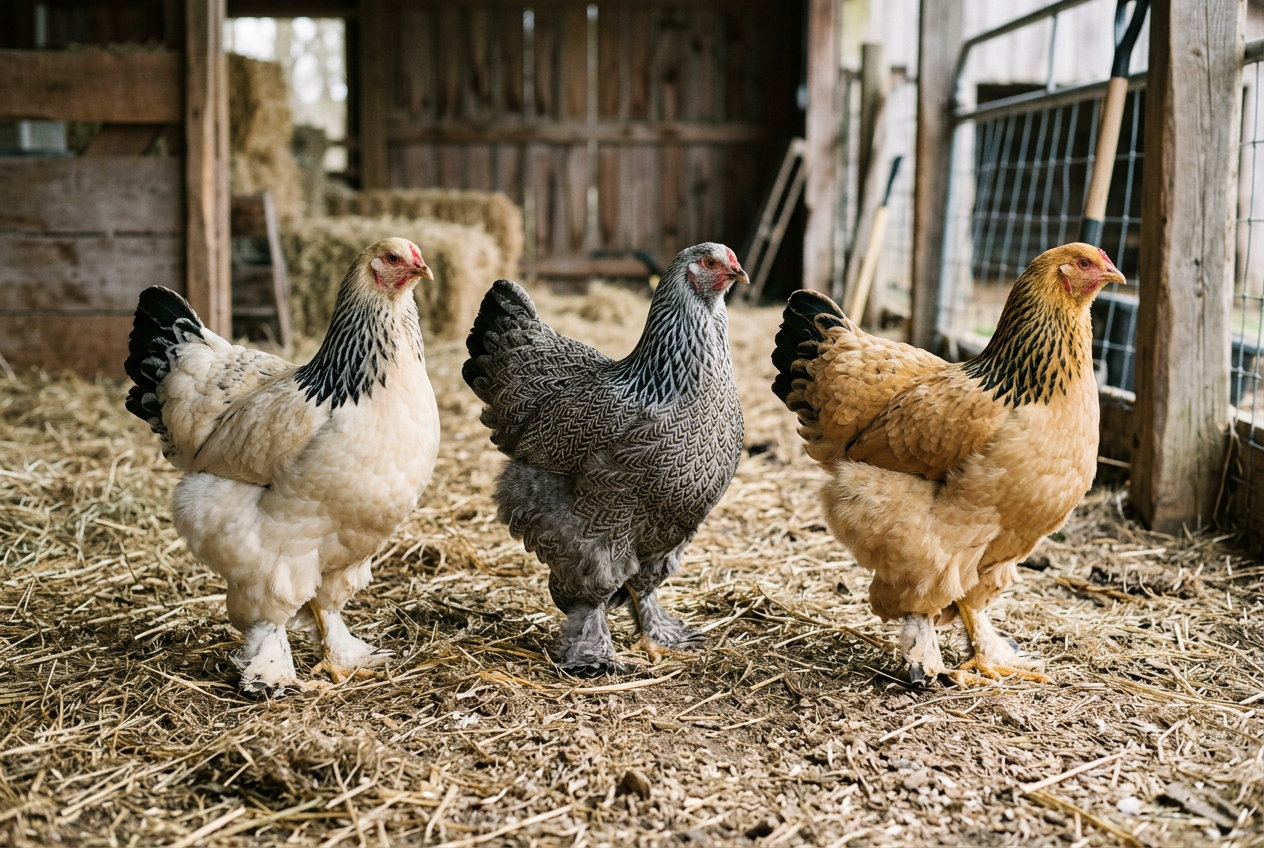
The APA recognizes three large-fowl varieties.
Light Brahma
The Light Brahma has a predominantly white body with contrasting dark markings around the neck and tail. It's also the largest of the three standard varieties by traditional APA weight.
Dark Brahma
Dark Brahmas have much more intricate patterning. Hens display beautiful penciled gray-and-black feather patterns, while males have a more contrasting black, silver, and white appearance. Historically, the Dark variety was developed partly in England before being brought back to the United States.
Buff Brahma
The Buff Brahma replaces much of the Light variety's white coloring with a warm buff tone while retaining darker contrasting markings. The Buff variety was accepted into the American Standard later than Light and Dark, in 1924.
The important backyard distinction is that color doesn't dramatically change basic care. All three are still giant feather-legged Brahmas.
Brahma Egg Production
It's easy to assume a chicken this large must be primarily a meat bird. Historically, Brahmas absolutely had major meat value — but they're also useful layers.
How Many Eggs Do Brahmas Lay?
Authoritative descriptions vary. Oklahoma State characterizes Brahmas as fair egg layers. The Livestock Conservancy is more optimistic and reports that Brahmas may produce up to about 200 eggs per year, particularly noting their ability to produce during colder months. An older Livestock Conservancy breed-comparison chart estimated approximately 140 eggs per year.
Taken together, I would plan for roughly 3–4 eggs per week during productive periods rather than buying Brahmas under the assumption that every hen will lay 200 eggs annually.
Bloodline matters, and so do age, season, daylight, nutrition, broodiness, and the individual bird.
Are Brahmas Good Egg Layers?
For their size, yes. Compared with a specialized production layer, no. That's an important distinction.
A Brahma eats and occupies space like a giant chicken because it is one. If your only goal is producing the greatest number of eggs from the least feed and space, a Brahma makes very little economic sense. If you want large calm chickens, useful eggs, cold-weather ability, and traditional dual-purpose value, the calculation changes.
What Color Eggs Do Brahmas Lay?
Brahmas lay brown eggs. The Livestock Conservancy describes them as medium-brown, while Oklahoma State simply lists brown shell color.
How Big Are Brahma Eggs?
The Livestock Conservancy lists Brahma eggs as medium to large. That may surprise people expecting a giant egg from a giant hen, but chicken body size and egg size don't scale perfectly together.
Do Brahmas Lay in Winter?
This is one of the breed's most interesting traditional strengths. The Livestock Conservancy describes Brahmas as superior winter layers and historically notes that much of their production occurred from roughly October through May.
That doesn't mean every modern Brahma will suddenly increase production every October — daylight, age, line, and individual variation still matter. But among traditional breeds, winter laying is an established part of the Brahma's reputation.
When Do Brahma Chickens Start Laying?
Brahmas mature slowly. Oklahoma State specifically notes their slow growth and long time to maturity, one reason the breed eventually lost favor in commercial production systems where rapid growth and early production are economically important.
I would therefore expect a Brahma pullet to begin laying later than many production-focused breeds. Rather than putting a hard week number on every bird, plan around a slower developmental timeline and watch for the normal signs of maturity: comb development, nesting-box interest, squatting behavior, pelvic changes, and increased vocalization.
If your biggest priority is getting eggs as quickly as possible, this isn't the breed I'd choose. For general point-of-lay guidance, see When Do Chickens Start Laying Eggs? Age, Signs & What to Expect.
Brahma Temperament & Flock Compatibility
For a chicken with such an intimidating physical presence, Brahmas have a remarkably mild reputation. The Livestock Conservancy describes them as calm and docile and notes that they're generally not flighty or aggressive toward other breeds. Their sheer size also means they're less likely to be physically intimidated by ordinary flockmates.
Are Brahmas Friendly?
Generally, yes. Many Brahmas become comfortable around people and are not known for nervous, high-strung behavior. That doesn't guarantee every bird will enjoy handling, but as a category the breed tends to be much calmer than highly active Mediterranean-type chickens.
Are Brahmas Good With Children?
They can be. Their gentle temperament works in their favor, but their size deserves consideration. A 9-pound hen is one thing; a 12-pound rooster standing nearly knee-high to a small child feels quite different. The Livestock Conservancy specifically notes that although Brahmas are generally friendly with people, their size may intimidate smaller children.
Teach children to approach slowly, avoid chasing, support the bird properly, respect a chicken that wants space, and wash hands afterward.
What Are Brahma Roosters Like?
The breed overall has a calm reputation, but I would still evaluate every male individually. A giant rooster has considerable physical power even when the breed is normally gentle.
Watch for charging, biting, excessive territorial behavior, spur use, aggression toward children, and excessive mating pressure on hens. Breed reputation helps set expectations — it doesn't excuse dangerous individual behavior.
Can Brahmas Live With Other Breeds?
Usually, yes. Their calm temperament and large size can make them surprisingly easy mixed-flock birds. I'd be more concerned about resource layout than whether other hens are physically bigger. Make sure lower-ranking birds can still access feeders, water, roosts, and nesting areas.
And remember that mixing giant Brahmas with extremely small bantams creates a very different physical flock than keeping similarly sized standard chickens together.
Broodiness & Mothering Ability
Brahma hens can go broody. Oklahoma State describes them as broody birds and fairly good mothers, and The Livestock Conservancy similarly notes that Brahmas may become broody, historically often in early summer.
Are Brahmas Good Mothers?
Generally, yes — but their size introduces one unusual consideration. A very large hen sitting on delicate eggs or newly hatched chicks requires observation. The Livestock Conservancy specifically warns that chicks should be monitored because the hen's enormous body can accidentally trample them.
This same basic problem appears with other giant breeds. A gentle chicken can still accidentally create trouble simply by weighing ten pounds.
Does Broodiness Affect Egg Production?
Yes. A broody hen stops normal production while she concentrates on sitting, so if your particular line is prone to broodiness, yearly egg totals can fall below the theoretical maximum.
Brahma Lifespan & Slow Maturity
I wouldn't assign Brahmas a precise breed-specific lifespan without strong longitudinal data. For backyard planning, the more useful point is that this is a slow-growing, long-term chicken. Backyard chickens can live for many years under good management, and Brahmas should be approached as a multi-year commitment rather than a short-term egg project.
Slow Growth Is a Real Breed Trait
Oklahoma State notes that slow growth and long maturity helped remove the breed from modern commercial poultry production. The Livestock Conservancy's historical account tells a similar story: Brahmas had excellent table qualities, but they took substantially longer to reach useful roasting size than modern commercial meat birds.
For a backyard owner, that means don't judge the final size of a young Brahma too early. They need time to mature.
Housing, Roosts & Space Requirements
This is where I would intentionally diverge from our normal standard-hen setup. A Brahma is a giant breed — treat it like one.
Coop Space
Roosted's general backyard planning target is about 4 square feet indoors per standard hen. For Brahmas, I'd size up to about 5–6 square feet of usable indoor space per bird when possible. That's a Roosted management recommendation rather than a universal scientific minimum.
Why go larger? Because Brahmas need more physical room around doors, feeders, waterers, roosts, and each other. An oversized bird inside a technically adequate but cramped structure creates unnecessary management problems.
For general flock calculations, see How Much Space Do Chickens Need? Coop & Run Size Chart + Calculator.
Run Space
Our normal target for standard hens is about 10 square feet per chicken. For Brahmas, I'd happily give 10–15+ square feet each if your property allows it. They aren't frantic or especially wide-ranging birds, but more ground gives a giant flock cleaner conditions, more room around resources, easier mud management, and more foraging space.
Roosts
This is one of the most important Brahma-specific design changes. Keep roosts low, sturdy, and wide.
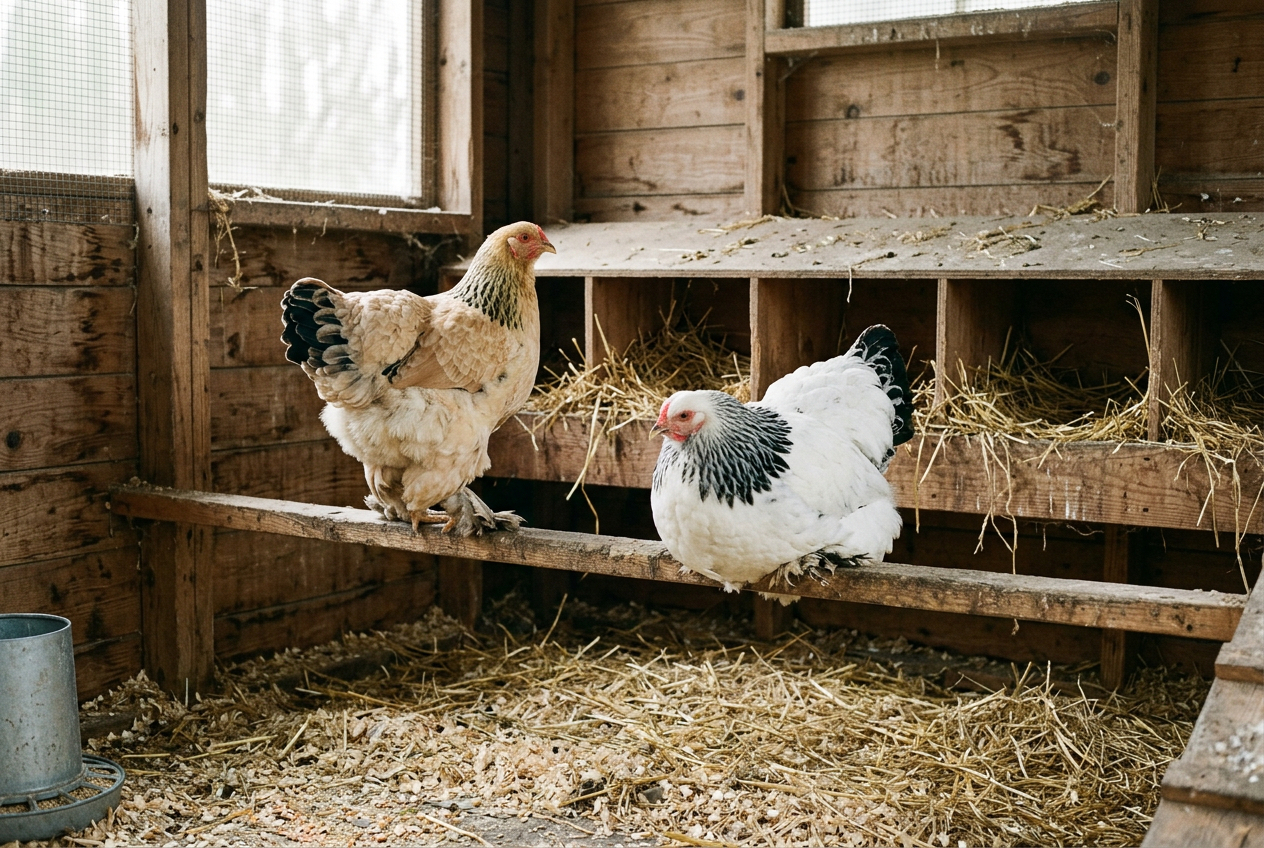
An older Livestock Conservancy breed guide specifically recommended keeping Brahma perches around 12 inches or less from the ground to accommodate their giant body size. I wouldn't treat 12 inches as a universal law, but the principle is excellent: don't make a 10-pound chicken jump from a four-foot roost every morning.
Heavy landings can place unnecessary stress on feet, legs, and joints. Use sturdy wooden roosts and provide enough clear landing space.
Nesting Boxes
Standard tiny nesting boxes can feel cramped for Brahmas. I'd use generously sized boxes with easy entrances, relatively low placement, and sturdy construction. The hen should be able to comfortably enter, turn, settle, and exit.
For general nest-box setup, see Chicken Nesting Boxes: Size, Dimensions, How Many You Need & Where to Put Them.
Feathered Feet & Mud Management
This is probably the most important everyday Brahma-specific care issue after body size. Brahmas have feathers extending down the shanks and onto the toes. Beautiful? Absolutely. Ideal for a permanently muddy chicken run? Not particularly.
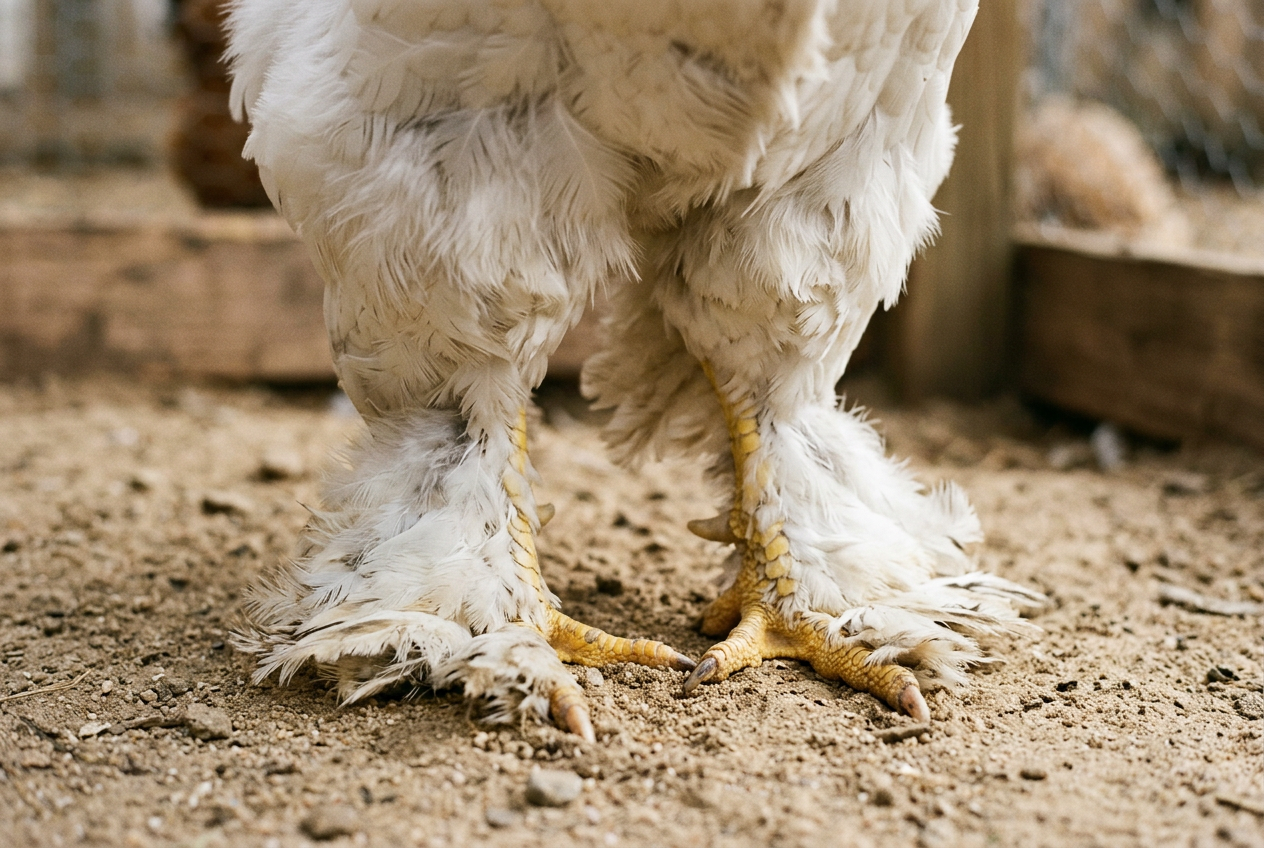
The Livestock Conservancy specifically warns that mud can cling to Brahma foot feathers, keep the feet wet, and increase cold-weather frostbite risk. It recommends dry, well-drained ground.
What to Watch For
Inspect feathered feet for packed mud, manure, ice buildup, damaged feathers, swollen toes, irritation, abnormal scales, and injuries hidden under feathering.
You don't need to obsessively wash normal feet. You do need to recognize when the environment is creating repeated wet-foot problems.
Fix the Ground, Not Just the Chicken
If you're constantly cleaning mud off Brahma feet, I'd question the run before developing a complicated grooming routine. Look at drainage, roof runoff, waterer placement, ground cover, and run coverage.
Our full ground-cover guide: Best Ground Cover for a Chicken Run: Sand vs. Wood Chips vs. Gravel.
Feeding Brahma Chickens
Brahmas don't require a special breed-specific feed. They need complete poultry nutrition appropriate to age, development, and laying status, just like other chickens.
Feed by Life Stage
Chicks: complete chick starter.
Growing birds: an appropriate grower ration.
Laying hens: a nutritionally complete layer ration or properly managed flock ration.
All ages: clean, fresh water.
Brahmas Eat Like Large Chickens
Because they're enormous birds, their maintenance needs are different from tiny bantams. The Livestock Conservancy specifically notes that Brahmas can require a lot of feed because of their size.
If you're planning a flock financially, don't compare six Brahmas to six Silkies as though the feed bill will be identical. It won't be.
Don't Push Growth With Random Supplements
Brahmas mature slowly because that's how the breed develops. Don't try to turn them into commercial broilers with excess protein, random supplements, or overfeeding without veterinary or nutritional justification. Use a complete age-appropriate ration and allow the birds to mature normally.
Cold Weather & Summer Heat
Climate is one area where Brahmas have a clear preference.
Brahmas Are Excellent Cold-Weather Chickens
Their dense plumage, heavy down, small pea comb, feathered legs, and large body make them particularly well suited to colder conditions. Oklahoma State says their pea comb and profuse feathering allow them to stand cold temperatures very well, and The Livestock Conservancy similarly describes Brahmas as extremely hardy and historically among the least susceptible chickens to cold exposure.
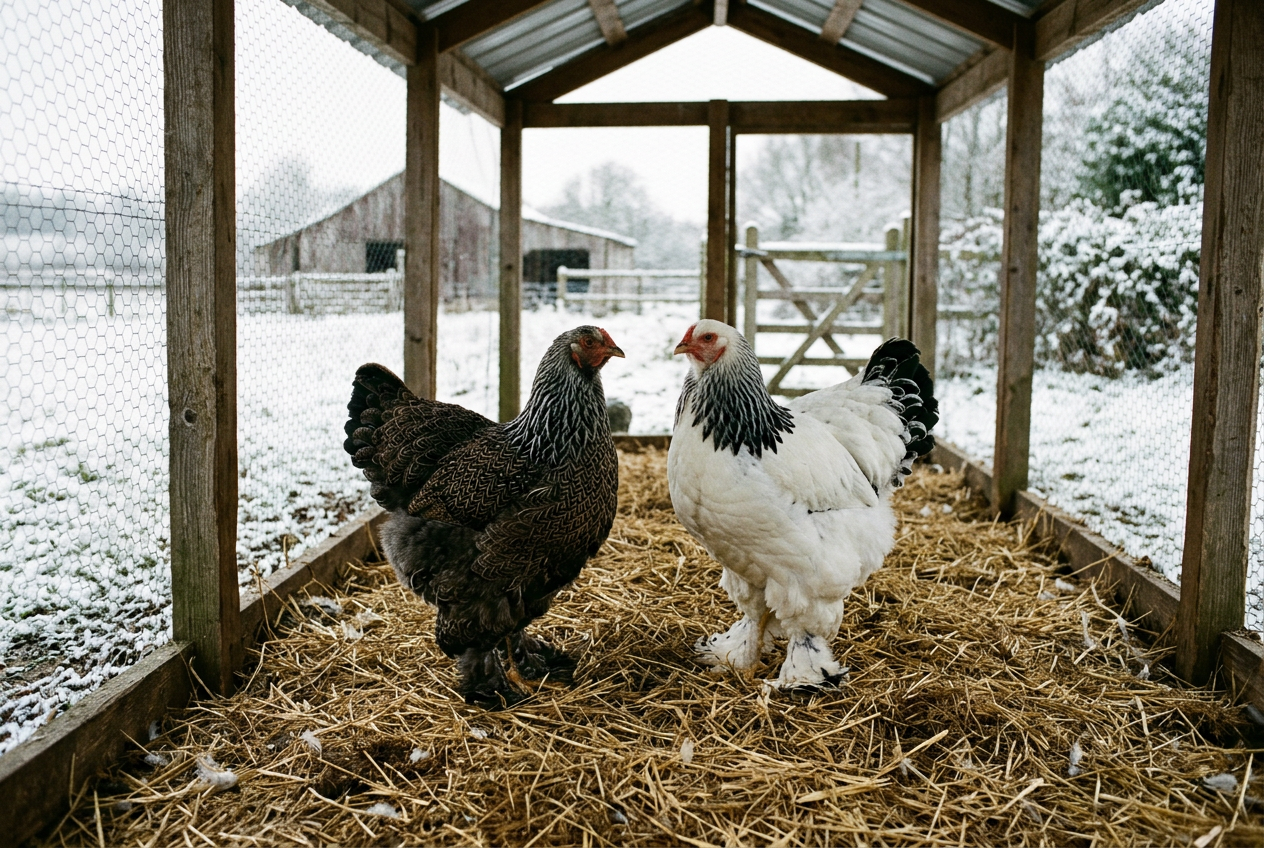
But cold-hardy doesn't mean wet-hardy. Wet feathered feet plus freezing temperatures create exactly the kind of conditions you want to avoid. Keep bedding dry, the run drained, water unfrozen, direct drafts off sleeping birds, and ventilation open.
Heat Is a Bigger Concern
The Livestock Conservancy specifically states that Brahmas are not ideal for southern climates and that they don't tolerate heat particularly well without plenty of shade and water.
That doesn't mean someone in Texas can't keep Brahmas. It does mean I would plan summer conditions before buying them. Provide deep shade, multiple clean water sources, strong coop ventilation, good air movement, substantial outdoor room, and no overcrowding.
Watch for heavy panting, wings held away from the body, inactivity, reduced eating, and weakness. For hot climates, summer management isn't optional with a chicken this large and heavily feathered — see How to Keep Chickens Cool in Summer.
Free-Ranging & Foraging
Brahmas enjoy foraging, but they're not built like lightweight range birds. The Livestock Conservancy notes that Brahmas may spend much of the day foraging but generally aren't wide-ranging or as intensely active as Mediterranean breeds.
That makes them interesting suburban or homestead chickens. They'll use the yard, but they're less likely to spend the entire day attempting to explore the next county.
Are Brahmas Easy to Contain?
Generally, yes. Their size and weight dramatically reduce their flight ability, and The Livestock Conservancy notes that Brahmas are relatively easy to contain because they don't readily fly over low fencing.
That doesn't mean a two-foot decorative fence is a predator-proof run. Keeping chickens inside and keeping predators outside are two different jobs, and your predator fencing still needs to be properly designed.
Brahma vs. Similar Chicken Breeds
The Brahma becomes easier to understand when compared with other giant or heavily feathered breeds.
| Characteristic | Brahma | Buff Orpington | Cochin | Jersey Giant |
|---|---|---|---|---|
| Main appeal | Giant calm dual-purpose bird | Calm family dual-purpose bird | Extremely docile ornamental/broody bird | Maximum body size and meat utility |
| Hen weight | ~8.5–9.5 lb by variety | ~8 lb | ~8.5 lb | ~10–11 lb |
| Rooster weight | ~11–12 lb | ~10 lb | ~11 lb | ~13–15 lb |
| Egg color | Brown | Brown | Brown | Cream to brown |
| Egg size | Medium–large | Large–extra large | Large | Extra large |
| Egg production | Moderate; good winter reputation | Moderate–good | Moderate | Moderate |
| Temperament | Calm/docile | Calm/docile | Extremely gentle | Calm/friendly |
| Broodiness | Common | Fairly common | Very high | Variable |
| Leg feathering | Yes | No | Heavy | No |
| Climate strength | Excellent cold tolerance | Strong cold tolerance | Strong cold tolerance | Strong cold tolerance |
| Major concern | Mud, size, summer heat | Size, summer heat | Feathering, heat, obesity | Extreme size, slow maturity |
The Cochin and Jersey Giant figures above come from The Livestock Conservancy's breed profiles.
Brahma vs. Buff Orpington
Choose the Brahma if you want even greater size, feathered feet, a pea comb, particularly strong cold-weather credentials, and a more unusual giant-breed appearance.
Choose the Buff Orpington if you want somewhat smaller large-fowl size, clean legs, large brown eggs, and a similarly calm family-flock temperament. Related guide: Buff Orpington Chickens: Egg Production, Temperament & Care.
Brahma vs. Cochin
These breeds are historically connected and helped fuel the same 19th-century poultry craze. Both are large, feather-legged, cold tolerant, and calm.
But Cochins are especially famous for extreme broodiness, enormous soft feathering, and an exceptionally gentle personality. The Livestock Conservancy describes Cochins as among the best brooding breeds and very docile. Brahmas generally retain more of the impression of a tall, powerful dual-purpose farm bird.
Brahma vs. Jersey Giant
If your only question is "which is bigger?", the Jersey Giant wins. The Livestock Conservancy lists adult Jersey Giant males around 13–15 pounds and hens around 10–11 pounds.
The Brahma offers feathered legs, a pea comb, excellent cold adaptation, and calmer giant-breed utility. The Jersey Giant offers even greater potential body size, extra-large eggs, clean legs, and strong meat-bird heritage. Both mature slowly, and both require infrastructure designed for genuinely large chickens.
Are Brahma Chickens Good for Beginners?
Yes — with enough space and the right climate management. The Livestock Conservancy's breed resources have historically rated Brahmas as suitable for novice to intermediate keepers, and their calm temperament works strongly in their favor.
Their care isn't technically difficult. The challenge is scale. Everything is bigger: the chicken, the appetite, the footprint, the nesting space, and the roost requirements. And the feathered feet make poor drainage more noticeable.
Brahma Pros & Cons
| Pros | Cons |
|---|---|
| Extremely calm temperament | Very large birds require more room |
| Excellent cold hardiness | High feed requirements |
| Useful brown eggs | Slower maturity |
| Good winter-laying reputation | Less suited to extreme heat |
| Dual-purpose heritage | Feathered feet collect mud |
| Generally easy to contain | Low/sturdy roosts needed |
| Usually good mixed-flock birds | Large nest boxes are helpful |
| Impressive appearance | Not efficient if maximum eggs are the goal |
Brahmas Are a Good Fit If You Want
- giant chickens
- calm flock personalities
- cold-hardy birds
- brown eggs
- traditional dual-purpose poultry
- limited flight
- birds comfortable in a large backyard or homestead setup
Consider Another Breed If You Want
- maximum egg efficiency
- the lowest possible feed bill
- small chickens
- fast maturity
- birds optimized for very hot climates
- a flock on permanently muddy ground
Recommended Setup for Four Brahmas
This is where I would intentionally give them more than our normal standard-hen baseline.
| Area | What I'd Provide |
|---|---|
| Coop | Large, dry, secure, well ventilated |
| Indoor space | About 20–24 sq ft or more for four adult birds |
| Run | About 40–60+ sq ft |
| Roost | Low, wide, extremely sturdy wooden perch |
| Nest boxes | Generously sized and easily accessible |
| Doors/openings | Large enough for wide-bodied birds |
| Feeder | Plenty of access and capacity |
| Water | Multiple clean-water options in summer |
| Shade | Substantial shade in warm climates |
| Ground | Dry, well drained and mud resistant |
| Dust bath | Large, dry loose-substrate area |
| Predator protection | Secure run and nighttime housing |
The exact measurements can vary with design. The principle shouldn't: don't design giant-breed housing at the absolute minimum.
Brahma Care Checklist
Daily: provide complete age-appropriate feed, keep fresh water available, collect eggs, observe movement and behavior, and confirm predator security.
Regularly: check feathered feet and toes, inspect the run for mud, monitor bedding moisture, clean feeders and waterers, monitor body condition, check roost stability, and keep nesting boxes clean.
During summer: provide deep shade, maintain abundant cool water, maximize safe airflow, avoid overcrowding, and watch closely for heat stress.
During winter: keep foot feathers dry, prevent mud and ice buildup, keep bedding dry, maintain ventilation, prevent drinking water from freezing, and keep direct drafts off sleeping birds.
During broodiness: decide whether you're allowing a hatch, make sure the hen eats and drinks, monitor body condition, provide a safe nest, and watch newly hatched chicks around the large hen.
The Bottom Line: Are Brahma Chickens Right for You?
Brahmas aren't subtle. They're some of the largest chickens you're likely to put in a backyard flock, with feathered feet, enormous frames, dense plumage, and enough physical presence to make an ordinary laying hen look small beside them.
Yet their personality is almost the opposite of what their size suggests. They're known for being calm, docile, relatively quiet, and easygoing — a major reason the breed has remained popular long after modern commercial poultry replaced it as a serious production bird.
A Brahma gives you enormous body size, brown eggs, useful winter production, excellent cold tolerance, broodiness, traditional dual-purpose history, limited flight, and a calm temperament. You pay for those characteristics with more feed, more physical space, slower maturity, extra attention to feathered feet, and greater concern during extreme summer heat.
If you live somewhere cool, have enough room, and want a giant chicken that's surprisingly easy to live with, the Brahma is difficult to beat. If you live somewhere hot and humid, have a tiny coop, or want the maximum number of eggs for the minimum feed, I'd choose something else.
The Brahma makes the most sense when you're choosing it because it's a Brahma, not because you're trying to force a giant heritage chicken into the job of a commercial laying hybrid.
Brahma Chicken FAQ
How big do Brahma chickens get?
Brahmas are among the largest recognized chicken breeds. Light Brahma roosters weigh about 12 pounds and hens about 9½ pounds, while Dark and Buff Brahmas are slightly lighter at roughly 11-pound males and 8½-pound hens under traditional standards.
Are Brahmas bigger than Jersey Giants?
Generally, no. Jersey Giants are usually heavier, with males commonly listed around 13–15 pounds and females around 10–11 pounds. Brahmas remain one of the largest breeds and can appear enormous because of their height and feathering.
How many eggs do Brahma chickens lay?
Production varies by line. The Livestock Conservancy reports up to roughly 200 eggs per year, while other breed references describe Brahmas more conservatively as fair layers. A practical backyard expectation is around 3–4 eggs per week during productive periods.
What color eggs do Brahmas lay?
Brahmas lay brown eggs, generally medium to large in size.
Are Brahma chickens friendly?
Yes, the breed is widely described as calm and docile. They aren't generally considered flighty or aggressive birds.
Are Brahmas good for beginners?
They can be excellent beginner birds when the keeper has enough space and understands their giant-breed requirements. The biggest considerations are body size, feed consumption, feathered feet, low roosts, and summer heat.
Are Brahmas cold hardy?
Very. Cold tolerance is one of the breed's strongest characteristics thanks to their dense feathering, large body, and pea comb.
Are Brahmas heat tolerant?
Heat is more challenging. The Livestock Conservancy specifically notes that Brahmas are not ideal for hot southern climates without ample shade and water.
Do Brahmas have feathered feet?
Yes. Feathering extends down the shanks and onto the toes, which is one of the breed's defining features.
Do Brahmas go broody?
Yes, some Brahma hens go broody and can make good mothers. Because of their enormous size, chicks should be monitored around sitting hens.
Can Brahmas fly?
Their enormous size and weight make them relatively poor flyers, so they are generally easier to contain than lighter breeds.
Do Brahmas need low roosts?
I recommend them. Their heavy bodies make repeated high jumps unnecessary, and historical Livestock Conservancy breed guidance specifically recommended very low perches for Brahmas.
Want to estimate what your flock could produce? Try the Chicken Egg Production Calculator →
Waiting on a Brahma pullet? Estimate her first-egg window →
Not sure whether this breed is right for you? Try the Chicken Breed Finder →
Keep Reading
Want another large, calm backyard breed? Buff Orpington Chickens: Egg Production, Temperament & Care
Looking for strong brown-egg production? Rhode Island Red Chickens: Eggs, Temperament & Complete Care Guide
Choosing your first flock size? How Many Chickens Should I Get? A Practical Flock Size Guide for Beginners
Planning enough room for giant chickens? How Much Space Do Chickens Need? Coop & Run Size Chart + Calculator
Trying to keep feathered feet out of the mud? Best Ground Cover for a Chicken Run: Sand vs. Wood Chips vs. Gravel
Sources & Further Reading
- The Livestock Conservancy — Brahma Chicken
- Oklahoma State University — Brahma Chickens
- American Poultry Association — Accepted Breeds & Varieties
- The Livestock Conservancy — Heritage Chicken Breed Comparison
- The Livestock Conservancy — Cochin Chicken
- The Livestock Conservancy — Jersey Giant Chicken