Chicken Dust Bath: What to Put In It, How to Make One & What to Avoid
A dust bath is one of the most natural and important routines in a chicken's day. This guide covers what a chicken dust bath is, why hens need one, how to build the perfect dust bathing area, exactly what to put in it, and what to avoid.
By Roosted Team Updated August 2026
Quick Answer
A chicken dust bath is a dry area of loose material chickens use as part of their natural grooming routine. Start with dry soil and coarse sand in a sheltered spot, keep the material loose and dry, and avoid damp, treated, clumping, or heavily scented materials. Optional botanicals can be mixed into the bathing area as part of the routine.
What Is a Chicken Dust Bath?
A chicken dust bath is exactly what it sounds like — a patch of loose, dry material that hens dig into, fluff over their feathers, and roll around in. It looks a little chaotic, but it's a deliberate and instinctive grooming ritual that every healthy flock does on its own.
As a chicken works the fine particles down to her skin and through her feathers, the dust absorbs excess preen oil, dirt, and moisture. When she stands up and shakes it all off, she carries away the grime with it. Think of it as a chicken's version of a dry shampoo and a spa day rolled into one.
Why Chickens Take Dust Baths
Dust bathing isn't optional enrichment — it's core to how chickens keep themselves clean and comfortable. A good dust bath helps your flock:
- Absorb and remove excess oil, dander, and dirt from feathers and skin
- Help manage mites, lice, and other external parasites as part of routine grooming
- Keep feathers loose, fluffy, and well-conditioned
- Reach cooler soil underneath to help them settle in warm weather
- Support a natural, often social grooming behavior
When hens don't have a proper place to dust bathe, they're more prone to parasite problems and general discontentment. A clean, inviting bath is one of the simplest things you can offer for a genuinely happier flock.
How to Make a Dust Bathing Area
You don't need anything fancy. The goal is a dry, loose, roomy spot your hens can settle into. Here's a simple approach:
- Pick a dry, sheltered spot. A sunny corner of the run or coop that stays out of the rain works best.
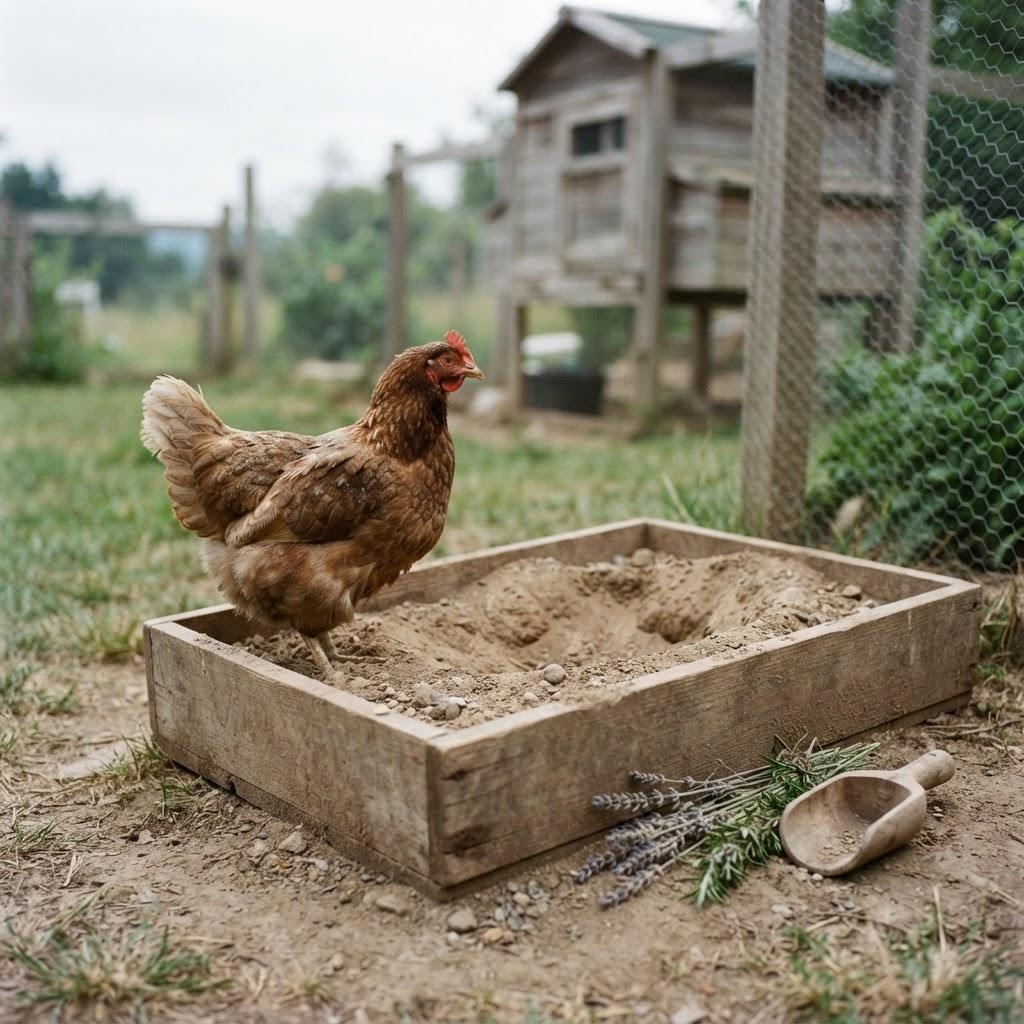
- Choose a container. A low tub, wooden box, old tire, or galvanized tray keeps the material contained — or simply loosen a patch of bare earth.
- Add your base. Fill it a few inches deep with loose dry soil and coarse sand so hens have plenty to dig into.
- Work in the extras. Mix in a little untreated wood ash and a scoop of dried botanicals for a cleaner, calmer bath.
- Let them do the rest. Dust bathing is instinctive — set it out and your flock will find it fast.
Size it so more than one hen can bathe at once if you have a larger flock. Chickens love to dust bathe together, and a bath that's too small can cause squabbling.
What to Put in a Chicken Dust Bath
A great dust bath starts with a loose, dry base and builds from there. These are the chicken dust bath ingredients worth adding:
- Loose, dry soilThe foundation of any dust bath — plain garden dirt that hens can dig and toss.
- Coarse sandKeeps the mix loose and fast-draining so it never packs down or holds moisture.Which sand is best? Compare types, grain size & what to avoid
- Wood ash (untreated)From a clean wood fire only. Helps absorb oils and is a classic addition in small amounts.
- Dried herbsLavender, rosemary, mint, and calendula are a traditional finishing touch many keepers add to the bath.
- Fine clay (kaolin)A gentle, absorbent base that coats feathers and helps lift excess oil and grime.
What to Avoid
Just as important as what you add is what you leave out. Steer clear of these:
- Damp or moldy materialWet dust bathing material grows mold and defeats the whole purpose. Keep it dry.
- Ash from treated or painted woodCharcoal briquettes, painted scraps, and treated lumber can release harmful chemicals.
- Cat litter or clumping productsNot made for birds — many contain fragrances or clumping agents that irritate.
- Large amounts of diatomaceous earthThe fine dust can irritate hens' (and your) airways. If used at all, use sparingly.Does diatomaceous earth actually work? Read the evidence
- Synthetic or scented additivesPerfumed powders and air-freshener style products don't belong near your flock.
How Often to Refresh It
A dust bath does most of its work by staying dry and loose, so refreshing it is less about a strict calendar and more about how it looks and feels:
- Check regularly: remove droppings, debris and wet material, and loosen anything that has compacted.
- Top up as needed: add material when the bath becomes shallow or heavily scattered.
- Replace when necessary: rebuild it if the material becomes persistently damp, heavily soiled or otherwise unusable.
For a deeper routine on keeping the whole coop fresh, see our chicken coop cleaning schedule.
Run vs. Free-Range Setups
In the run
For confined or covered runs, use a dedicated container — a low tub, an old tire, a wooden box, or a galvanized tray. Keep it in a dry, sheltered corner so rain can't turn it to mud, and top it up as the material scatters.
Free-range flocks
Free-range hens usually dig their own hollows in a sunny, dry patch of dirt. You can still improve those spots by loosening the soil and working in sand, ash, and a scoop of botanicals so their favorite wallow stays clean and inviting.

Zen Dust & How to Use It
Zen Dust is a botanical chicken dust bath mix you stir into the dust bath your hens already use. Rather than replacing your dirt, sand, or ash base, it layers a fine kaolin clay with lavender buds, peppermint leaf, rosemary, and rose petals to make a natural dust bath for chickens feel cleaner and more intentional.
How To Use It
Sprinkle evenly over your flock's favorite dust bathing area, work it into the top layer, and let your hens dig, fluff, and roll. Reapply as needed to keep the space fresh, dry, and inviting.
Frequently Asked Questions
What is the best thing to put in a chicken dust bath?
A simple, effective mix is loose dry soil and coarse sand as the base, with a little untreated wood ash and dried herbs worked in. A fine kaolin clay base — like the one in Zen Dust — adds gentle, absorbent cleansing power on top of that.
Do chickens need a dust bath if they free-range?
Free-ranging hens usually make their own dust baths in dry soil, so they may not need a built one. That said, offering a clean, loose, botanical-rich spot gives them a reliable place to bathe when the ground is wet or frozen.
How often should I change the dust bath?
Refresh the top layer every couple of weeks, and sooner if it looks soiled, damp, or compacted. Fully rebuild the mix every month or two. Keeping it dry and loose is what keeps hens coming back to it.
Can baby chicks use a dust bath?
Yes — chicks can begin dust bathing as early as two weeks old using a shallow dish of fine, dry material. Always supervise young birds and keep the area dry and draft-free.
Is sand or dirt better for a chicken dust bath?
Both work, and a blend of the two is ideal. Dirt gives hens the fine particles they love to coat their feathers with, while coarse sand keeps the mix loose and well-draining so it doesn't pack down.
Sources & Further Reading
- University of Minnesota Extension — Raising chickens for eggs
- Poultry Extension — Poultry behavior, including dust bathing
- Research on dust bathing behavior in laying hens (PubMed)
This guide is educational and isn't a substitute for veterinary advice. If your flock shows signs of illness or a parasite problem, consult a poultry veterinarian.
A cleaner, calmer dust bath in one scoop
Zen Dust adds a botanical lift to the dust bath your flock already loves — hand-mixed in small batches in Waco, Texas.
Shop Zen Dust