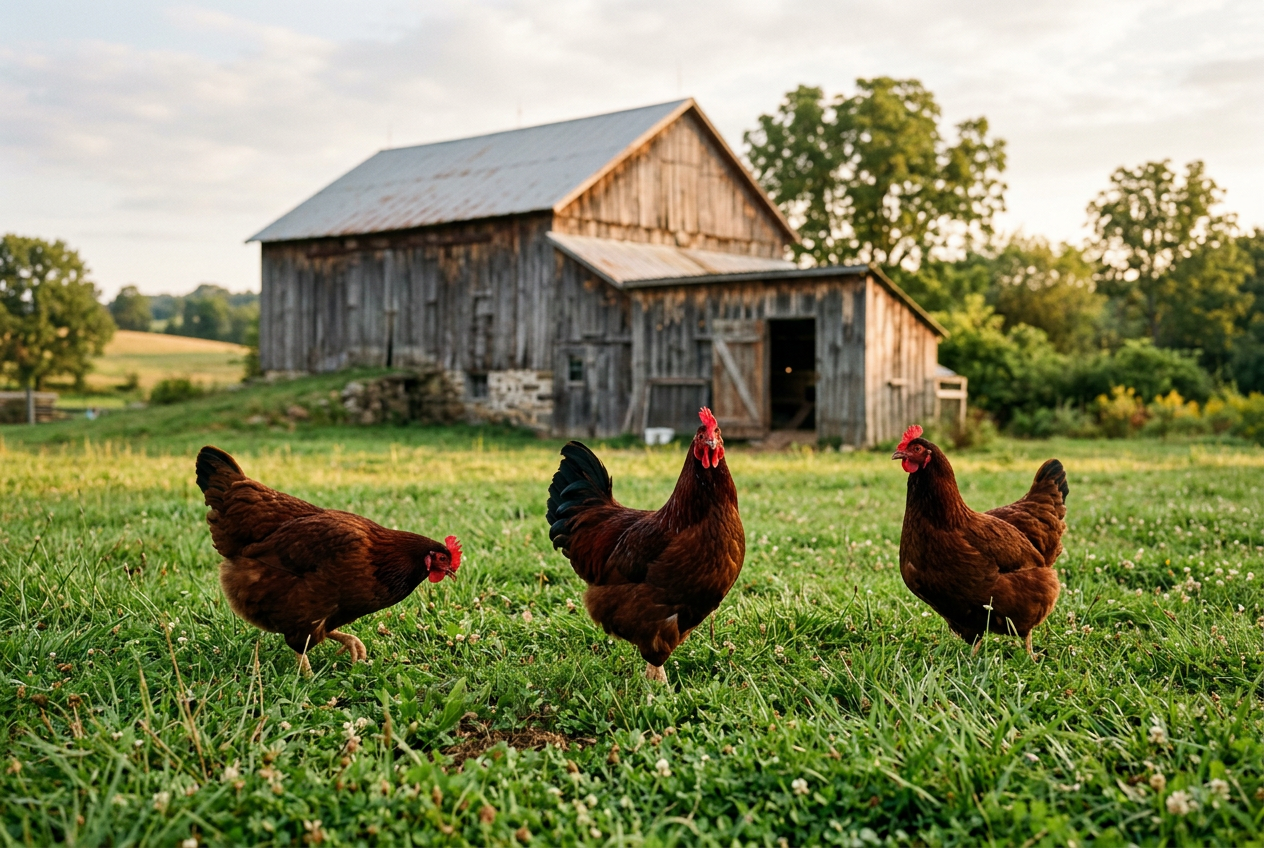
Rhode Island Reds earned their reputation long before backyard chickens became popular on social media.
They were developed as practical American farm birds: hardy enough to handle changing weather, substantial enough to have dual-purpose value, and productive enough to keep the egg basket full. More than a century later, that combination is still why Rhode Island Reds remain one of the most recognizable chickens in the country.
But there's an important detail that gets overlooked when people research the breed today: not every Rhode Island Red has been bred toward the same goal.
Traditional or exhibition-oriented Rhode Island Reds can be larger, darker and somewhat more prone to broodiness. Production-focused lines have been selected much more heavily for egg output and may be lighter-bodied, less broody and more efficient layers. The Livestock Conservancy specifically notes how decades of selection for egg production changed the modern utility type.
That distinction explains why one source may tell you Rhode Island Reds lay 150–200 eggs per year while another says 250–300. They're often describing different strains of the same historic breed.
Rhode Island Red Quick Facts
| Trait | Rhode Island Red |
|---|---|
| Primary use | Eggs and dual-purpose utility |
| Origin | Rhode Island & Massachusetts, USA |
| APA class | American |
| Hen weight | About 6.5 lb |
| Rooster weight | About 8.5 lb |
| Egg color | Brown |
| Egg size | Large |
| Egg production | Good to excellent; strongly dependent on strain |
| Temperament | Generally calm; some birds can be assertive |
| Rooster temperament | Some males may be aggressive |
| Broodiness | Variable; reduced in production strains |
| Foraging | Good practical range bird |
| Cold tolerance | Good |
| Heat tolerance | Generally adaptable with proper management |
| Comb types | Single comb and rose comb |
| Best for | Eggs, beginners, homesteads, mixed utility flocks |
| Main thing to understand | Heritage and production strains can differ considerably |
The Rhode Island Red is also literally a state symbol: Rhode Island designated the breed its official state bird in 1954.
What Makes Rhode Island Red Chickens Unique?
The Rhode Island Red's biggest strength isn't appearance. It's practicality.
The breed was developed to produce useful quantities of eggs while still maintaining enough body size to function as a traditional farm bird. The Livestock Conservancy describes the Rhode Island Red as one of the most successful dual-purpose chickens and particularly strong among traditional breeds for brown-egg production.
That combination resulted in a chicken that could handle backyard flocks, farm environments, confinement, free-ranging, meat production and household egg production — without being extremely specialized for any one environment.
Modern commercial poultry has largely separated meat birds from egg layers. The Rhode Island Red comes from an earlier philosophy: one useful chicken doing several jobs reasonably well.
Rhode Island Red History, Size & Appearance
Where Did Rhode Island Reds Come From?
The Rhode Island Red was developed in Rhode Island and Massachusetts during the late 1800s.
Its ancestry included several chicken types, with historical breed accounts identifying Malay, Java and Brown Leghorn influence among the birds used during development. The goal was not simply to create a dark-red show bird; breeders were selecting for useful meat qualities and dependable egg production.
The American Poultry Association admitted the Single Comb Rhode Island Red in 1904 and the Rose Comb variety shortly afterward. The APA currently recognizes both large-fowl Single Comb and Rose Comb Rhode Island Reds.
And the breed became so closely associated with its home state that Rhode Island officially adopted it as the state bird on May 3, 1954.
What Does a Rhode Island Red Look Like?
The classic Rhode Island Red is a substantial, rectangular chicken with deep red plumage. Typical breed characteristics include:
- deep red to mahogany-colored feathers
- a rectangular body
- black coloring in parts of the wings and tail
- yellow legs and yellow skin
- red facial features
- either a single or rose comb
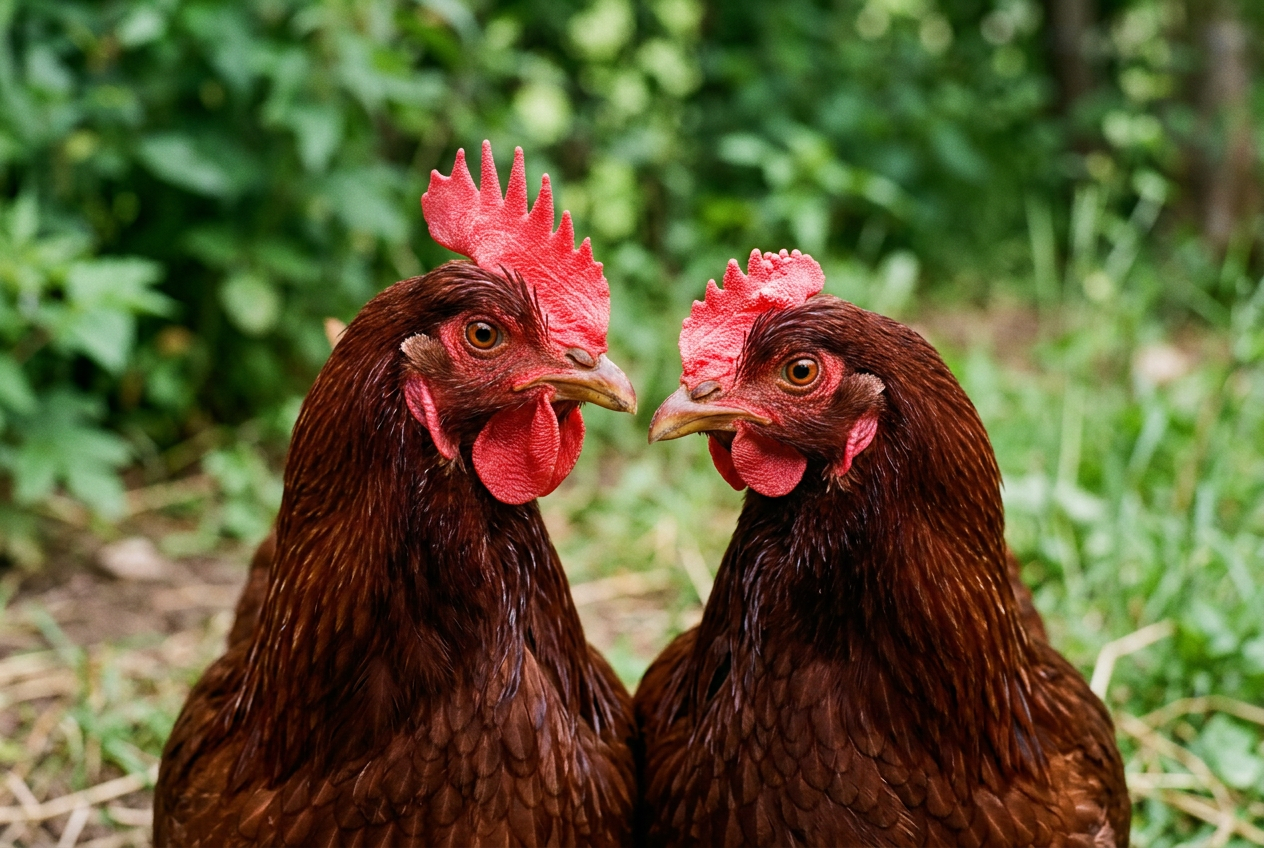
Oklahoma State notes that prolonged sun exposure can fade the red plumage, so a bird living outside all summer may not retain the same deep color seen on an exhibition bird kept under more controlled conditions.
How Big Do Rhode Island Reds Get?
The American standard weights listed by Oklahoma State are approximately:
| Bird | Standard Weight |
|---|---|
| Rooster | 8.5 lb |
| Hen | 6.5 lb |
| Cockerel | 7.5 lb |
| Pullet | 5.5 lb |
That puts Rhode Island Reds firmly in the standard-size category. They're smaller than a Buff Orpington but considerably more substantial than a lightweight Mediterranean layer.
Heritage vs. Production Rhode Island Reds
This deserves its own section because it explains a lot of conflicting information online.
A Rhode Island Red selected heavily for egg production can become noticeably different from one selected to remain close to the older breed type.
The Livestock Conservancy notes that beginning in the 1940s, Rhode Island Reds were increasingly selected for efficient egg production. Over time, these birds became smaller, lighter in color and less broody than the older traditional type.
Older heritage-type Rhode Island Reds tend to retain deeper color, heavier bodies, stronger dual-purpose characteristics, more traditional breed type and somewhat greater broodiness.
So the question "How many eggs does a Rhode Island Red lay?" needs one additional question: "Which Rhode Island Red?"
A high-production hatchery strain and a carefully bred exhibition flock can both legitimately be Rhode Island Reds while giving their owners noticeably different experiences.
Rhode Island Red Egg Production
Egg production is where Rhode Island Reds built much of their reputation. Among traditional dual-purpose breeds, they're consistently recognized as strong layers.
How Many Eggs Do Rhode Island Reds Lay?
Published figures vary significantly. Oklahoma State gives a traditional figure of roughly 150–200 eggs per year. The Livestock Conservancy reports that Rhode Island Reds may produce 200–300 eggs per year, and its more recent heritage-breed comparison identifies strong laying performance in non-industrial lines.
University of Maine poultry specialists likewise use roughly 250 eggs per year as a practical figure for brown production layers such as Rhode Island Reds under good management.
Rather than pretending those sources disagree about one identical bird, I'd use them to create a realistic backyard expectation.
Practical Roosted Estimate
About 4–5 eggs per week from a good utility hen during productive periods, with some production-selected hens capable of more. Heritage or exhibition-oriented birds may produce less.
Are Rhode Island Reds Good Egg Layers?
Yes. This is one breed where I'd comfortably use the word good.
Mississippi State rates Rhode Island Red egg production as good and large brown eggs as characteristic of the breed, while University of Minnesota identifies the breed as a hardy dual-purpose chicken commonly used for laying.
If you want even greater efficiency, commercial sex-links and specialized hybrids can outperform them. But if you want recognized breed + good eggs + practical body size, Rhode Island Reds are hard to dismiss.
What Color Eggs Do Rhode Island Reds Lay?
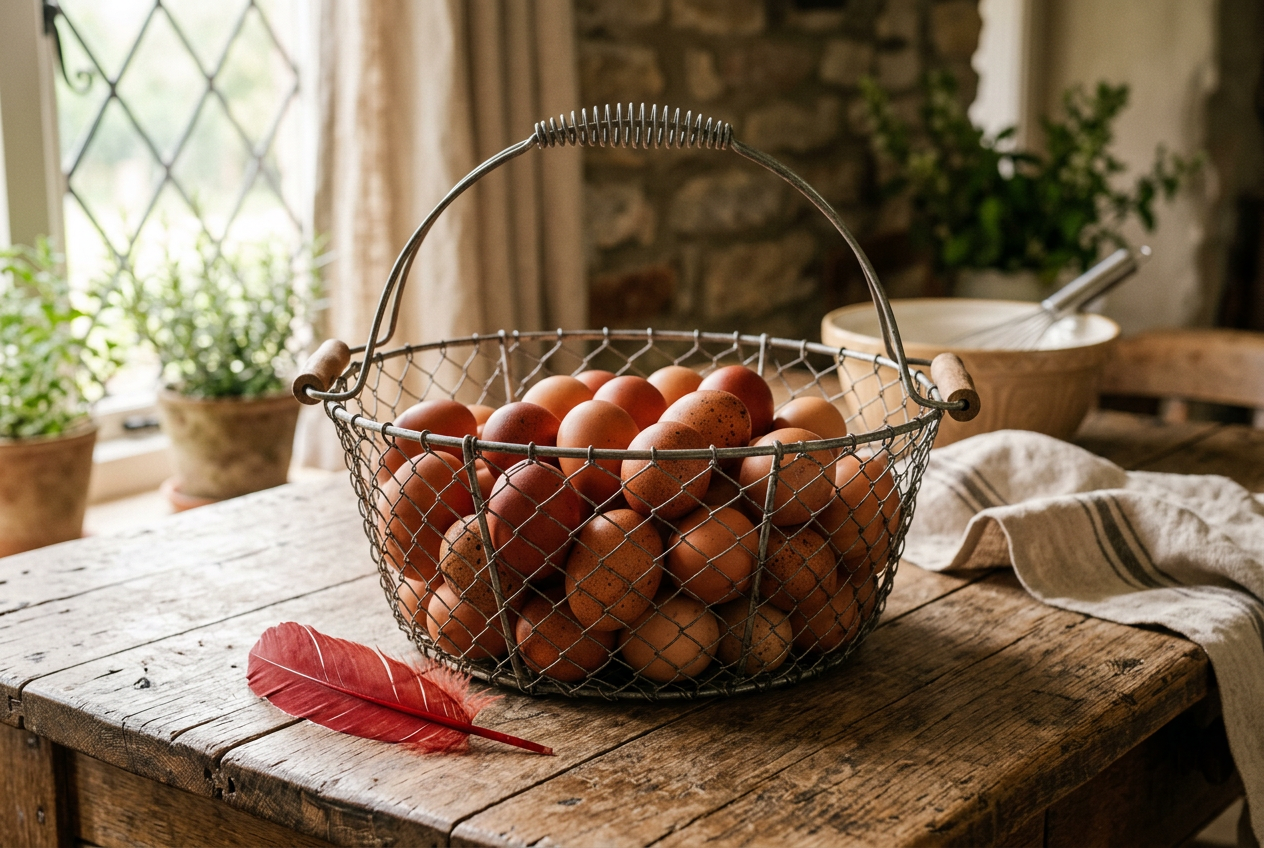
Rhode Island Reds lay brown eggs, generally large in size. Individual shell shade can vary, and some hens produce fairly dark brown eggs, but this isn't a chocolate-egg breed in the Marans sense.
When Do Rhode Island Reds Start Laying?
The Livestock Conservancy notes that Rhode Island Reds can begin laying as early as roughly six months, while production-selected pullets may mature somewhat earlier depending on strain and management.
For practical backyard planning, about 5–6 months is a reasonable expectation for many utility birds, with individual variation.
Season can move that timeline. A pullet reaching maturity during short winter days may begin later than one reaching the same developmental stage during spring. For the full laying timeline, see When Do Chickens Start Laying Eggs? Age, Signs & What to Expect.
Rhode Island Red Temperament & Flock Compatibility
Rhode Island Reds are often described as calm, hardy and practical chickens. The Livestock Conservancy lists their temperament as calm, while Mississippi State describes them as docile and friendly.
But this is another area where line and individual personality matter. I would generally expect Rhode Island Reds to be confident, active, curious, comfortable foraging, and less delicate socially than very docile ornamental breeds.
That doesn't automatically mean aggressive. It does mean I wouldn't describe them exactly the same way I would describe a Silkie or Buff Orpington.
Are Rhode Island Red Hens Friendly?
Many are. A Rhode Island Red raised around calm human interaction can become a very manageable backyard bird. They're often interested in what their keeper is doing and may readily approach for food.
But their overall personality is frequently more confident and businesslike than quiet lap chicken. That's not a negative — for many people, that's exactly the kind of chicken they want.
Are Rhode Island Reds Good With Children?
They can be. I'd be comfortable considering Rhode Island Red hens for a family flock, especially when the birds have been handled calmly from a young age.
As always, children should learn to avoid chasing birds, support chickens correctly, respect individual temperament, and wash hands after handling poultry. A calm hen and a calm child are a much better combination than relying on breed reputation alone.
What Are Rhode Island Red Roosters Like?
This is where I'd be more cautious. Both Oklahoma State and The Livestock Conservancy note that some Rhode Island Red males can be aggressive.
That doesn't mean every Rhode Island Red rooster is difficult. It means I would not choose one under the assumption that the breed guarantees an exceptionally docile male.
An adult rooster should be evaluated individually for charging, biting, spur use, territorial behavior, aggression toward children, and excessive pressure on hens.
Roosters are optional for egg production anyway. If you simply want brown eggs, you don't need one.
Rhode Island Reds in Mixed Flocks
Rhode Island Red hens can fit well into mixed flocks. Because they're confident, medium-large birds, they may hold their own socially better than particularly small or timid breeds.
I'd still watch pairings involving very docile birds such as Silkies, some Polish, and very small bantams — especially if space or feeder access is limited.
The goal isn't to assemble chickens based entirely on breed labels. It's to create a flock where every bird can eat, drink, roost, nest and move away without constant harassment.
Broodiness & Mothering Ability
Broodiness is one area where Rhode Island Reds can vary considerably.
Older breed descriptions note broodiness in many Reds, but decades of production selection have reduced that trait in some modern lines. Oklahoma State specifically notes that broodiness has been partially eliminated from better egg-production strains, and The Livestock Conservancy makes the same general distinction.
Do Rhode Island Reds Go Broody?
Some do. But I would describe broodiness as variable rather than a defining characteristic.
If natural hatching is one of your main goals, I'd choose a breed with a stronger and more predictable broody reputation. University of Maine specifically notes that Rhode Island Reds aren't considered among the very best mothering breeds compared with chickens such as Silkies and Cochins.
Does Broodiness Affect Egg Production?
Yes. A hen that becomes committed to sitting stops normal laying during that period.
So production-focused lines have historically been selected toward reduced broodiness, because a hen spending weeks incubating isn't producing eggs for the basket. That's one reason modern utility Reds can differ so noticeably from older birds.
Rhode Island Red Lifespan & Long-Term Production
As with the other Roosted breed guides, I would avoid claiming one precise breed-specific lifespan when there isn't strong evidence supporting it.
A reasonable planning horizon for a well-managed backyard chicken is roughly 6–8+ years, with substantial individual variation. Important influences include genetics, disease, predator exposure, nutrition, housing, accidents and veterinary care.
Egg Production Declines Before Lifespan Ends
A Rhode Island Red's reputation for productivity doesn't mean she'll produce at peak levels for eight years. Laying generally declines with age, and the bird can remain perfectly healthy long after her strongest production years are behind her. That's worth considering before starting any flock primarily for egg output.
Housing, Roosts & Space Requirements
Rhode Island Reds don't require specialized housing. They require good chicken housing: secure shelter, ventilation, dry bedding, appropriate roosts, nest boxes, enough floor area, sufficient outdoor room and predator protection.
Coop Space
For backyard planning, Roosted uses about 4 square feet of usable indoor floor space per standard hen as a comfortable starting target. A Rhode Island Red hen at around 6½ pounds fits comfortably into that standard-size category.
I wouldn't try to squeeze the number downward simply because other published minimums exist. More room makes litter management, flock interactions, feeder access and wet-weather confinement easier. Use our complete calculator: How Much Space Do Chickens Need? Coop & Run Size Chart + Calculator.
Run Space
Our standard planning target is about 10 square feet of run per hen. Rhode Island Reds make good use of outside space — they're practical range birds and tend to be more interested in exploring and scratching than some heavier, quieter breeds. If you can safely provide more than the minimum target, I would.
Roosts
Normal sturdy chicken roosts work well: wood, stable attachment, appropriate width, enough length for everyone, and sensible height. Rhode Island Reds are more athletic than heavy Orpingtons, but there's still no reason to put sleeping birds unnecessarily high in the air.
Nesting Boxes
Standard-sized nest boxes work well for Rhode Island Red hens, and you don't need a box for every bird. For dimensions and flock ratios, see Chicken Nesting Boxes: Size, Dimensions, How Many You Need & Where to Put Them.
Feeding Rhode Island Red Chickens
Rhode Island Reds became famous partly because of their ability to remain productive under practical farm conditions. Historical breed sources even note their ability to continue producing under less-than-ideal conditions.
That does not mean I'd intentionally provide mediocre nutrition. Modern backyard birds should receive a complete poultry ration appropriate to age and production stage.
Feed by Life Stage
Chicks: complete chick starter.
Growing pullets: an appropriate grower ration.
Laying hens: a nutritionally complete layer ration or a properly managed all-flock system.
All birds: constant clean water.
The goal isn't to find out how poorly a hardy breed can be fed. The goal is to give it what it needs to perform well.
Treats Still Count
Rhode Island Reds may enthusiastically tell you otherwise. But scratch, mealworms, kitchen scraps and garden extras should remain supplemental. A nutritionally balanced feed should make up the majority of the diet.
Feed and Egg Production Go Together
A productive Rhode Island Red has real nutritional demands. If laying suddenly declines, look at the whole situation — age, season, daylight, molt, health, diet and water — rather than immediately assuming the breed isn't performing.
For the broader laying picture: How Often Do Chickens Lay Eggs? Daily, Weekly & Yearly Expectations
Cold Weather & Summer Heat
One of the Rhode Island Red's traditional strengths is adaptability. The Livestock Conservancy's current breed comparison describes them as doing well in both hot and cold climates, while University of Minnesota describes them as hardy birds that perform well in small flocks.
That doesn't eliminate normal weather management.
Cold Weather
Provide dry bedding, ventilation, unfrozen water, and shelter from wind and precipitation.
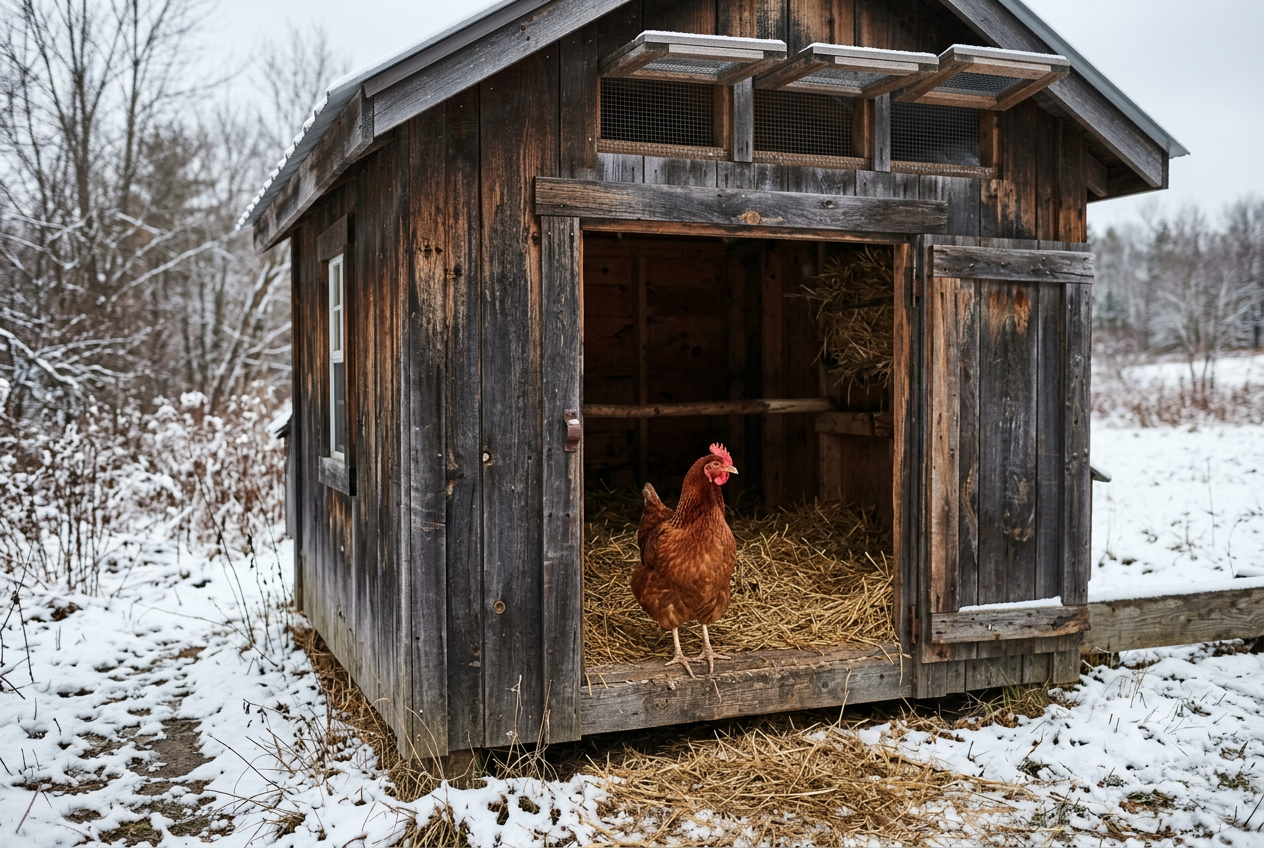
Single-comb Rhode Island Reds also have more exposed comb tissue than Rose Comb birds. The Livestock Conservancy specifically notes the Rose Comb Rhode Island Red as the better choice for colder conditions, where reduced exposed comb area can be useful.
Regardless of comb type, don't respond to cold weather by sealing the coop airtight. See Chicken Coop Ventilation: How Much Does Your Coop Need?
Hot Weather
Rhode Island Reds can also function well in warm climates when basic summer needs are met: reliable shade, abundant cool water, ventilation, air movement and adequate outdoor space.
Watch for normal heat-stress signs: panting, wings held away from the body, lethargy, reduced feed intake and weakness.
Hardy doesn't mean immune to weather. It means the breed gives you a relatively adaptable starting point.
Free-Ranging & Foraging
This is another place where Rhode Island Reds differ from Buff Orpingtons. The Livestock Conservancy specifically describes the Rhode Island Red as a chicken that likes to range, and Mississippi State describes the breed as a useful forager.
That makes them appealing if you want birds that actively use a backyard or homestead. Expect them to scratch, investigate, forage, move around, hunt insects and explore vegetation.
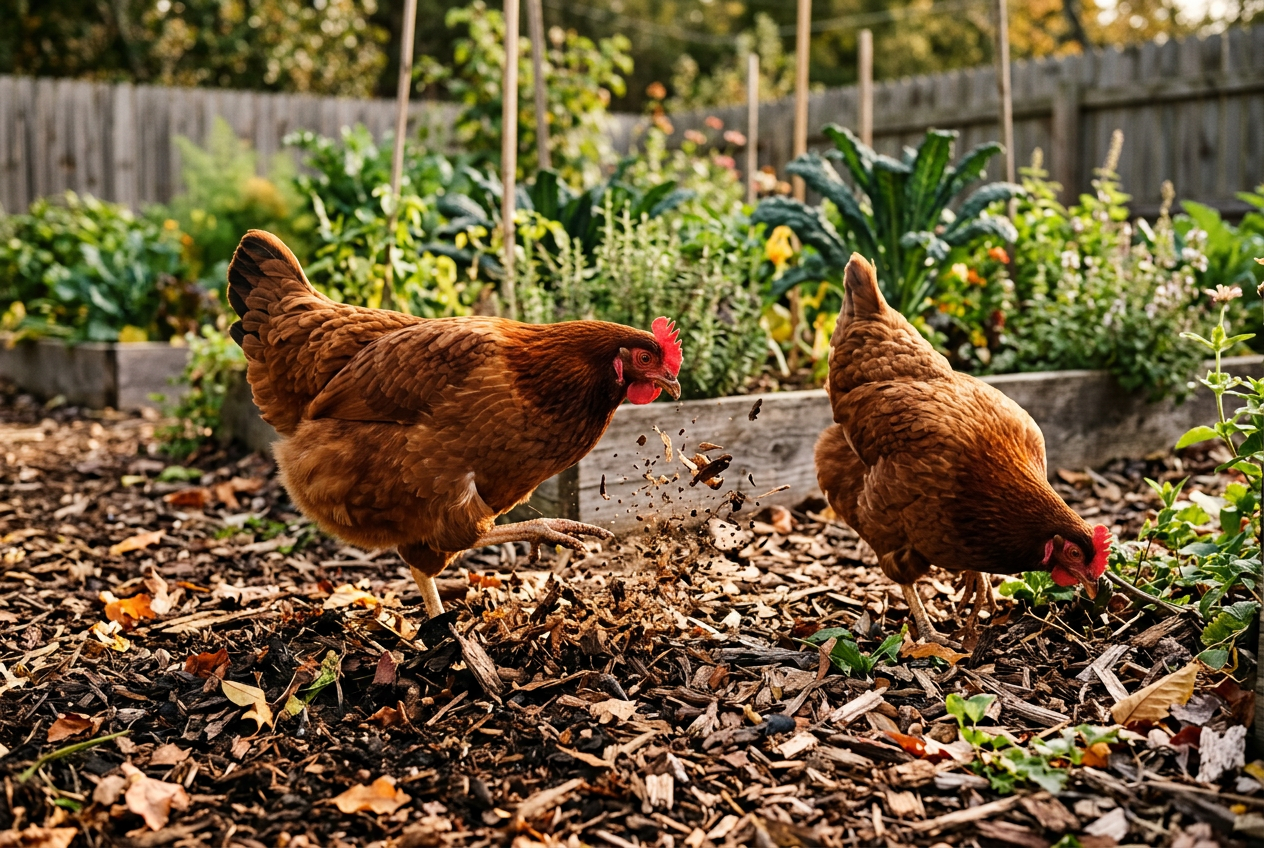
Will Rhode Island Reds Destroy Landscaping?
They are chickens. So your mulch is subject to reinterpretation.
A motivated Rhode Island Red can move leaves, wood chips, soil and garden mulch farther than you probably intended. If some areas need to remain chicken-free, fencing is more reliable than explaining your landscaping vision to the hens.
Rhode Island Red vs. Similar Chicken Breeds
Rhode Island Reds become more useful to understand when compared with breeds that emphasize different traits.
| Characteristic | Rhode Island Red | Buff Orpington | Australorp | New Hampshire |
|---|---|---|---|---|
| Main appeal | Strong practical brown-egg production | Calm family dual-purpose bird | Strong egg production | Faster-growing RIR-derived dual-purpose bird |
| Hen weight | ~6.5 lb | ~8 lb | ~6.5 lb | ~6.5 lb |
| Egg color | Brown | Brown | Light brown/tinted | Brown |
| Egg size | Large | Large–extra large | Medium–large | Large |
| Egg production | Good to excellent by line | Moderate to good | Strong | Good |
| Temperament | Generally calm/confident | Generally very calm | Generally calm/active | Generally docile |
| Broodiness | Variable; often reduced in production lines | Fairly common | Variable | More common |
| Foraging | Good practical range bird | Less active | Good | Good |
| Main consideration | Strain differences; some assertiveness | Size and summer heat | More production-focused | More meat/growth emphasis |
Rhode Island Red vs. Buff Orpington
Choose the Rhode Island Red if your priorities lean toward stronger egg production, more active ranging, slightly smaller body size and practical utility.
Choose the Buff Orpington if you prefer a heavier bird, an especially calm temperament, stronger broodiness and natural mothering ability. Read Buff Orpington Chickens: Egg Production, Temperament & Care.
Rhode Island Red vs. Australorp
Both make excellent practical backyard chickens. The Rhode Island Red is a classic American dual-purpose bird with a very long production history. The Australorp descends partly from Orpington stock and was developed in Australia with particularly strong emphasis on laying ability.
I'd consider both if eggs matter significantly. The individual strain may ultimately matter as much as the breed name.
Rhode Island Red vs. New Hampshire
This comparison has an interesting history. The New Hampshire was developed from Rhode Island Red stock through deliberate selection for characteristics including faster growth, earlier maturity and practical meat qualities. Mississippi State notes that New Hampshires came directly from selective Rhode Island Red breeding.
So these aren't simply two unrelated red chickens — they're closely connected. A practical way to think about them:
Rhode Island Red: a stronger identity around egg production and classic dual-purpose utility.
New Hampshire: an RIR-derived breed pushed more heavily toward early maturity and meat qualities.
Rhode Island Reds and Modern Hybrid Layers
Rhode Island Red genetics have also played an important role in commercial and backyard hybrid chickens.
Mississippi State notes that Rhode Island Reds have been used in modern hybrids including sex-links and Cinnamon Queens, and University of Maine describes the classic cross of a Rhode Island Red male over Barred Plymouth Rock females to produce useful sex-linked chicks.
That's an important part of the breed's legacy. Rhode Island Reds didn't just become successful themselves — they also became useful genetic building blocks for other productive chickens.
Are Rhode Island Reds Good for Beginners?
Yes. They're one of the traditional breeds I'd strongly consider for a first practical backyard flock.
University of Minnesota identifies them as hardy and well suited to small flocks, while The Livestock Conservancy's current breed guide rates the non-industrial Rhode Island Red as appropriate for novice keepers.
Their strengths are easy to appreciate: good egg production, a normal-sized body, adaptable climate performance, practical foraging behavior, widely available birds and straightforward chicken care.
The biggest caution is simply understanding that temperament and production can vary by strain.
Rhode Island Red Pros & Cons
| Pros | Cons |
|---|---|
| Strong brown-egg production | Production varies significantly by strain |
| Large eggs | Some hens can be socially assertive |
| Hardy and adaptable | Some roosters may be aggressive |
| Useful free-range ability | Less reliably broody than traditional mothering breeds |
| Dual-purpose heritage | High-production strains may differ from heritage type |
| Good beginner potential | Single comb needs normal cold-weather attention |
| Commonly available | Not as uniformly docile as the calmest breeds |
| Important traditional American breed | Feed-store birds may not resemble exhibition stock closely |
Rhode Island Reds Are a Good Fit If You Want
- plenty of brown eggs
- a hardy practical flock
- active chickens
- good backyard foraging
- a recognized traditional breed
- moderate body size
- chickens with strong farm utility
Consider Another Breed If You Want
- extremely calm ornamental birds
- predictable broodiness
- tiny bantams
- unusual egg colors
- a breed selected primarily as a lap-style companion
- guaranteed docile roosters
Recommended Setup for Four Rhode Island Reds
Four Rhode Island Red hens make a very manageable small household flock.
| Area | What I'd Provide |
|---|---|
| Coop | Dry, predator-secure and well ventilated |
| Indoor space | Around 16 sq ft using Roosted's planning target |
| Run | Around 40 sq ft minimum planning target, preferably more |
| Roosts | Stable wooden perches with adequate length |
| Nest boxes | 1–2 comfortable standard-size boxes |
| Feeder | Enough access to prevent crowding |
| Water | Constant clean fresh water |
| Shade | Reliable summer shade |
| Ground | Well-drained, scratchable surface |
| Dust bath | Dry soil/sand area |
| Predator protection | Secure coop and run with nighttime lockup |
If I had the property available, I'd give the run additional space. Rhode Island Reds are birds that can actually make use of it.
Rhode Island Red Care Checklist
Daily
- Provide complete age-appropriate feed
- Provide clean fresh water
- Collect eggs
- Observe flock behavior
- Confirm predator security
Regularly
- Check bedding for moisture
- Clean feeders and waterers
- Monitor body condition
- Check feet and legs
- Watch mixed-flock dynamics
- Keep nesting boxes clean
- Inspect coop and run for damage
During Summer
- Provide reliable shade
- Maintain abundant water
- Increase safe airflow
- Watch for heat stress
- Avoid overcrowding
During Winter
- Keep bedding dry
- Maintain high ventilation
- Prevent water from freezing
- Monitor exposed comb tissue
- Keep direct drafts off sleeping birds
During Laying Season
- Maintain complete nutrition
- Provide appropriate calcium access
- Track unusual production changes
- Watch for molt or broodiness
- Keep nest boxes clean and inviting
The Bottom Line: Are Rhode Island Red Chickens Right for You?
The Rhode Island Red became famous because it worked. It wasn't built around unusual feathers. It doesn't lay novelty-colored eggs. It isn't tiny. And it wasn't created simply to be an exhibition bird.
The breed was developed to be hardy + productive + useful. More than a century later, that's still its strongest argument.
A typical Rhode Island Red gives you large brown eggs, strong laying potential, medium-large body size, good ranging ability, climate adaptability and practical dual-purpose heritage — with relatively straightforward care.
But the most important thing to understand about the breed today is the difference between lines. A dark, heavy traditional Rhode Island Red bred toward the Standard can be quite different from a lighter utility strain selected hard for egg production. Decades of selective breeding have widened that gap.
So don't buy Rhode Island Reds based only on the words "Rhode Island Red." Ask the breeder or hatchery what the mature birds look like, expected egg production, temperament, adult weight, broodiness, and whether the flock is selected primarily for production or traditional breed type.
If your goal is "I want a classic chicken that gives us plenty of brown eggs and handles normal backyard life well," the Rhode Island Red remains one of the easiest breeds to put on the shortlist.
Its history isn't an accident. This chicken became one of America's most famous poultry breeds because generations of keepers found it genuinely useful.
Rhode Island Red Chicken FAQ
How many eggs do Rhode Island Reds lay?
Published estimates vary by strain. Traditional references range from roughly 150–200 eggs annually, while production-oriented Rhode Island Reds may reach roughly 200–300 eggs per year. A practical backyard expectation for a good utility hen is around 4–5 eggs per week during strong production.
What color eggs do Rhode Island Reds lay?
Rhode Island Reds lay brown eggs, generally large in size.
Are Rhode Island Reds friendly?
They are generally described as calm, hardy and manageable chickens. Individual birds vary, and some strains or hens may be more assertive than especially docile breeds.
Are Rhode Island Reds good for beginners?
Yes. Their hardiness, useful egg production and straightforward care make them a strong beginner breed.
How big do Rhode Island Reds get?
Standard large-fowl hens weigh approximately 6½ pounds, while roosters weigh around 8½ pounds.
When do Rhode Island Reds start laying?
Many begin around 5–6 months, although strain, season and individual maturity affect the timing. The Livestock Conservancy notes laying can begin by roughly six months.
Are Rhode Island Reds cold hardy?
Yes. They're considered hardy birds capable of performing in cold climates. Rose Comb Rhode Island Reds can be particularly attractive for colder areas because the comb presents less exposed tissue.
Are Rhode Island Reds heat tolerant?
They are considered adaptable to both warmer and colder climates, provided they receive shade, water and proper ventilation.
Do Rhode Island Reds go broody?
Some do, particularly more traditional lines. Broodiness has been deliberately reduced in many egg-production strains, so it isn't equally common across all Rhode Island Reds.
Are Rhode Island Red roosters aggressive?
Some can be. Both Oklahoma State and The Livestock Conservancy note that Rhode Island Red males may show aggressive behavior, so individual roosters should be evaluated rather than assuming breed reputation guarantees temperament.
Can Rhode Island Reds free-range?
Yes. They have a strong traditional reputation as practical range birds and can make good use of outdoor foraging space.
What is the difference between Rhode Island Reds and New Hampshires?
New Hampshire chickens were developed through selective breeding of Rhode Island Red stock, with heavier emphasis on traits such as rapid growth and meat utility. Rhode Island Reds retain a particularly strong reputation for practical egg production.
Want to estimate what your flock could produce? Try the Chicken Egg Production Calculator →
Raising a Rhode Island Red pullet? Find her expected first-egg range →
Not sure whether this breed is right for you? Try the Chicken Breed Finder →
Keep Reading
Want a calmer, heavier brown-egg breed? Buff Orpington Chickens: Egg Production, Temperament & Care
Interested in colorful eggs instead? Easter Egger Chickens: Egg Colors, Temperament & Care Guide
Looking for a small companion breed? Silkie Chickens: Eggs, Temperament, Lifespan & Complete Care Guide
Deciding how many hens to start with? How Many Chickens Should I Get? A Practical Flock Size Guide for Beginners
Planning your coop and run? How Much Space Do Chickens Need? Coop & Run Size Chart + Calculator
Sources & Further Reading
- The Livestock Conservancy — Rhode Island Red Chicken
- Oklahoma State University — Rhode Island Red Chickens
- American Poultry Association — Rhode Island Red Chicken
- University of Minnesota Extension — Raising Chickens for Eggs
- Mississippi State University Extension — Choosing the Right Breed for Your Backyard Flock
- University of Maine Cooperative Extension — poultry resources
- State of Rhode Island — State Facts & Figures
Considering a giant dual-purpose breed? Brahma Chickens: Size, Egg Production, Temperament & Care
Comparing another strong brown-egg layer? Australorp Chickens: Egg Production, Temperament & Care
Comparing another classic American breed? Barred Rock Chickens: Egg Production, Temperament & Care