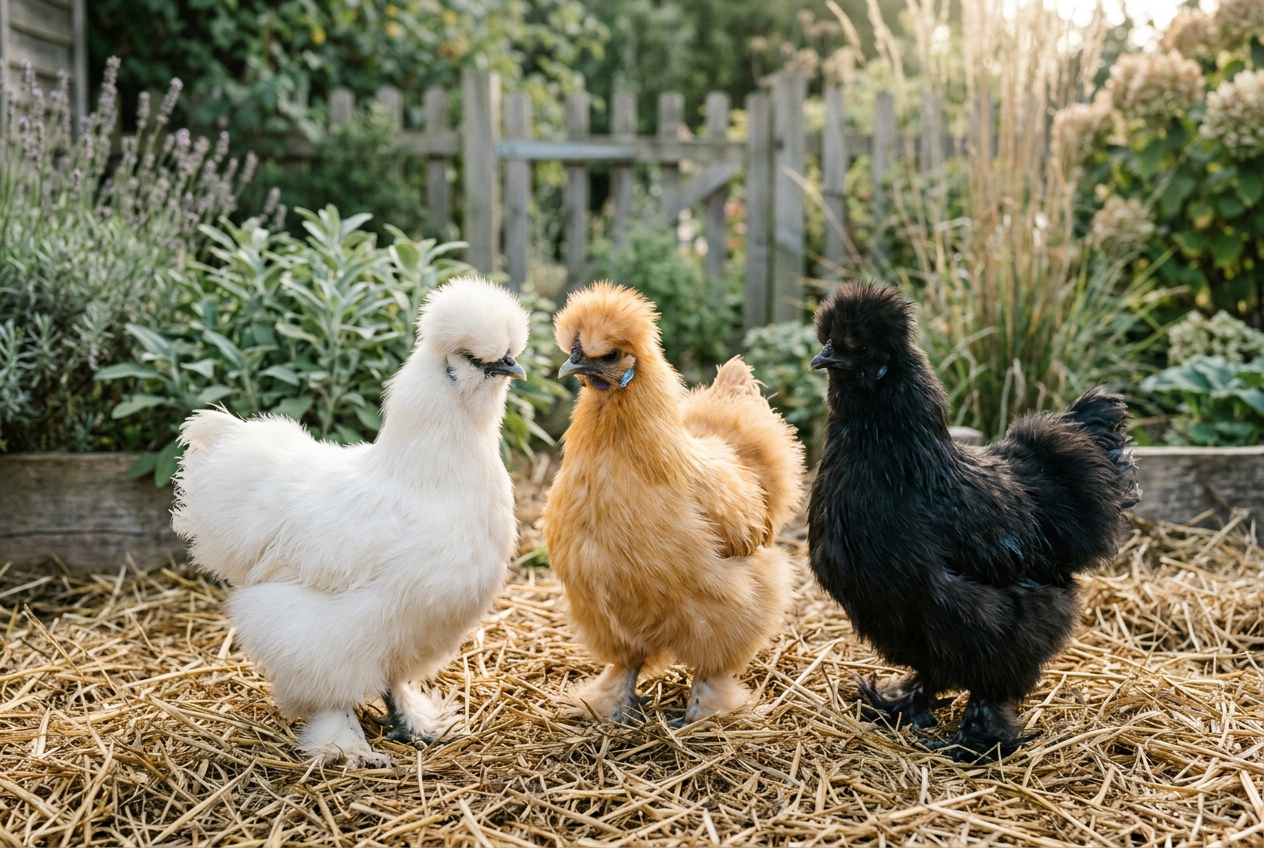
Silkie chickens don't look much like the average backyard hen.
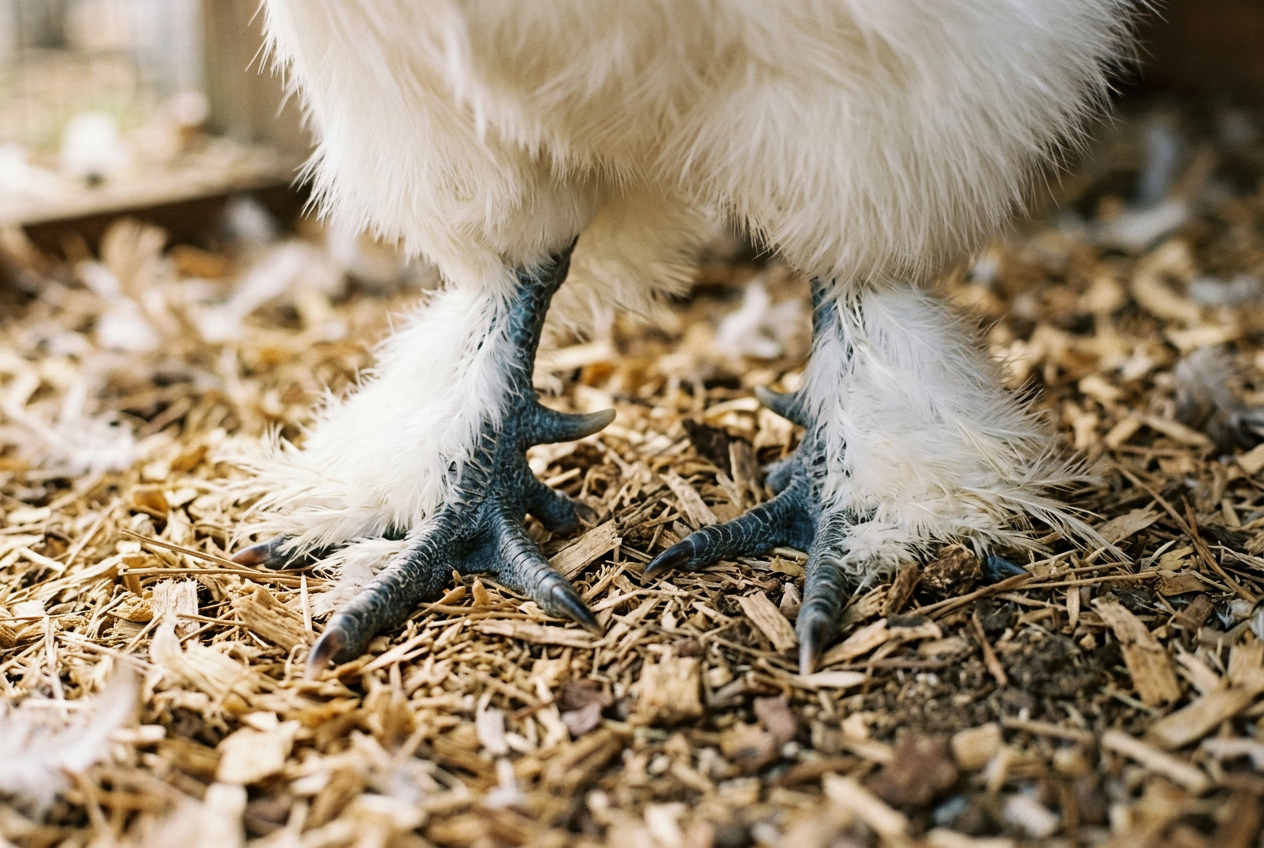
Their feathers have a soft, almost fur-like appearance. They have dark skin beneath all that fluff, feathered legs, five toes instead of the usual four, and a distinctive crest on top of the head.
But their appearance is only part of why people love them. Silkies are also known for their generally calm temperament and unusually strong tendency to go broody. That combination has made them popular as ornamental chickens, family flock members, natural mothers and companion birds.
They are not, however, the breed I'd choose if maximum egg production or rugged free-ranging were the priority.
Silkie Chicken Quick Facts
| Trait | Silkie Chicken |
|---|---|
| Primary use | Ornamental, companion, broody hen |
| U.S. classification | Bantam |
| Hen weight | About 32 oz / 2 lb |
| Rooster weight | About 36 oz / 2.25 lb |
| Egg color | Cream or tinted |
| Egg size | Small |
| Egg production | Relatively low; roughly 2–3/week while actively laying |
| Broodiness | Very high |
| Temperament | Generally calm and docile |
| Flight ability | Limited |
| Skin | Dark due to fibromelanosis |
| Feet | Feathered, usually five toes |
| Best for | Pets, ornamental flocks, natural hatching |
| Main care considerations | Dry conditions, predator protection, accessible housing |
The unusual feather structure, dark pigmentation, fifth toe, broodiness and cream/tinted egg color are all established Silkie breed characteristics.
What Makes Silkie Chickens Unique?
Silkies are an old Asian chicken breed whose exact place of origin is uncertain. Oklahoma State University notes that most accounts associate them with China or Japan and points to Marco Polo's 13th-century description of a chicken with fur-like plumage during his travels in China. The American Poultry Association admitted Silkies to its Standard of Perfection in 1874.
Their history is interesting, but what really distinguishes the breed is the combination of physical traits you don't normally see together in other chickens.
Their Unusual Feathers
Normal chicken feathers contain tiny structures that interlock to create a relatively smooth feather surface. Silkie plumage lacks many of those normal hooklets. That gives the feathers their loose, soft appearance and the texture people often describe as fluffy, silky or fur-like.
It also affects more than appearance. Silkies have much poorer flight ability than conventional-feathered chickens, which matters when you're designing roosts, ramps, nesting areas, fencing and predator protection. A Silkie should not need to fly several feet to reach something essential.
Black Skin and Five Toes
Beneath the feathers, Silkies have unusually dark skin and tissues caused by a pigmentation trait known as fibromelanosis. This pigmentation is separate from feather color — a white Silkie can still have dark skin underneath its white plumage.
Silkies are also known for having five toes rather than the four found on most chicken breeds. Their lower legs and feet are feathered as well, giving the breed an appearance that's difficult to mistake once you know what you're looking for.
Silkie Size, Colors & Appearance
In the United States, Silkies are considered bantams. Oklahoma State lists the American Poultry Association standard weights at approximately:
| Bird | Standard Weight |
|---|---|
| Silkie hen | 32 oz / 2 lb |
| Silkie rooster | 36 oz / 2.25 lb |
That makes them considerably smaller than common standard-sized backyard breeds such as Orpingtons, Plymouth Rocks and Rhode Island Reds.
Recognized Silkie Colors
The American Poultry Association recognizes multiple Silkie varieties, including familiar colors such as:
- Black
- Blue
- Buff
- Gray
- Partridge
- White
Additional accepted varieties have been added over time, and breeders also produce colors and patterns outside the exhibition standard. If you're simply choosing backyard pets, color is largely personal preference. If you intend to show Silkies, use the current APA Standard of Perfection rather than assuming every commercially available color is recognized.
Bearded vs. Non-Bearded Silkies
You'll also encounter bearded Silkies, with additional feathering around the face and throat, and non-bearded Silkies, with less facial feathering and more visible facial features.
Neither is inherently better for a backyard flock. The practical consideration is visibility: an especially heavy crest or facial feathering should not interfere with a bird's ability to comfortably see its surroundings.
How Many Eggs Do Silkie Chickens Lay?
Silkies are not high-production layers. Oklahoma State University's breed reference simply describes them as birds that lay relatively few eggs and are known for broodiness.
For a more practical planning estimate, Meyer Hatchery lists roughly 2–3 small eggs per week during active production. That's useful as a general expectation, but it is not a universal breed standard or guarantee.
Actual production can vary with:
- individual bird
- age
- season
- daylight
- nutrition
- health
- molt
- broodiness
Broodiness is particularly important with Silkies. A Silkie may be laying normally and then spend several weeks focused almost entirely on sitting in a nest. When that happens, egg production drops accordingly.
Are Silkies Good Egg Layers?
If you're comparing them with breeds developed primarily for laying: no. If your priority is obtaining the maximum number of eggs from a small flock, I'd choose a more production-oriented breed.
Silkies make more sense when eggs are one benefit of owning the bird rather than the entire reason you chose it.
What Color Eggs Do Silkies Lay?
Silkie hens lay cream or tinted eggs. Their eggs are generally small, which matches the size of the bird.
Despite Silkies' unusual dark skin and sometimes bluish facial features, they do not normally lay blue or green eggs. That's worth mentioning because physical features such as earlobe color are sometimes incorrectly used online to predict eggshell color.
A typical Silkie egg is simply a small cream-to-light-tinted chicken egg. And yes, it is completely edible.
When Do Silkie Chickens Start Laying?
Silkies can mature more slowly than production-focused laying breeds. General backyard-chicken guidance commonly places first eggs somewhere around the five- to six-month range for many breeds, but Silkies may begin later. Breeder and hatchery guidance often places their first eggs roughly around 6–8 months, with substantial individual and seasonal variation.
I would treat that as a planning range rather than a deadline. If a healthy Silkie pullet hasn't laid at exactly 20 weeks, that doesn't automatically indicate a problem. Look instead for the usual signs of approaching lay:
- comb development
- interest in nesting areas
- squatting behavior
- changes in pelvic spacing
- changes in routine
Season matters too. A pullet reaching maturity during short winter days may take longer to begin laying than one reaching the same age during spring. For the broader laying timeline, see When Do Chickens Start Laying Eggs? Age, Signs & What to Expect.
Silkie Temperament & Flock Compatibility
Temperament is one of the Silkie's biggest strengths. The American Poultry Association highlights the breed's calm disposition, and that reputation is one of the main reasons Silkies have become popular as companion chickens.
Individual birds still vary. But as a breed, Silkies are generally associated with calm behavior, relatively easy handling, lower-intensity flock personalities and strong maternal behavior.
Are Silkies Friendly?
Many are. Silkies raised around calm human interaction often become comfortable around their keepers. But breed reputation shouldn't become an expectation that every Silkie wants to be carried around. One may happily climb onto your lap; another may prefer standing nearby and waiting for snacks. Both are normal.
Are Silkies Good With Children?
Their small size and generally calm disposition can make Silkies an appealing family breed. Children should still be taught proper poultry handling:
- don't chase
- don't squeeze
- support the bird's body
- don't pull feathers
- wash hands after handling poultry
Small and gentle doesn't mean the bird should be treated like a toy.
Can Silkies Live With Other Chicken Breeds?
Yes, but I'd pay attention to flock personality. Silkies are small, relatively docile and poor flyers, and some have heavy crest feathering that can limit peripheral vision. That can put them at a disadvantage in a highly assertive mixed flock.
A calm standard-sized hen may coexist beautifully with Silkies. A flock that constantly chases, pecks or blocks them from food and water may not. Watch for:
- repeated chasing
- crest pecking
- hiding
- weight loss
- inability to reach feed
- one bird constantly being displaced
More room and duplicate resources can help, but persistent bullying shouldn't simply be dismissed as "the pecking order."
Broodiness & Natural Hatching
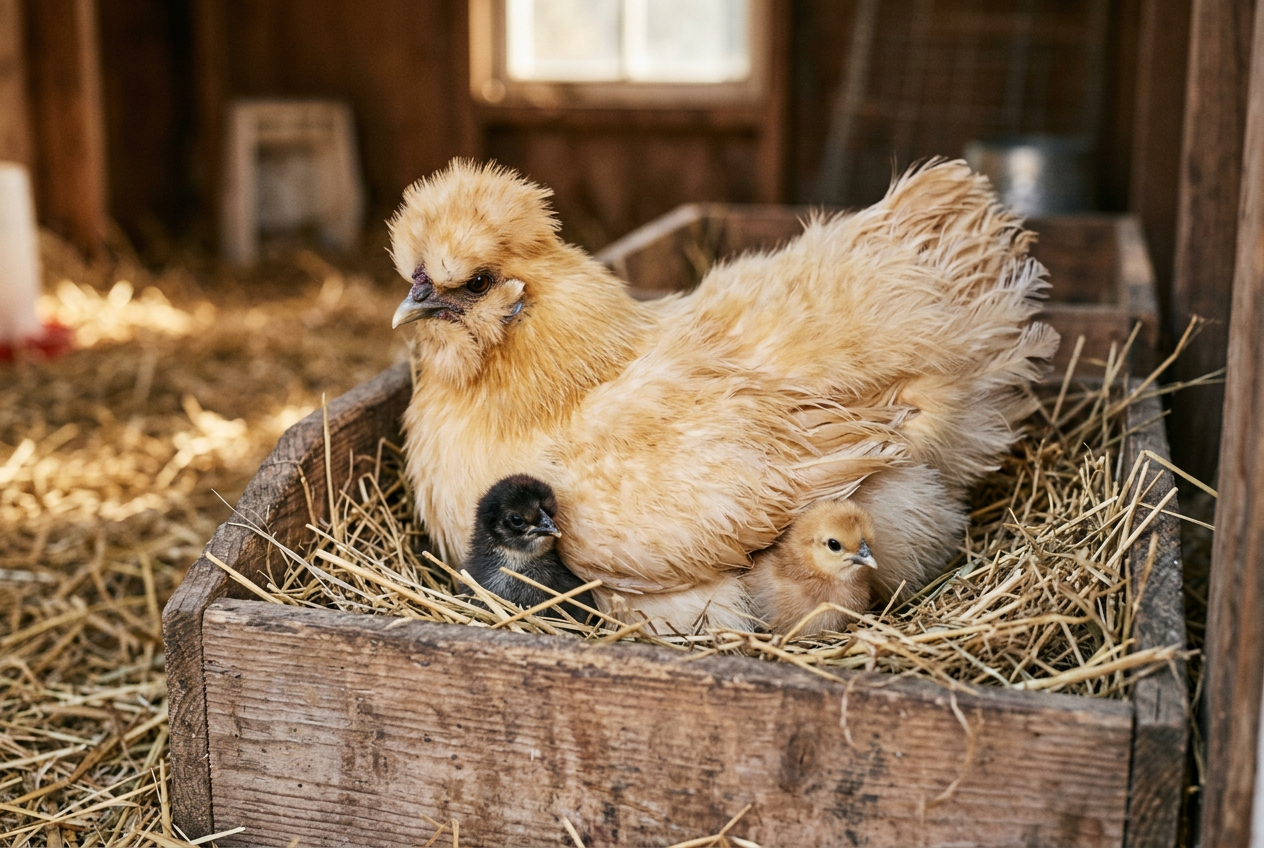
If there is one trait Silkies may be even more famous for than their feathers, it's broodiness. Oklahoma State specifically identifies Silkies as a breed known to go broody.
When a hen becomes broody, she becomes focused on sitting on a nest and typically stops normal egg production during that period. That makes broodiness both an advantage and a disadvantage.
If You Want to Hatch Chicks
A broody Silkie can be extremely useful. Silkies have a longstanding reputation as natural setters and mothers, and keepers often use them to hatch eggs naturally rather than relying entirely on an incubator.
If You Mainly Want Eggs
Frequent broodiness makes Silkie production less predictable. A hen sitting for weeks isn't producing a normal stream of eggs during that time. That's one reason exact annual egg counts for Silkies should be treated cautiously — their biological tendency toward motherhood works against consistent egg production.
Managing a Broody Silkie
If you want chicks, make sure the hen has:
- a safe nest
- access to food
- fresh water
- protection from flock harassment
- a plan for chicks after hatch
If you don't want chicks, you may decide to interrupt the broody cycle rather than letting her sit indefinitely on infertile eggs. Either way, monitor the hen's body condition and general health.
Silkie Lifespan & Health
You'll often see very specific Silkie lifespan claims online. I'd be more cautious. There isn't a strong breed-specific longevity dataset proving that a Silkie normally lives exactly seven, eight or nine years.
General small-flock chicken guidance is more defensible. Oklahoma State gives approximately 6–8 years as a reasonable lifespan for chickens in well-managed small flocks, and Penn State notes that backyard chickens commonly live around eight years and that some may live considerably longer.
So for planning purposes, expect a Silkie to potentially be part of your flock for 6–8+ years. Some will live longer; some will not. Individual lifespan depends on factors including:
- genetics
- disease
- predators
- nutrition
- accidents
- housing
- veterinary care
The important point for a new keeper is that Silkies are a multi-year commitment, even after egg production begins declining.
Production Doesn't Last as Long as the Chicken
This matters if eggs are part of your reason for keeping them. A hen can remain healthy for years after her most productive laying period has passed. With Silkies — already relatively modest layers — that makes it even more important to decide whether you're comfortable keeping older birds primarily as flock members and companions.
Housing, Roosts & Space Requirements
Silkies need the same fundamentals as other chickens: predator-resistant shelter, fresh air, dry bedding, appropriate feed, clean water, nesting areas, resting areas and outdoor space. The difference is how their body structure influences the design.
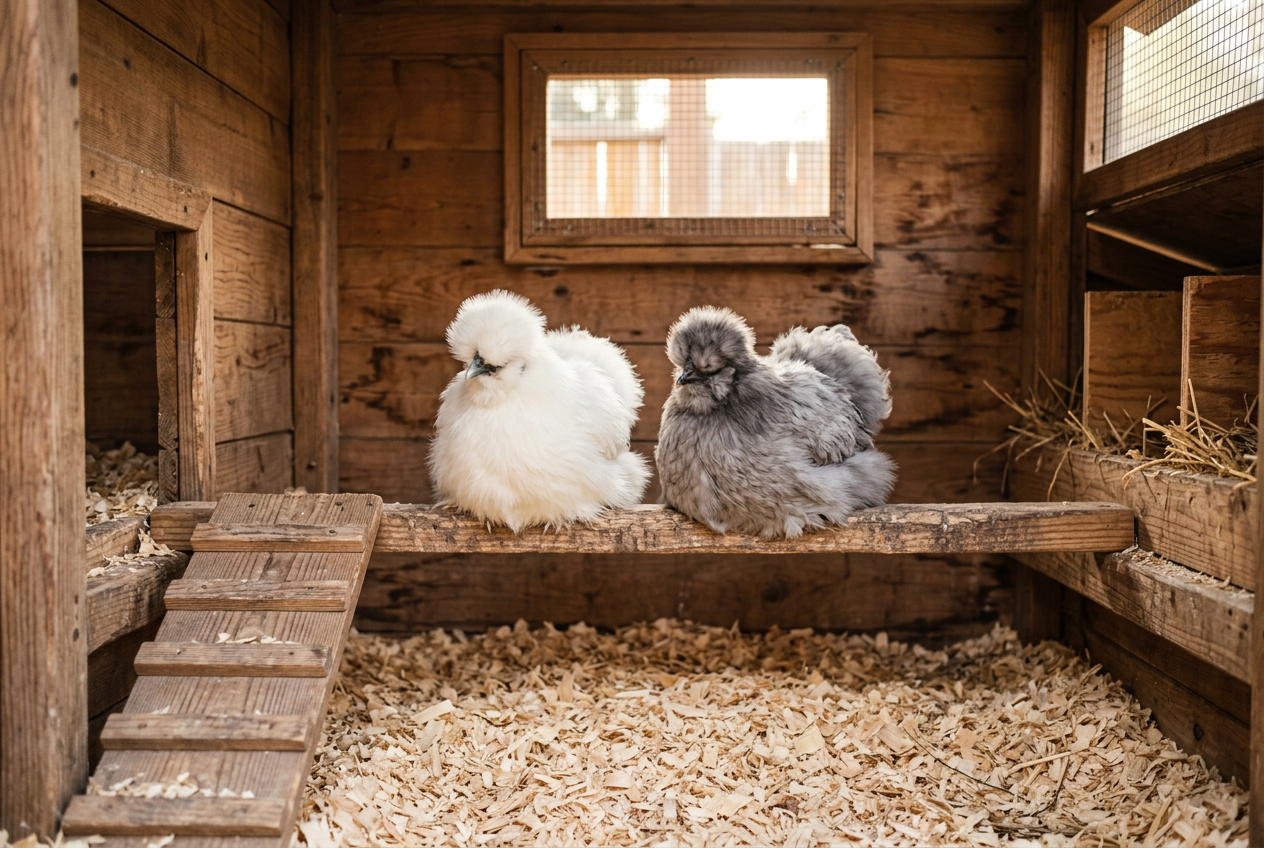
Give Them Accessible Roosts
Because Silkie feathering limits normal flight ability, I prefer low, easy-to-reach roosts rather than tall perches designed for agile standard chickens. A practical Silkie roost should be:
- sturdy
- wooden
- wide enough for stable footing
- easy to reach
- low enough to reduce injury risk
A ramp or intermediate step can also help. Some Silkies may choose to sleep at ground level rather than use a perch. The goal isn't to force them onto a high roost — it's to give them a safe, dry and comfortable sleeping area.
Give Them Useful Space
Because Silkies are bantams, published minimum-space recommendations may allow a smaller footprint than they would for large standard hens. But I wouldn't use small body size as an excuse to overcrowd them. Extra usable space gives a flock more room to avoid conflict, cleaner ground, better access to food and water, more dry areas, and more room for natural behavior.
Our general backyard planning target remains a useful conservative starting point: 4 sq ft indoors per bird and 10 sq ft of run space per bird for a comfortable setup. Silkies may physically require less than a large hen, but generous space generally makes management easier.
Use the full planner here: How Much Space Do Chickens Need? Coop & Run Size Chart + Calculator
Predator Protection Matters
A Silkie's limited flight ability and small body size make predator protection especially important. Don't depend on the bird being able to escape. Use:
- secure doors
- reliable latches
- strong fencing
- protected ventilation openings
- a covered or otherwise secure run
- nighttime lockup
The Silkie should not be the last line of defense between itself and a predator.
Feeding, Grooming & Weather Care
Silkies don't need a special diet simply because they're Silkies. The foundation should be a nutritionally complete poultry feed matched to the bird's age and production stage.
Feeding Silkies
A simple system looks like this:
- Chicks: appropriate chick starter
- Growing pullets: appropriate grower ration
- Laying hens: properly formulated layer or flock ration with calcium managed appropriately
- All birds: constant access to fresh water
Treats should remain supplemental. Because Silkies are small, it doesn't take a huge volume of snacks to displace a meaningful portion of their complete ration.
Keep Feathered Feet Manageable
Feathered feet deserve periodic inspection, especially in wet weather. Look for:
- packed mud
- manure
- damaged feathers
- irritation
- swelling
- abnormal scales
- overgrown nails
This doesn't mean a Silkie needs constant bathing or grooming. It means you should notice when the environment is creating a problem. A permanently muddy run will create considerably more work than a well-drained one — see Best Ground Cover for a Chicken Run: Sand vs. Wood Chips vs. Gravel.
Check the Fifth Toe
Because of its position, the fifth toe may not wear exactly the same way as the other toes. Check nail length as part of normal flock inspection, particularly in older or low-activity birds.
Monitor the Crest
A healthy crest shouldn't prevent the bird from functioning normally. If feathers clearly interfere with the eyes, watch for exaggerated startling, difficulty finding food, inability to see flockmates, or reduced awareness of surroundings. Only intervene if the feathering is creating a real problem.
Keep Silkies Dry
This is one of the most useful management principles for the breed. Their hookless feather structure does not create the same tightly interlocking outer plumage found on conventional-feathered chickens.
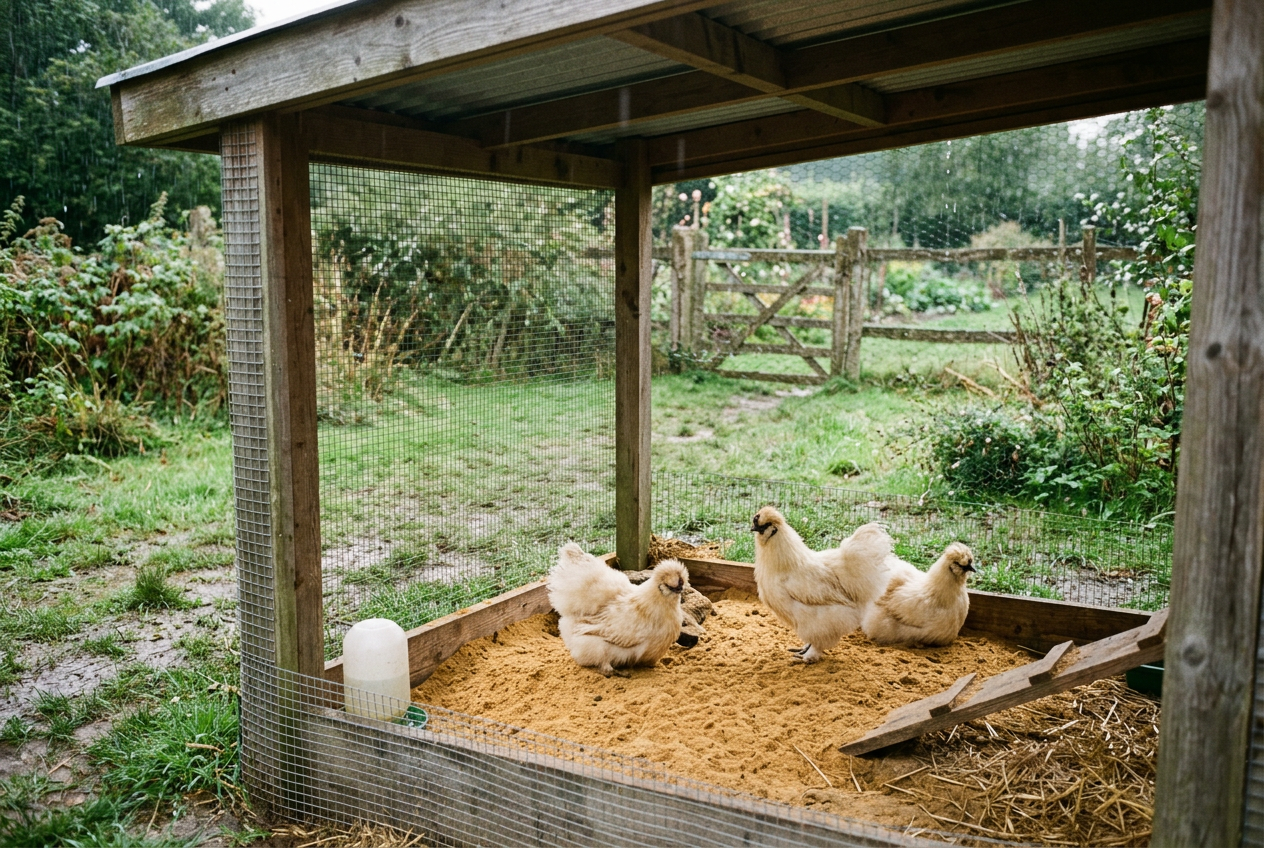
That doesn't mean Silkies can never encounter rain. It means I want them to always have easy access to dry shelter. A partially covered run can be particularly useful because it provides:
- dry ground during rain
- a dry feeding area
- a protected dust bath
- cleaner foot feathers
- usable outdoor space during poor weather
I'd worry less about one specific temperature number and more about combinations such as cold + wet + wind. Dry bedding and appropriate ventilation remain important in winter. See Chicken Coop Ventilation: How Much Does Your Coop Need?
Silkie vs. Similar Chicken Breeds
Silkies aren't the only calm or ornamental chickens available. The best breed depends on what you're actually trying to get from your flock.
| Characteristic | Silkie | Buff Orpington | Polish |
|---|---|---|---|
| Main appeal | Companionship, broodiness, unusual appearance | Friendly large dual-purpose backyard breed | Ornamental crest and distinctive appearance |
| Size | Bantam in U.S. standard | Large fowl | Standard-sized ornamental breed |
| Egg production | Relatively low | Generally stronger layer than Silkie | Moderate relative to Silkie |
| Temperament | Generally calm and docile | Generally calm and gentle | Generally calm but can be easily startled |
| Broodiness | Very high | Can be broody | Not the defining trait |
| Special care | Dry conditions, accessible roosts, feathered feet | Larger housing footprint | Crest visibility and feather care |
| Best fit | Pets, broody hens, small ornamental flocks | Families wanting larger birds and more eggs | Keepers wanting a highly ornamental standard bird |
The important distinction is not that one breed is universally better. They're built for different priorities.
Choose a Silkie if you value personality, broodiness and appearance more than egg output.
Consider a Buff Orpington if you want a calm, much larger backyard chicken with stronger general-purpose production.
Consider a Polish if you love unusual ornamental birds but prefer a conventional-feathered, larger chicken with a dramatic crest.
Are Silkies Good for Beginners?
Yes — but they're best for a beginner willing to accommodate what makes them different. They aren't particularly complicated birds. They simply benefit from a setup designed around them rather than one copied blindly from a larger, more athletic breed.
Silkie Pros & Cons
| Pros | Cons |
|---|---|
| Generally calm temperament | Relatively low egg production |
| Small and manageable | Frequent broodiness |
| Distinctive appearance | Limited flight ability |
| Strong natural mothering instinct | Need careful predator protection |
| Good companion-bird reputation | Mud and prolonged wet conditions create more maintenance |
| Useful for natural hatching | Feathered feet require inspection |
| Can work well in smaller backyard flocks | Can be disadvantaged around aggressive breeds |
Silkies Are a Good Fit If You Want:
- a small ornamental flock
- backyard companion chickens
- calm birds
- broody hens
- natural chick hatching
- a breed you enjoy for more than egg production
I'd Choose Another Breed If You Want:
- maximum egg production
- minimal broodiness
- rugged unattended free-ranging
- birds expected to navigate tall roosts
- a flock living constantly in wet or muddy conditions
The question isn't "Are Silkies good chickens?" They are. The better question is: "Are the things Silkies are good at the things I want from my flock?"
Recommended Setup for Four Silkies
If I were starting a small backyard flock of four Silkies, I'd keep the setup simple and deliberately design around their mobility and feathering.
| Area | What I'd Provide |
|---|---|
| Coop | Dry, secure, well ventilated and easy to clean |
| Indoor space | Around 16 sq ft using Roosted's conservative backyard target |
| Run | Around 40 sq ft or more |
| Roost | Low, wide, sturdy and easily accessible |
| Ramp | Helpful if the sleeping area is elevated |
| Nesting boxes | Low enough to reach without significant flight |
| Run cover | At least a substantial dry covered section |
| Ground | Well drained; avoid permanent mud |
| Dust bath | Dry soil/sand area under cover |
| Feeder & waterer | Easy for small birds to access |
| Predator protection | Secure run, strong openings and nighttime lockup |
The important idea is to design for the actual chicken. You don't need a specialized luxury Silkie coop. You need a dry, secure chicken setup where a small, poor-flying bird can comfortably reach everything it needs.
Silkie Care Checklist
Daily
- Fresh water
- Complete age-appropriate feed
- Quick flock behavior check
- Collect eggs
- Confirm secure predator protection
Regularly
- Check bedding for moisture
- Inspect feathered feet
- Check fifth-toe nail length
- Make sure crest feathering isn't obstructing normal vision
- Watch for bullying in mixed flocks
- Monitor body condition
- Clean feeders and waterers
During Wet Weather
- Make sure dry covered space remains available
- Check foot feathers for heavy mud
- Remove wet bedding
- Don't leave soaked birds exposed to cold wind
During Broodiness
- Decide whether you're allowing a hatch
- Make sure the hen is eating and drinking
- Monitor body condition
- Keep the nesting area safe
- Manage the broody cycle if you aren't hatching eggs
Silkie Chicken FAQ
How many eggs do Silkie chickens lay?
Silkies are relatively low-production layers. A practical hatchery estimate is around 2–3 small eggs per week during active laying, but broodiness, age, season and the individual hen can substantially affect production.
What color eggs do Silkies lay?
Silkie hens generally lay cream or tinted eggs. The eggs are typically smaller than those of standard-sized laying breeds.
How long do Silkie chickens live?
There isn't a strong breed-specific longevity study establishing an exact Silkie lifespan. General small-flock chicken guidance suggests roughly 6–8 years is a reasonable planning range, with some chickens living considerably longer.
Are Silkie chickens friendly?
Silkies are known for a generally calm disposition and are widely kept as companion and family flock birds. Individual personality still varies.
Do Silkies go broody?
Yes. Broodiness is one of the Silkie's best-known breed characteristics. This makes them useful for natural hatching but also makes their egg production less predictable.
Can Silkies live with regular chickens?
Yes, but monitor mixed flocks carefully. Their small size, calm temperament and poor flight ability can leave them at a disadvantage around aggressive birds.
Do Silkies need special care?
Not dramatically different care, but their body type creates a few important considerations: dry conditions, accessible low roosts, feathered-foot inspection, predator protection and monitoring crest visibility. Their feed and basic health needs remain fundamentally those of other chickens.
Are Silkies good for beginners?
Yes. They're a strong beginner choice for someone who wants calm ornamental chickens and is willing to provide dry, secure housing. They are less suitable for someone whose main goal is maximizing egg production.
The Bottom Line: Are Silkie Chickens Right for You?
Silkies are not production chickens disguised in fluffy feathers. They're a genuinely different kind of backyard bird.
Expect a small bantam hen of roughly two pounds with soft hookless plumage, dark skin, five toes, feathered feet, cream or tinted eggs, modest laying, frequent broodiness, a generally calm temperament and limited flight ability.
For the right keeper, those aren't disadvantages. They're exactly why you choose the breed.
If you want a flock primarily for maximum egg production, I'd look elsewhere. If you want small, distinctive chickens that are enjoyable to keep, frequently go broody and can become wonderful backyard companions, Silkies deserve serious consideration.
Their care isn't difficult. It's simply specific. Give them dry shelter, accessible housing, complete feed, other chickens, sufficient space and strong predator protection, and you've handled most of what makes Silkie care different.
The goal isn't to own Silkies because they're unusual. It's to understand what makes them unusual well enough to build a setup where they can thrive.
Want to estimate what your flock could produce? Try the Chicken Egg Production Calculator →
Waiting on a Silkie pullet? Estimate her first-egg window →
Not sure whether this breed is right for you? Try the Chicken Breed Finder →
Keep Reading
Deciding how many birds to start with? How Many Chickens Should I Get? A Practical Flock Size Guide for Beginners
Planning the coop and run? How Much Space Do Chickens Need? Coop & Run Size Chart + Calculator
Choosing coop bedding? Best Bedding for Chickens: Pine Shavings vs. Hemp, Straw & Sand
Trying to keep feathered feet out of the mud? Best Ground Cover for a Chicken Run: Sand vs. Wood Chips vs. Gravel
Building a dust bath? How to Set Up a Dust Bath for Chickens
Want a hardy, productive brown-egg layer? Rhode Island Red Chickens: Eggs, Temperament & Complete Care Guide
Sources & Further Reading
- Oklahoma State University — Silkie (Bantam) Chicken
- American Poultry Association — Silkies: What Makes a Champion
- American Poultry Association — Accepted Breeds & Varieties
- Merck Veterinary Manual — Management of Backyard Poultry
- Merck Veterinary Manual — Laying and Reproduction in Backyard Poultry
- Penn State Extension — Successfully Raising a Small Flock of Laying Chickens
- Meyer Hatchery — Breed Spotlight: Silkies
Want a larger calm breed? Buff Orpington Chickens: Egg Production, Temperament & Care
Want blue and green eggs? Easter Egger Chickens: Egg Colors, Temperament & Care Guide
Curious about another feather-footed breed? Brahma Chickens: Size, Egg Production, Temperament & Care