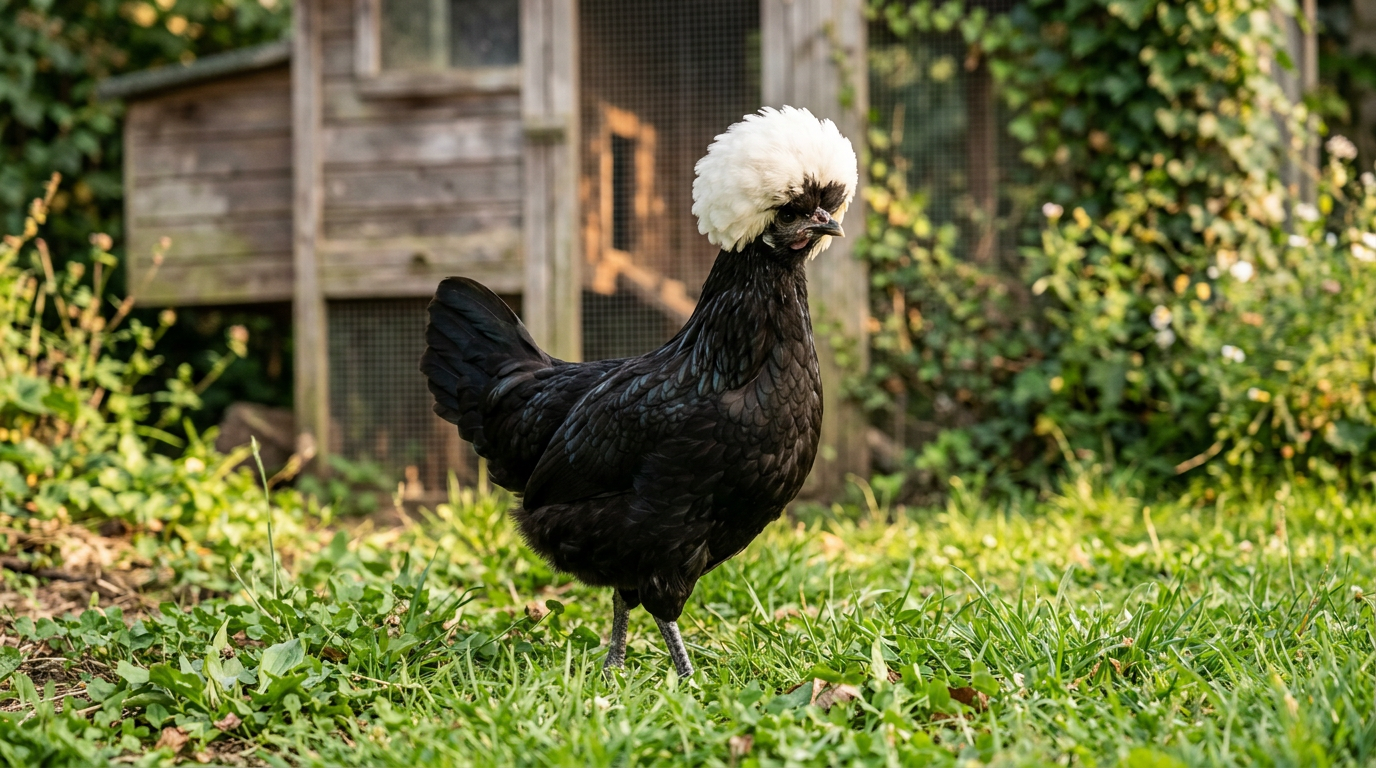
Polish chickens are difficult to mistake for anything else in the backyard.
With enormous feather crests that resemble fluffy hats, they're one of the most recognizable ornamental chicken breeds. Some have bright white crests sitting above black bodies. Others wear elaborate golden or silver feather patterns.
They're beautiful, unusual, and often surprisingly friendly.
But there's something important to understand before adding Polish chickens to your flock.
That impressive feather crest can interfere with their vision, making ordinary chicken activities more complicated.
Finding food, noticing predators, navigating the coop, and interacting with other chickens can all become more difficult when a bird can't clearly see its surroundings.
That doesn't mean Polish chickens are difficult to raise. It means their care requires a little more attention than the average backyard breed.
Here's what to know about their crests, temperament, egg production, housing, and whether they're a good fit for your flock.
Polish Chicken Quick Facts
| Trait | Polish Chicken |
|---|---|
| Breed type | Traditional ornamental chicken |
| Origin | Uncertain; European historical roots |
| APA class | Continental |
| Hen weight | Approximately 4.5 lb |
| Rooster weight | Approximately 6 lb |
| Egg color | White |
| Egg size | Generally medium; varies by line |
| Egg production | Around 150 annually in The Livestock Conservancy's estimate; other sources differ |
| Starts laying | Variable; some may mature later than production-focused breeds |
| Temperament | Generally gentle, but easily startled |
| Broodiness | Low; rarely broody |
| Comb type | V-shaped, often hidden by crest |
| Crest | Large, sometimes obscures vision |
| Feathered feet | No |
| Cold tolerance | Requires extra care to keep the crest dry |
| Heat tolerance | Generally good with shade and water |
| Flight ability | Better than many heavy or ornamental breeds |
| Primary use | Ornamental, exhibition, companion, eggs |
| Beginner-friendly | Possible, with additional attention |
| Main care challenge | Crest visibility, cleanliness, predators, and flock dynamics |
Unlike breeds developed primarily to maximize eggs or meat production, modern Polish chickens are most commonly kept for their appearance and ornamental qualities.
But that doesn't mean they lack practical value.
They can still contribute eggs to a backyard flock while bringing a little more personality and variety to the coop.
What Makes Polish Chickens Unique?
The defining characteristic of a Polish chicken is its crest.
This isn't simply a few feathers growing upward from the head.
Polish chickens have a prominent feather crest supported by a bony prominence on the skull. Over generations, breeders selected birds for increasingly distinctive head feathering.
The result is the dramatic appearance we recognize today.
A Polish hen typically develops a rounded crest resembling a pom-pom.
A Polish rooster often has longer, more irregular crest feathers that spread outward in a loose, swept-back arrangement.
The appearance is striking, but the practical consequences are even more interesting.
Why Do Polish Chickens Have Feathers on Their Heads?
Their crests are an inherited breed characteristic that has been emphasized through selective breeding.
They aren't feathers that developed because of cold weather or environmental conditions.
Polish chickens have been depicted in European artwork for centuries, and their elaborate crests became an important part of their ornamental identity.
The Livestock Conservancy credits Dutch poultry enthusiasts with refining their colors and crest characteristics during the eighteenth century.
The exact geographic origin of the breed remains uncertain despite its name.
What we know is that the crest has become so important to the Polish chicken's appearance that it also influences how the bird experiences its surroundings.
Can Polish Chickens See?
Yes, Polish chickens can see, but large crest feathers may obstruct part of their field of vision.
That distinction matters.
A Polish chicken with feathers covering its eyes isn't necessarily blind. Its eyesight may simply be physically blocked.
Imagine trying to navigate your backyard with thick bangs falling over both eyes.
You might still see what's directly in front of you, but movement from above or beside you becomes harder to detect.
Polish chickens can experience a similar problem.
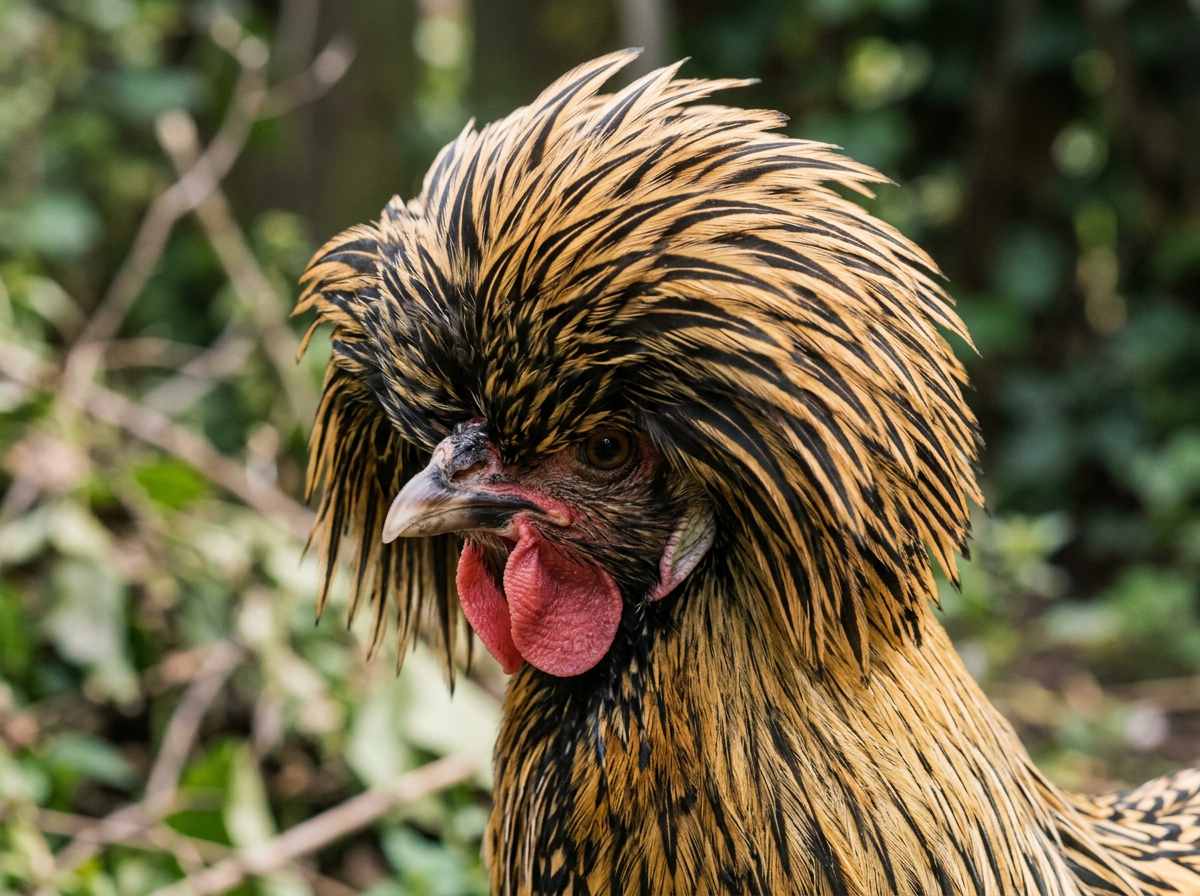
Mississippi State University Extension specifically identifies their crests as a reason they may be more vulnerable to aerial predators when free-ranging.
Oklahoma State University also notes that Polish chickens are easily frightened and may be bullied by more aggressive breeds.
Signs Your Polish Chicken's Crest Is Blocking Its Vision
Watch for behaviors such as:
- Frequently bumping into objects
- Difficulty locating food or water
- Being startled when approached from the side
- Hesitating around unfamiliar obstacles
- Struggling to navigate entrances or roosts
- Becoming unusually nervous when other chickens approach
- Frequently holding its head at unusual angles to see around the crest
These observations aren't a formal vision test. They are reasons to inspect the crest and determine whether feathers are obstructing the eyes.
Other health or behavioral problems can cause similar signs.
How to Check a Polish Chicken's Vision
A simple visual inspection can tell you quite a bit.
Gently observe the bird from the front and sides.
Can you see both eyes without lifting a large amount of feathering?
Does the chicken appear able to notice movement in front of and beside it?
Can it confidently reach its feeder, waterer, and favorite roost?
A crest that looks impressive in a photograph may be creating genuine difficulties in everyday life.
Roosted Note
Don't assume that every unusually nervous Polish chicken has an aggressive or naturally skittish personality.
Sometimes the bird simply didn't see you coming.
Before deciding that a Polish chicken is difficult to handle, check whether its feathers are interfering with its ability to see.
Should You Trim a Polish Chicken's Crest?
If mature crest feathers are significantly obstructing a Polish chicken's vision, carefully trimming a small amount of feathering may help.
However, not every Polish chicken needs a haircut.
The goal isn't to remove its distinctive appearance or reshape the entire crest.
The goal is to help the bird see comfortably and navigate safely.
For an ordinary backyard chicken, functional vision should take priority over maintaining an exaggerated ornamental crest.
How to Approach Crest Trimming Safely
A practical approach includes:
- Inspect the crest first. Identify whether mature feathers actually block the eyes.
- Keep the chicken calm. Have an experienced helper gently support the bird if necessary.
- Use appropriate rounded-tip grooming scissors. Avoid sharp, pointed blades near the face.
- Remove only the obstructing feather tips. Keep scissors away from the skin and eyes.
- Never cut developing blood feathers. Newly growing feathers contain a blood supply and can bleed if damaged.
- Recheck the bird afterward. Make sure it can navigate normally without signs of irritation.
If you're inexperienced, have an avian veterinarian or knowledgeable poultry professional demonstrate the process.
The difference between trimming a fully developed feather and injuring a growing blood feather is important.
And because you're working near the eyes, a struggling bird creates an additional injury risk.
How Often Should Polish Chickens Have Their Crests Trimmed?
There isn't one established trimming schedule suitable for every Polish chicken.
Some birds have naturally manageable crests and may never need trimming.
Others develop heavier feathering that regularly obstructs vision.
Check the crest as part of your normal flock observations, particularly after molting or when new feather growth changes its shape.
Can You Tie Back a Polish Chicken's Crest?
Some keepers use temporary, loose methods to hold crest feathers away from the eyes.
However, anything attached to the crest can cause problems if it tightens, catches on equipment, pulls feathers, or irritates the skin.
For an everyday backyard bird, professionally guided trimming of obstructive mature feathers may be simpler than leaving an accessory attached to the head.
If the bird is intended for exhibition, discuss crest management with an experienced breeder because trimming can affect its show appearance.
Keeping Polish Chicken Crests Clean and Dry
Vision isn't the only reason to pay attention to the crest.
A Polish chicken's head feathers can become wet, dirty, or matted.
This is especially important during rainy weather and winter.
The Livestock Conservancy notes that Polish chickens are less suited to wet, cold conditions because their crests can become waterlogged, chilled, or frozen.
Why Wet Crests Can Become a Problem
When the crest absorbs water, the feathers can remain damp against the bird's head.
In freezing conditions, that moisture can create additional problems.
Dirty or matted feathers may also be more difficult for the chicken to maintain through normal preening.
That's why Polish chickens benefit from consistently dry housing.
A Practical Crest-Care Routine
| When | What to Check |
|---|---|
| Daily | Obstructed eyes, obvious dirt, wet feathers, unusual behavior |
| Weekly | Feather condition, skin around the crest, matting, signs of irritation |
| After heavy rain | Whether the crest is wet or dirty |
| During freezing weather | Ice formation, moisture, signs of chilling |
| After molting | New feather growth and changes in visibility |
| When behavior changes | Whether crest feathers may be affecting sight or access to resources |
Inspect gently.
Avoid unnecessarily soaking the crest during routine cleaning.
If the feathers become wet, ensure the bird has a dry, protected environment where they can dry comfortably.
What About Eye Infections?
If you notice redness, swelling, discharge, repeated eye closure, or persistent scratching around the face, don't assume the problem is only cosmetic.
A dirty crest and an eye problem are not necessarily the same thing.
An avian veterinarian should evaluate suspected eye infections or injuries.
Routine grooming should never replace appropriate medical care.
Do Polish Chickens Get Bullied?
Polish chickens can be more vulnerable to bullying in mixed flocks, especially when their vision is restricted.
This is one of the most important considerations before adding them to an established flock.
Oklahoma State University describes Polish chickens as gentle birds that can be intimidated by more aggressive breeds.
Their crests may make it harder to notice approaching flockmates or respond quickly to threatening behavior.
Crest feathers can also become a target for feather pecking.
Why Other Chickens May Peck Their Crests
Chickens sometimes peck one another's feathers as part of flock behavior.
The Merck Veterinary Manual identifies feather pecking as a welfare concern that can progress from mild feather damage to painful feather removal and injuries.
The Polish chicken's prominent crest provides an especially noticeable area that flockmates may investigate or peck.
One brief peck isn't automatically a bullying problem.
Repeated targeting is different.
Warning Signs of Bullying
Watch for:
- Missing crest feathers
- Bleeding or irritated skin
- Repeated chasing
- Hiding in corners
- Reluctance to approach food
- Being pushed away from waterers
- Weight loss or declining condition
- Persistent isolation from the flock
If one chicken is repeatedly injured or unable to access essentials, intervene rather than expecting the situation to resolve itself.
Can Polish Chickens Live With Other Breeds?
Yes.
But flock compatibility matters more than simply choosing breeds that are labeled friendly.
Calm, appropriately sized companions can make a good match.
More assertive chickens may require closer observation, particularly during introductions.
Consider:
- Introducing new birds gradually
- Providing multiple feeding and watering locations
- Creating enough space to avoid crowding
- Adding visual barriers and places to move away from dominant birds
- Watching for repeated crest pecking
- Separating birds when serious aggression or injury occurs
You don't necessarily need an entirely separate Polish chicken flock.
But I wouldn't place a heavily crested, visually restricted bird into an aggressive group and assume it will figure everything out.
Roosted Note
A chicken that can't clearly see another bird approaching may appear nervous, submissive, or unusually reactive.
Before blaming personality or pecking-order behavior, look at the whole situation: vision, space, feeding access, and flock temperament.
Are Polish Chickens Vulnerable to Predators?
Yes, particularly when their crest obstructs their ability to notice movement.
This is an important difference between Polish chickens and many ordinary backyard breeds.
Mississippi State University Extension specifically warns that the crest can increase vulnerability to predators, especially those approaching from above.
A hawk doesn't need to be invisible to be dangerous.
It only needs the chicken to notice it too late.
Should Polish Chickens Free-Range?
They can spend time outdoors and explore, but completely unprotected free-ranging carries additional risks.
For a Polish flock, I'd strongly favor a secure, covered run or appropriately supervised outdoor access.
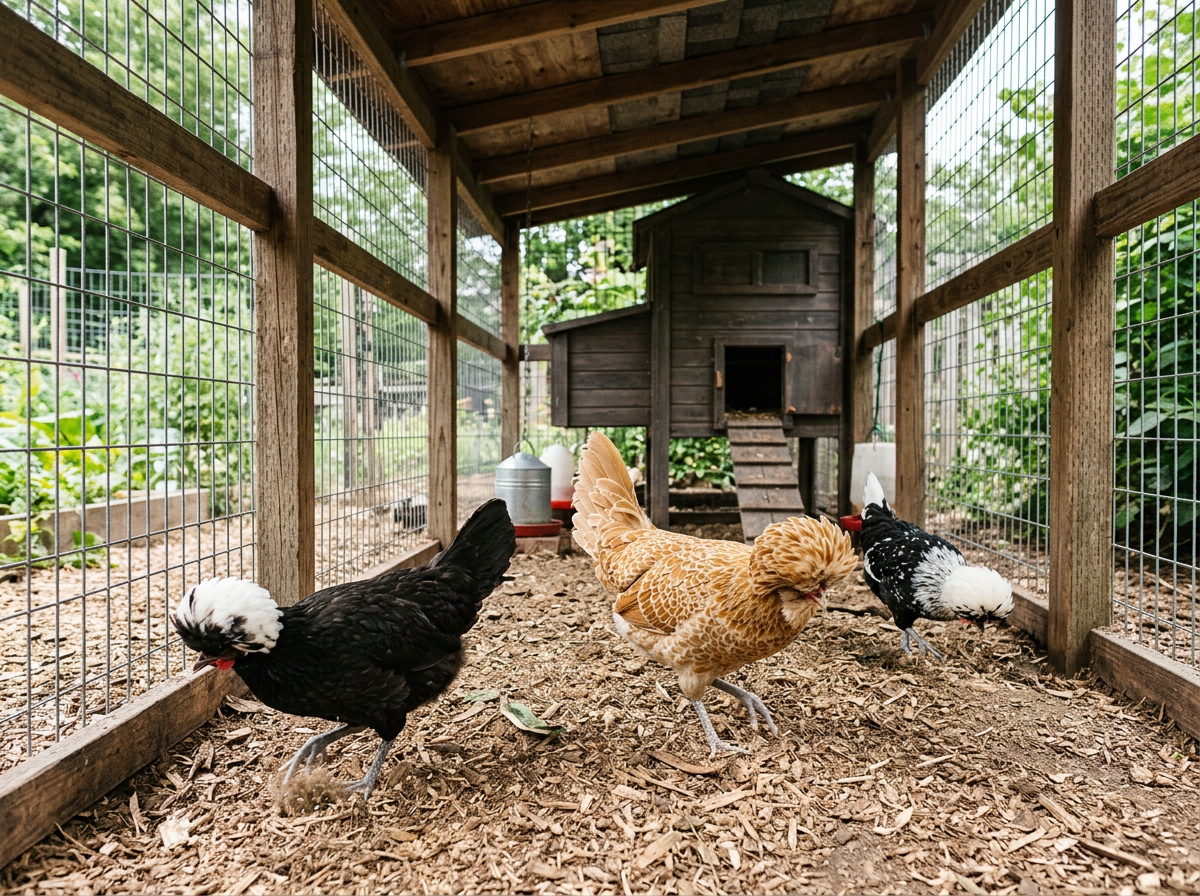
A good setup includes:
- Predator-resistant fencing
- A secure roof or overhead predator protection
- A properly secured nighttime coop
- Protected feeding areas
- Shade and shelter
- Enough room to move comfortably
Overhead protection is particularly useful where hawks and other aerial predators are common.
Can Polish Chickens Fly?
Yes.
Unlike Silkies, Polish chickens have conventional feathers and can fly reasonably well for their size.
The Livestock Conservancy notes that these lightweight birds may even roost in tree branches.
That means you'll need to think about containment as well as predator protection.
A bird that struggles to see around its crest may still be perfectly capable of flying over an inadequate fence.
Polish Chicken Appearance, Colors & Varieties
Polish chickens are best known for the crest, but there's more to their appearance than that.
Typical characteristics include:
- Large feather crest
- Smaller, relatively slender body
- V-shaped comb, often hidden beneath the crest
- White earlobes
- Red wattles
- Slate or gray legs
- Clean, unfeathered feet
- Four toes
- White skin
Some Polish chickens also have additional facial feathering, including beards and muffs.
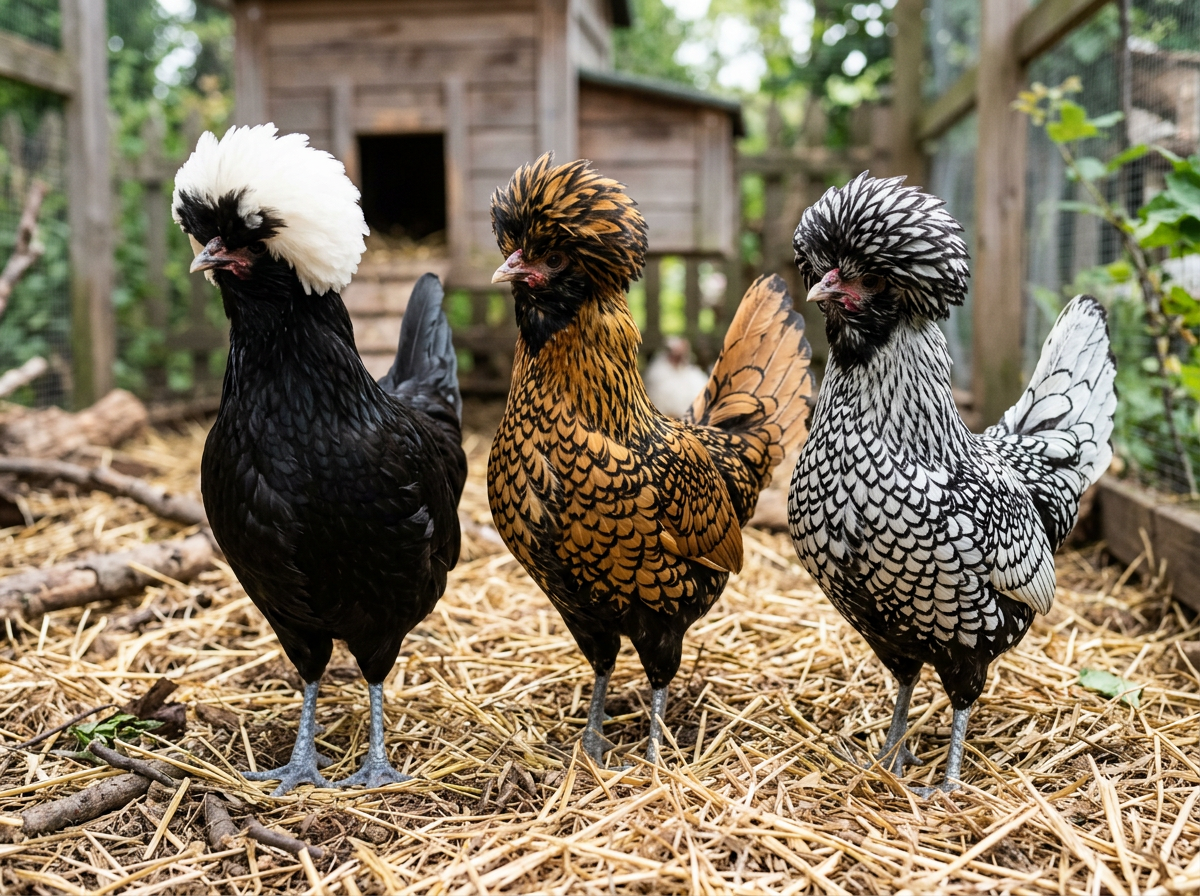
White Crested Black Polish Chickens
This is one of the most recognizable Polish varieties.
The bird has predominantly black body feathers topped by a contrasting white crest.
It's an especially striking appearance because the bright crest stands out against the dark body.
For people choosing Polish chickens primarily for ornamental appearance, White Crested Black is often an obvious favorite.
Golden Polish Chickens
Golden Polish chickens have warm golden feather coloring with intricate darker markings.
They offer a different look from the high-contrast White Crested Black variety.
Silver Polish Chickens
Silver Polish chickens feature silvery-white plumage with darker patterned markings.
Their feather patterns can be particularly attractive when the birds are seen in natural daylight.
Other Polish Varieties
Established breed references also identify varieties such as:
- White
- Buff Laced
- White Crested Blue
- Black Crested White
Some colors are represented in both bearded and non-bearded forms.
For exhibition, use the current American Poultry Association Standard of Perfection to confirm the precise variety and requirements.
Bearded vs. Non-Bearded Polish Chickens
Bearded Polish chickens have additional feathering around the lower face and throat.
Non-bearded birds have less feathering in that area.
Both can have the breed's famous head crest.
From a backyard care standpoint, the important consideration isn't simply whether the bird is bearded.
It's whether the overall facial feathering affects vision, cleanliness, or comfort.
How Big Do Polish Chickens Get?
Polish chickens are smaller than many common standard backyard breeds.
According to Oklahoma State University, their standard large-fowl weights are:
| Bird | Standard Weight |
|---|---|
| Adult rooster | 6 lb |
| Adult hen | 4.5 lb |
| Cockerel | 5 lb |
| Pullet | 4 lb |
These are breed-standard weights rather than guarantees for every individual.
A mature Polish hen is noticeably lighter than a standard Buff Orpington or Barred Plymouth Rock.
That smaller size helps explain why Polish chickens can be relatively agile and capable of flight.
Are Bantam Polish Chickens Available?
Yes.
Polish chickens also exist in bantam form.
Bantams are much smaller than the standard breed, so confirm which type you're purchasing before planning housing and flock compatibility.
If you're mixing bantams with substantially larger chickens, pay particular attention to injuries, bullying, and access to food.
How Many Eggs Do Polish Chickens Lay?
Polish chickens can be useful egg layers, but egg production isn't usually the main reason people choose them.
The Livestock Conservancy estimates approximately 150 white eggs annually.
That averages just under three eggs per week across a full year.
However, Polish chicken production estimates differ substantially between reputable references.
Oklahoma State University describes production of 200 or more eggs annually, while other sources are more conservative.
Those differences are important.
They suggest that the breed name alone isn't enough to predict egg production precisely.
Why Do Egg Estimates Vary?
Several factors can influence production:
- Breeding line
- Whether birds were selected for exhibition or utility
- Age
- Season and daylight
- Nutrition
- Health
- Molting
- Individual variation
Some Polish chickens may be comparatively productive, while others lay far fewer eggs.
For an ornamental flock, I'd treat roughly 150 eggs annually as a published reference point rather than an expectation every hen must meet.
If high egg production is essential to your flock plan, ask the breeder for actual production information.
You can also explore the Roosted Chicken Egg Production Calculator to understand how breed choice and flock size influence your estimated egg supply.
Are Polish Chickens Good Egg Layers?
They're capable of laying a useful number of eggs, but they aren't generally the first choice for maximum production.
Modern high-output layers and breeds such as Leghorns are usually stronger choices when eggs are your main objective.
Polish chickens are better understood as ornamental birds that can also contribute to the egg basket.
That's still a worthwhile combination for many backyard keepers.
What Color Eggs Do Polish Chickens Lay?
Polish chickens lay white eggs.
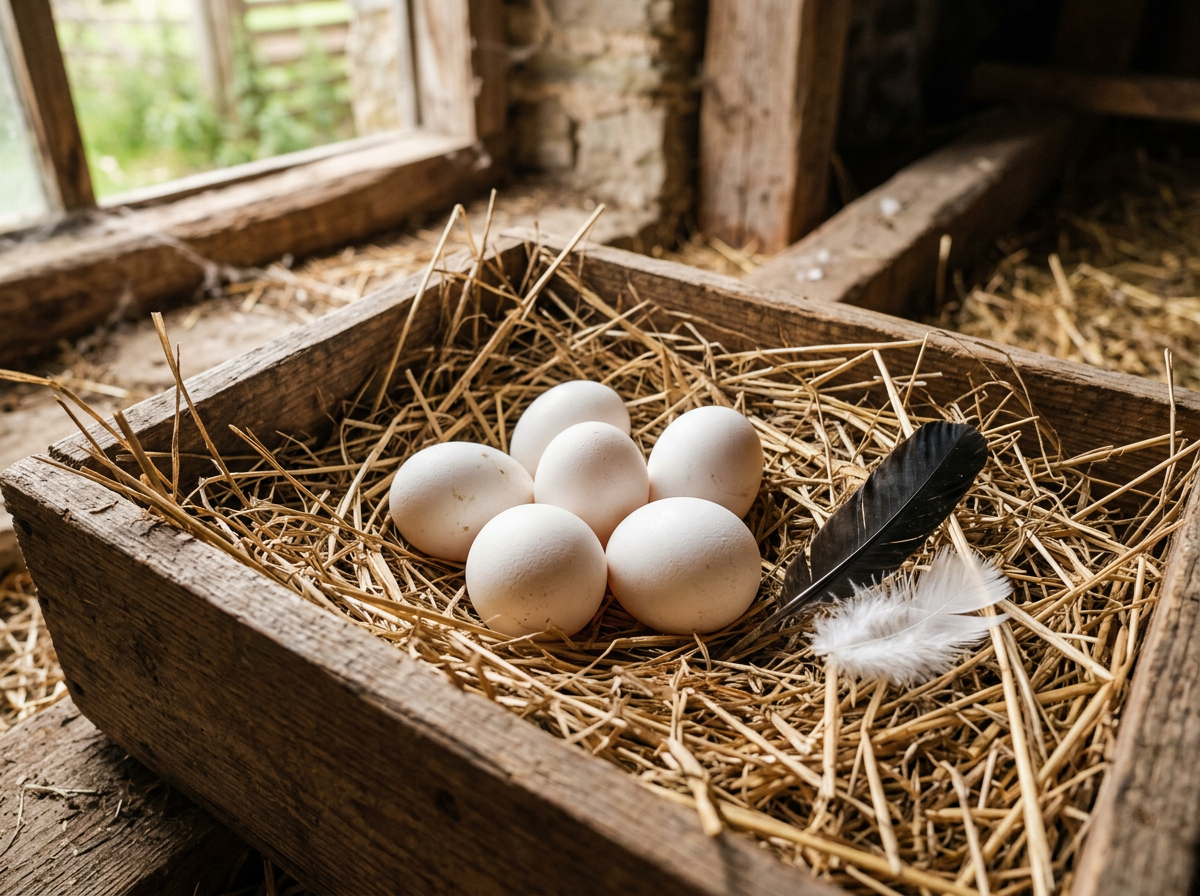
This is a consistent characteristic across the recognized breed references.
The color of the chicken's crest or body feathers doesn't change its normal eggshell color.
A White Crested Black Polish hen doesn't lay black eggs.
A Golden Polish hen doesn't lay golden eggs.
Both lay white eggs.
How Big Are Polish Chicken Eggs?
Their eggs are generally described as medium-sized, although published references vary.
The Livestock Conservancy describes medium-to-large eggs, while some hatchery lines may produce smaller eggs.
Egg size also changes with the age and maturity of the hen.
Young pullets often begin with smaller eggs before producing their more typical adult size.
When Do Polish Chickens Start Laying Eggs?
Polish pullets may begin laying during the general five- to seven-month maturation period common to many backyard breeds, but dependable breed-specific age ranges are limited.
The Livestock Conservancy notes that Polish hens can start laying somewhat later in the season before becoming persistent layers.
Rather than promising eggs at one particular week, I'd pay attention to the individual bird.
Signs a Polish Hen May Be Getting Ready to Lay
Common signs include:
- Redder, more developed comb and wattles
- Increasing interest in nesting boxes
- Squatting behavior
- More mature body development
- Changes in nesting behavior
Because Polish chickens have crests that may hide much of the comb, external maturity signs can be less obvious than in a chicken with a large upright comb.
Season also matters.
A pullet maturing in fall or winter may begin laying later due to shorter daylight hours.
Our When Do Chickens Start Laying Eggs? guide explains the broader laying timeline.
Are Polish Chickens Friendly?
Polish chickens are generally gentle and can become comfortable around people, but their limited vision may make them easier to startle.
This is an important distinction when evaluating temperament.
Oklahoma State University describes them as calm and gentle but easily frightened.
The Livestock Conservancy similarly notes that they can be friendly while reacting nervously to unexpected movement.
A Polish chicken may enjoy your company and still jump when you approach without warning.
Those behaviors aren't contradictory.
Do Polish Chickens Like Being Held?
Some become comfortable with handling, particularly when introduced to calm human interaction while young.
Others prefer remaining on the ground.
When approaching a Polish chicken:
- Speak before reaching toward it.
- Approach slowly.
- Avoid sudden movement near its face.
- Support the body properly when handling.
- Return it to the ground gently.
Talking to the bird before approaching can be especially useful when its crest limits peripheral vision.
Are Polish Chickens Aggressive?
They are not generally recognized as an especially aggressive breed.
However, individual temperament still varies.
Roosters require separate consideration, regardless of breed.
A gentle breed reputation does not guarantee that every rooster will remain manageable.
Are Polish Chickens Noisy?
There isn't sufficient reliable breed-specific evidence to assign Polish chickens a precise quietness rating.
They make normal chicken vocalizations, including social calls and egg announcements.
Roosters crow.
A chicken that's easily startled may also vocalize when surprised.
If noise is a major concern, consider the behavior of the individual birds and the conditions of your coop rather than relying on unsupported claims that a particular breed is exceptionally quiet.
Do Polish Chickens Go Broody?
Polish hens are generally considered unlikely to go broody.
The Livestock Conservancy describes them as non-sitters that rarely become broody.
That means they're less likely than breeds such as Silkies to spend extended periods trying to hatch eggs.
However, broodiness is never completely impossible.
Individual hens can still behave differently.
Are Polish Chickens Good Mothers?
Because they rarely become broody, they're not usually selected for natural incubation and chick raising.
If your goal is a flock that regularly hatches its own eggs, there are more suitable breeds.
Silkies, for example, are particularly well known for their strong broody tendencies.
Are Polish Chickens Good in Cold Weather?
Polish chickens require more care in cold and wet conditions than many hardy backyard breeds.
The main issue is their crest.
The Livestock Conservancy notes that wet crest feathers can cause chilling and may freeze during icy weather.
Unlike cold-hardy breeds with compact combs and relatively uncomplicated head feathering, Polish chickens have additional moisture-management concerns.
Winter Care for Polish Chickens
Focus on:
- Keeping the coop dry
- Maintaining fresh air without strong drafts across roosting birds
- Preventing waterers from regularly soaking their crests
- Keeping bedding clean and dry
- Providing unfrozen drinking water
- Checking for frozen or wet head feathers
- Offering a protected area during rain, snow, and freezing conditions
Avoid sealing the coop completely to preserve warmth.
Moisture buildup can make winter conditions worse.
Read our Chicken Coop Ventilation Guide for practical airflow recommendations.
Can Polish Chickens Handle Hot Weather?
They can generally do well in warmer conditions when provided with shade, ventilation, and adequate water.
The Livestock Conservancy describes Polish chickens as relatively heat tolerant when shade is available.
However, no chicken is immune to heat stress.
Provide cool drinking water, shaded outdoor space, airflow, and room to avoid crowding.
Watch for panting, weakness, unusual inactivity, and other signs of overheating.
Housing and Space Requirements for Polish Chickens
Polish chickens don't need an entirely different style of coop.
They need ordinary chicken housing designed with their particular vulnerabilities in mind.
The two biggest priorities are visibility and protection.
How Much Coop Space Do Polish Chickens Need?
For standard-size Polish chickens, Roosted's general backyard planning targets are:
- Approximately 4 square feet of usable indoor space per bird
- Approximately 10 square feet of secure outdoor run space per bird
These are Roosted comfort targets rather than universal biological minimums.
| Polish Hens | Indoor Coop Space | Outdoor Run Space |
|---|---|---|
| 3 | 12 sq ft | 30 sq ft |
| 4 | 16 sq ft | 40 sq ft |
| 6 | 24 sq ft | 60 sq ft |
| 8 | 32 sq ft | 80 sq ft |
Given the possibility of flock bullying, extra room and multiple resource locations can be particularly helpful.
Use our Chicken Coop Size Calculator to plan your flock.
Roosting Bars
Polish chickens can use normal chicken roosts.
Unlike Silkies, they retain conventional feather structure and better flight ability.
Still, make roosts stable and easy to locate.
Birds with restricted vision may benefit from a consistent coop arrangement with uncomplicated paths to essential resources.
Nesting Boxes
Ordinary nesting boxes work well.
Keep them accessible, clean, and dry.
Our Chicken Nesting Boxes Guide covers size, placement, and how many boxes your flock needs.
Waterers
Waterer design deserves extra attention.
A Polish chicken should be able to drink normally without continually soaking its crest.
If you notice frequent wet head feathers, evaluate the waterer's design and height.
The goal isn't to restrict water access.
It's to make drinking easy while keeping the head feathering reasonably dry.
Predator Protection
For Polish chickens, I'd place a high priority on a secure, covered run.
The reason is simple: reduced visual awareness combined with access to outdoor predators is an unnecessary risk.
Our Chicken Run Builder can help plan run dimensions, materials, and predator-aware construction.
Feeding Polish Chickens
Polish chickens don't require a special breed-specific diet.
Like other backyard chickens, their nutritional needs depend on age and production stage.
Feeding by Life Stage
| Stage | Recommended Approach |
|---|---|
| Chicks | Complete chick starter |
| Growing pullets | Appropriate grower feed |
| Laying hens | Complete layer feed or a correctly managed flock ration |
| All stages | Fresh drinking water and appropriate grit when needed |
Treats should remain supplemental.
The bulk of the diet should come from balanced poultry feed.
Make Sure Every Bird Can Eat
One management issue is particularly important with Polish chickens.
A visually restricted or bullied bird may struggle to access feed when competing against more assertive flockmates.
Check that every chicken can reach the feeder without being repeatedly displaced.
Providing multiple feeding areas can help.
Use our Chicken Feed Calculator to estimate feed requirements for your flock.
Polish Chickens vs. Silkie Chickens
Both are popular ornamental chickens with unusual feathering.
But they aren't the same type of bird.
A Polish chicken's defining feature is its elaborate head crest.
A Silkie is distinguished by its soft, unusual feather structure, dark skin, feathered feet, and strong broodiness.
Polish vs. Silkie Comparison
| Trait | Polish | Silkie |
|---|---|---|
| Main appeal | Dramatic feather crest | Soft, fluffy appearance |
| Typical U.S. size | Standard and bantam forms | Standardized as bantam |
| Standard hen weight | 4.5 lb | About 2 lb for U.S. bantam |
| Egg color | White | Cream or tinted |
| Egg production | Variable; approximately 150/year in one major reference | Generally relatively low |
| Temperament | Gentle but easily startled | Generally calm |
| Broodiness | Rare | Very frequent |
| Flight ability | Relatively good | Limited |
| Main special care | Crest visibility and cleanliness | Feather structure, feathered feet, dryness, predator protection |
| Ideal appeal | Ornamental bird that also lays white eggs | Companion bird and natural broody hen |
Which One Is Better for Beginners?
Both can work for beginners who understand their care requirements.
Silkies require attention to their unusual feathering, limited flight ability, and small size.
Polish chickens require particular attention to their crest, visual awareness, and flock interactions.
If you're choosing one primarily as a friendly backyard companion, individual temperament may matter more than which breed looks more unusual.
For more detail, read our Silkie Chicken Guide.
Polish Chickens vs. Other Backyard Breeds
Polish chickens serve a somewhat different purpose from common utility breeds.
| Characteristic | Polish | Leghorn | Barred Rock |
|---|---|---|---|
| Primary appeal | Ornamental crest | White egg production | Balanced backyard utility |
| Egg color | White | White | Brown |
| Production priority | Secondary to ornamental qualities | High | Good |
| Temperament tendency | Gentle, easily startled | Active and independent | Generally calm |
| Flight ability | Relatively good | Good | More limited |
| Special care | Crest and vision management | Active-bird containment | Standard large-breed care |
| Best fit | Ornamental backyard flock | Egg-focused flock | General-purpose backyard flock |
If you want an attractive chicken with unusual head feathering, Polish chickens are an appealing option.
If you want maximum white egg production, Leghorns deserve more attention.
If you want an uncomplicated, all-around backyard chicken, a Barred Rock may be easier to manage.
Read our Barred Rock Chicken Guide for a closer comparison.
Are Polish Chickens Good for Beginners?
Polish chickens can be suitable for beginners, but I wouldn't describe them as one of the most maintenance-free breeds.
They're generally gentle and don't need unusually complicated diets or housing systems.
The extra work comes from their crests and how those crests can affect ordinary behavior.
A beginner willing to monitor vision, maintain dry housing, and pay attention to flock dynamics can absolutely keep Polish chickens successfully.
Someone who wants a straightforward egg flock with minimal special considerations might prefer a Barred Rock, Australorp, or Buff Orpington.
Are Polish Chickens Good Pets?
They can make appealing companion chickens.
Their unusual appearance and generally gentle behavior make them enjoyable birds to observe and interact with.
Some become comfortable around people when handled calmly and consistently.
But remember that being a good pet doesn't mean enjoying constant handling.
Let the individual chicken determine how much interaction it's comfortable with.
Are Polish Chickens Good With Kids?
They can be, with appropriate supervision.
Children should understand that a Polish chicken may be startled easily when it can't see someone approaching.
Teach children to speak gently, approach slowly, avoid grabbing crest feathers, and support the chicken's body properly.
Polish Chicken Pros and Cons
| Pros | Cons |
|---|---|
| Unusually beautiful appearance | Crests may restrict vision |
| Generally gentle temperament | Easily startled |
| Distinctive color varieties | Can be vulnerable to bullying |
| Produces white eggs | Not generally a maximum-production layer |
| Relatively manageable standard size | Extra crest grooming may be needed |
| Can become comfortable around people | Increased predator risk with obstructed vision |
| Low broodiness | Less suitable for natural chick hatching |
| Relatively good flight ability | May require more secure containment |
| Interesting ornamental breed | Wet and frozen crest feathers require attention |
Who Should Raise Polish Chickens?
Polish chickens are a good choice if you:
- Appreciate ornamental chicken breeds
- Want distinctive birds in your backyard
- Can provide a predator-secure run
- Are comfortable inspecting and occasionally managing crest feathers
- Have a generally peaceful flock
- Don't depend on maximum egg production
- Enjoy observing and interacting with your chickens
Who Might Prefer Another Breed?
Consider another breed if you:
- Want the highest possible egg output
- Don't want to monitor unusual feathering
- Have a highly aggressive mixed flock
- Plan to free-range without predator protection
- Have limited ability to keep the coop dry
- Primarily want hens that will hatch and raise chicks
These aren't reasons to avoid Polish chickens altogether.
They're reasons to choose them intentionally.
Recommended Setup for Four Polish Hens
If I were planning a backyard flock of four standard Polish hens, this is the kind of setup I'd prioritize.
| Area | Recommended Setup |
|---|---|
| Coop | Dry, well-ventilated, predator-secure |
| Indoor space | Approximately 16 sq ft or more |
| Outdoor run | Approximately 40 sq ft or more |
| Overhead protection | Covered run strongly preferred |
| Roosts | Stable and easy to access |
| Nesting boxes | 1–2 accessible boxes |
| Feeders | Enough feeding access to avoid competition |
| Water | Constant access, with waterer positioned to limit crest soaking |
| Shade | Available during warm weather |
| Bedding | Dry, clean, absorbent material |
| Crest care | Regular vision and cleanliness checks |
| Flock companions | Calm, compatible birds |
| Nighttime security | Fully secured coop |
The most important distinction is that I wouldn't build the run solely around square footage.
I'd also consider sightlines, access to resources, flock compatibility, and overhead predator protection.
Those details matter more for Polish chickens than they do for some conventional utility breeds.
Polish Chicken Care Checklist
Daily
- Provide fresh water and appropriate complete feed.
- Check that crest feathers aren't blocking the eyes.
- Watch for bullying or repeated feather pecking.
- Look for unusual nervousness or difficulty navigating.
- Confirm the coop and run remain predator-secure.
Weekly
- Inspect the crest for matting, debris, and irritation.
- Check the skin and feather condition.
- Examine bedding and waterer placement.
- Watch for weight or body-condition changes.
- Inspect feeders, waterers, and fencing.
During Rainy Weather
- Provide dry, covered space.
- Prevent prolonged crest saturation.
- Check whether drinking arrangements are wetting the crest.
- Maintain dry bedding and appropriate ventilation.
During Winter
- Watch for frozen or persistently wet feathers.
- Keep the coop ventilated while avoiding direct drafts.
- Maintain accessible unfrozen water.
- Check whether outdoor conditions are affecting the birds' comfort.
When Introducing New Chickens
- Introduce gradually.
- Watch for crest pecking and chasing.
- Provide multiple resource locations.
- Separate injured birds or intervene in sustained aggression.
- Confirm the Polish chickens can access food and water comfortably.
The Bottom Line: Are Polish Chickens Worth Raising?
Polish chickens are among the most distinctive ornamental chickens you can add to a backyard flock.
Their enormous crests, unusual varieties, and generally gentle personalities make them appealing to keepers who want something different from the typical farm chicken.
They also lay white eggs, so they aren't purely decorative.
But the crest changes the equation.
A Polish chicken may need extra help seeing clearly, staying dry, avoiding bullying, and remaining safe from predators.
That makes this breed less about complicated equipment and more about careful observation.
If you're willing to provide that attention, Polish chickens can be a rewarding part of a backyard flock.
If you mainly want dependable eggs and uncomplicated management, there are easier breeds to choose.
The best reason to keep Polish chickens is that you appreciate what makes them different—and you're prepared to care for those differences.
Polish Chicken FAQ
Why do Polish chickens have feathers on their heads?
Polish chickens have a genetically inherited crest supported by a bony prominence on the skull. Breeders selected for these elaborate feathers over generations, making the crest the breed's most recognizable ornamental feature.
Can Polish chickens see?
Yes, but large crest feathers may obstruct their field of vision. Some individuals see comfortably, while others have feathering that interferes with noticing predators, navigating obstacles, or interacting with flockmates.
Should you trim Polish chicken crest feathers?
Only when necessary to improve visibility or comfort. Mature feathers that significantly block the eyes can sometimes be carefully trimmed, but developing blood feathers must not be cut. Ask an avian veterinarian or experienced poultry professional for guidance if you're unfamiliar with the process.
Are Polish chickens friendly?
Generally, yes. Polish chickens tend to be gentle, but restricted vision can make them easily startled. Calm handling and approaching where the bird can see or hear you can help.
Do Polish chickens get bullied?
They can. Their relatively gentle disposition and restricted vision may make them vulnerable to assertive flockmates. Monitor for crest pecking, chasing, injuries, and difficulty accessing feed.
How many eggs do Polish chickens lay?
The Livestock Conservancy estimates approximately 150 white eggs annually. Other authoritative sources report different production levels, so actual results depend on breeding line, age, season, and management.
What color eggs do Polish chickens lay?
Polish chickens lay white eggs. Their body or crest feather colors do not determine a different shell color.
Are Polish chickens good pets?
They can be enjoyable companion chickens because of their generally gentle personalities and distinctive appearance. They still require appropriate poultry housing, care, predator protection, and respectful handling.
Are Polish chickens good for beginners?
They can be, but they require more attention to crest care, vision, and flock compatibility than many conventional backyard breeds. Beginners who understand those considerations can raise them successfully.
Can Polish chickens live with other breeds?
Yes, particularly when flockmates are compatible and the birds have sufficient space and resources. Watch for repeated crest pecking or bullying, especially when introducing Polish chickens to an established flock.
Are Polish chickens cold hardy?
They need additional care in cold, wet weather because their crests can become saturated or frozen. A dry, properly ventilated coop and protection from precipitation are particularly important.
Do Polish chickens go broody?
Rarely. Polish hens are generally considered non-sitters, so they're not an ideal choice if your goal is natural egg incubation and chick raising.
Want to estimate what your flock could produce? Try the Chicken Egg Production Calculator →
Raising a Polish pullet? Estimate when she may lay her first egg →
Not sure whether this breed is right for you? Try the Chicken Breed Finder →
Want maximum white egg production? Leghorn Chickens: White Eggs, Temperament, Production & Care
Keep Reading
Planning a flock or comparing breeds? These Roosted resources can help:
- Chicken Breed Finder — Compare chicken breeds based on temperament, climate, egg goals, and backyard space.
- Silkie Chickens: Eggs, Temperament, Lifespan & Care — Learn about another unusual ornamental chicken.
- Barred Rock Chickens: Egg Production, Temperament & Care — Compare Polish chickens with a practical, traditional backyard breed.
- Chicken Coop Size Calculator — Plan appropriate indoor and outdoor space.
- Chicken Run Builder — Plan a secure outdoor run and estimate fencing materials.
- Chicken Egg Production Calculator — Estimate potential egg production across your flock.
- Chicken Coop Ventilation — Understand how to keep housing dry and properly ventilated.
- Best Bedding for Chickens — Compare bedding materials for moisture control and daily coop management.
Sources & Further Reading
- The Livestock Conservancy — Polish Chicken — Breed history, physical characteristics, crest-related vision concerns, temperament, egg production, broodiness, and climate considerations.
- Oklahoma State University — Polish Chickens — Standard weights, varieties, eggshell color, temperament, and flock bullying concerns.
- University of Wisconsin Extension — Chicken Breeds & Varieties — Poultry classification, Polish varieties, weights, and crest-related management considerations.
- Mississippi State University Extension — Choosing the Right Breed for Your Backyard Flock — Breed selection, Polish characteristics, vision limitations, predator awareness, and egg production context.
- Merck Veterinary Manual — Behavior Problems of Poultry — Feather pecking, injuries, behavioral problems, and management considerations.
- Backyard Poultry — A Guide to Clipping Chicken Wings — Includes practical discussion of crest trimming for crested chickens.
- VCA Animal Hospitals — Wing Clipping — Veterinary feather-trimming principles, including blood-feather injury risks and handling precautions.
- Poultry Extension — Sexing Day-Old Chicks — Describes developmental differences in the crests of male and female crested chickens.