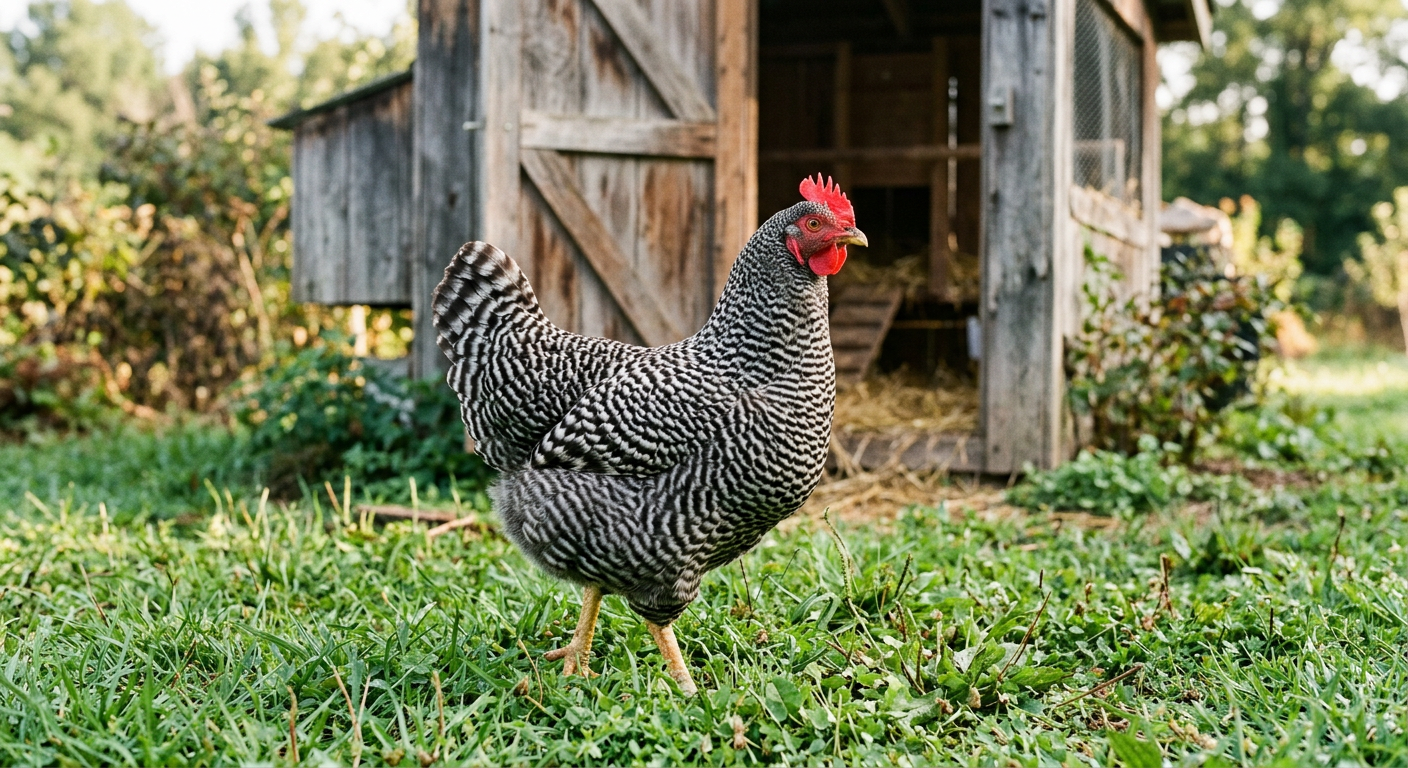
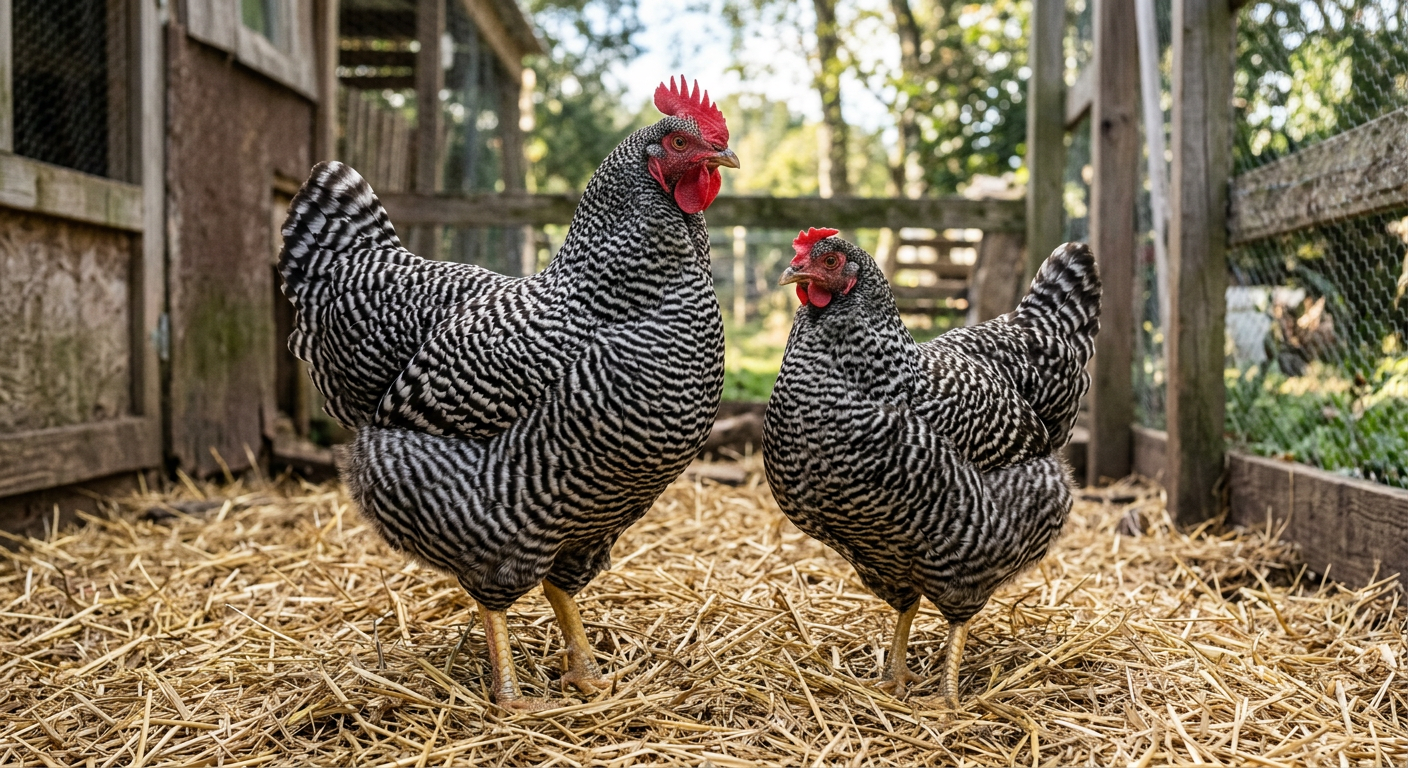
Barred Rocks are one of those chickens that somehow look familiar even if you've never owned one. The black-and-white striped plumage, bright red comb, yellow legs, and sturdy body are almost a visual shorthand for the classic American farm chicken.
That reputation is deserved. Barred Rocks were developed to be practical birds: productive enough to supply a household with eggs, large enough to have real dual-purpose value, hardy enough for changing weather, and calm enough to live comfortably in an ordinary farm or backyard flock.
There's also an important naming detail worth clearing up immediately: a Barred Rock is a Barred Plymouth Rock. "Plymouth Rock" is the breed. "Barred" is the original and most famous color variety.
Barred Rock Quick Facts
| Trait | Barred Rock |
|---|---|
| Full breed name | Barred Plymouth Rock |
| Breed or variety? | Barred variety of the Plymouth Rock breed |
| Origin | United States |
| APA class | American |
| Hen weight | About 7.5 lb |
| Rooster weight | About 9.5 lb |
| Egg color | Brown |
| Egg size | Large |
| Egg production | Very good; around 200/year is a practical heritage estimate |
| Temperament | Calm, docile, generally friendly |
| Broodiness | Moderate; hens can be good sitters |
| Mothering ability | Generally good |
| Cold tolerance | Strong |
| Foraging | Good |
| Confinement | Tolerates it well with adequate room |
| Flight ability | Limited compared with lighter breeds |
| Best for | Beginners, families, eggs, mixed flocks, homesteads |
| Main care considerations | Standard large-breed space, summer shade, comb protection in extreme cold |
The Barred Plymouth Rock became one of America's most important farm chickens because it was useful in nearly every category that mattered to a traditional small flock.
What Makes Barred Rock Chickens Unique?
Barred Rocks aren't unusual because of one extreme trait. They're unusual because they do so many ordinary chicken jobs well. Historically, they provided:
- dependable brown eggs
- useful meat
- natural broodiness
- fast chick feathering
- good farm hardiness
- manageable temperament
That balanced utility helped the Plymouth Rock become enormously popular in the United States. Oklahoma State notes that until World War II, no breed was kept and bred as extensively as the Barred Plymouth Rock. It also played an important role as one of the foundation breeds used by the developing broiler industry during the 1920s.
That history tells you a lot about the bird. This wasn't originally a decorative backyard chicken. It was developed to work.
Barred Rock History, Size & Appearance
Is a Barred Rock the Same as a Plymouth Rock?
Yes — with one clarification. Plymouth Rock is the breed. Barred is one variety of that breed.
The American Poultry Association currently recognizes multiple large-fowl Plymouth Rock varieties, including Barred, Blue, Buff, Columbian, Partridge, Silver Penciled, and White.
The Barred variety came first. That's why older poultry references sometimes use "Plymouth Rock" in a way that practically means "Barred Rock." Today, Barred Plymouth Rock is the most precise name.
Where Did Barred Rocks Come From?
The Plymouth Rock was developed in the United States during the 19th century. The Livestock Conservancy notes that early examples appeared at a Boston poultry show in 1849, although that early population disappeared from public view before the breed reemerged at Worcester, Massachusetts, in 1869. Those later birds became the foundation of the modern Plymouth Rock.
Several breeds or chicken populations have been credited with contributing to its development, including the Dominique, Java, Cochin, Brahma, and other contemporary American and Asian stock.
The Barred Plymouth Rock was accepted into the American Poultry Association Standard in 1874.
How Big Do Barred Rocks Get?
Standard large-fowl weights are approximately:
| Bird | Standard Weight |
|---|---|
| Rooster | 9.5 lb |
| Hen | 7.5 lb |
| Cockerel | 8 lb |
| Pullet | 6 lb |
That puts the Barred Rock in a very practical middle ground. It's larger than many dedicated laying breeds but smaller than giant chickens such as Brahmas. A 7½-pound hen is substantial without requiring giant-breed infrastructure.
What Does a Barred Rock Look Like?
The defining feature is obviously the barring — alternating dark and light bars across each feather, creating the familiar black-and-white striped appearance. Other typical characteristics include:
- bright red single comb
- red wattles and earlobes
- reddish-bay eyes
- yellow skin
- yellow legs
- four toes
- broad body
- full breast
The breed should look solid and useful rather than fine-boned or extremely upright.
Why Do Barred Rocks Have Stripes?
This is one of the most interesting breed-specific traits in the entire Roosted chicken library. The barred pattern is genetic.
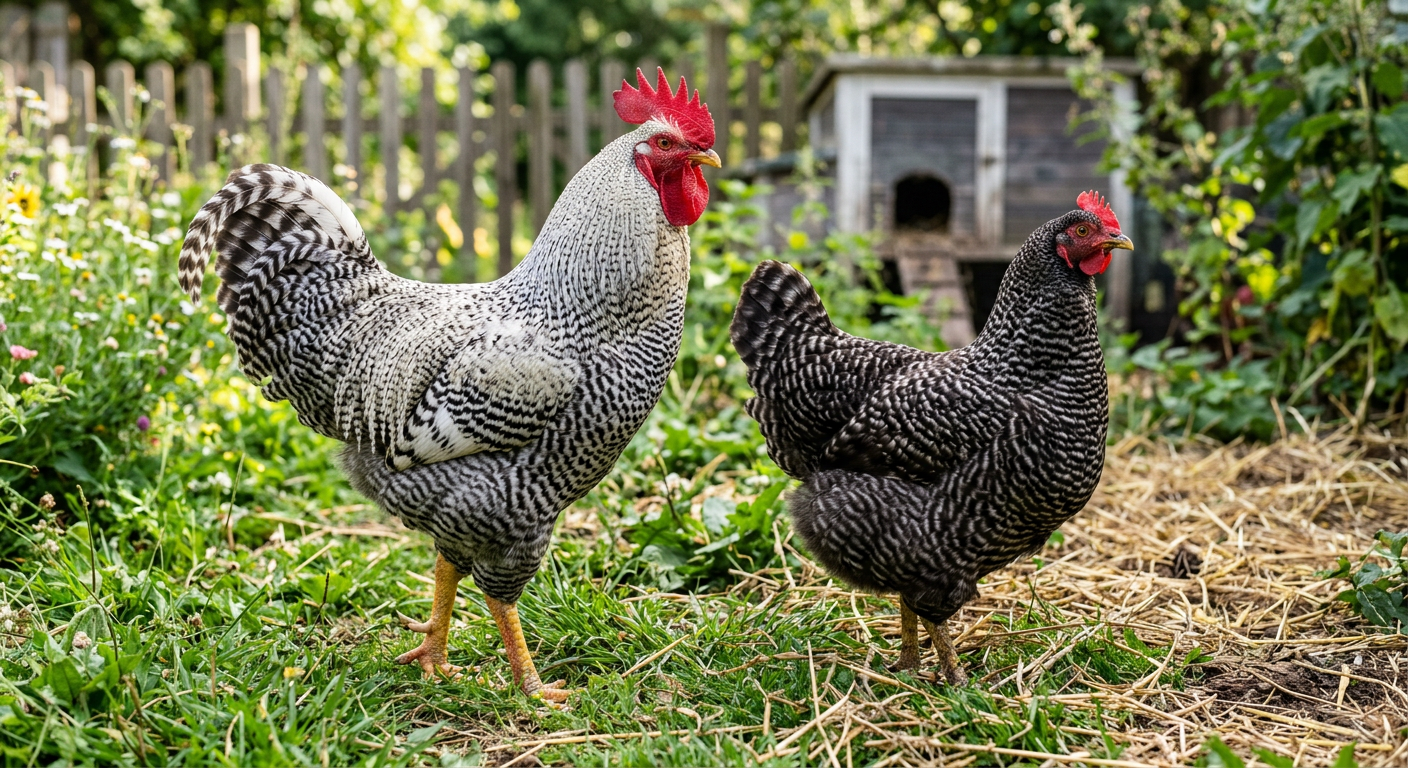
The American Poultry Association notes that the Barred Plymouth Rock's barring is produced by a sex-linked gene. Males carry two copies while females carry one, which causes adult males to appear somewhat lighter overall than females. The Livestock Conservancy describes the same effect: alternating light and dark bars created by a dominant sex-linked barring gene.
So if you put a mature Barred Rock rooster and hen beside one another, the male commonly looks lighter and more evenly barred, while the hen often appears darker overall. That's not random feather variation — it's connected directly to the genetics behind the color pattern.
Barred Rock Egg Production
Egg production is one of the main reasons Barred Rocks have remained popular for more than a century. They're not specialized commercial hybrids. But for a traditional dual-purpose breed, their laying ability is genuinely useful.
How Many Eggs Do Barred Rocks Lay?
The Livestock Conservancy gives a practical breed estimate of approximately 200 large brown eggs per year. That averages roughly 3–4 eggs per week across an entire year, and during stronger laying periods an individual hen may give you more.
Actual production varies based on bloodline, age, season, daylight, nutrition, molt, broodiness, and the individual bird. Oklahoma State also notes that different Plymouth Rock strains have historically been selected toward different purposes: some lines are particularly good layers, while others have been bred more heavily for meat qualities.
So once again: line matters. For the bigger picture on laying rhythms, see How Often Do Chickens Lay Eggs?
Are Barred Rocks Good Egg Layers?
Yes. For a traditional American dual-purpose breed, I'd comfortably call them very good layers.
They're particularly attractive to someone who wants more than just eggs. A Barred Rock gives you useful laying, large brown eggs, good body size, calm temperament, cold hardiness, and foraging ability. A high-output commercial hybrid can beat it on sheer egg numbers — but that's not the only metric that matters in a backyard flock.
What Color Eggs Do Barred Rocks Lay?
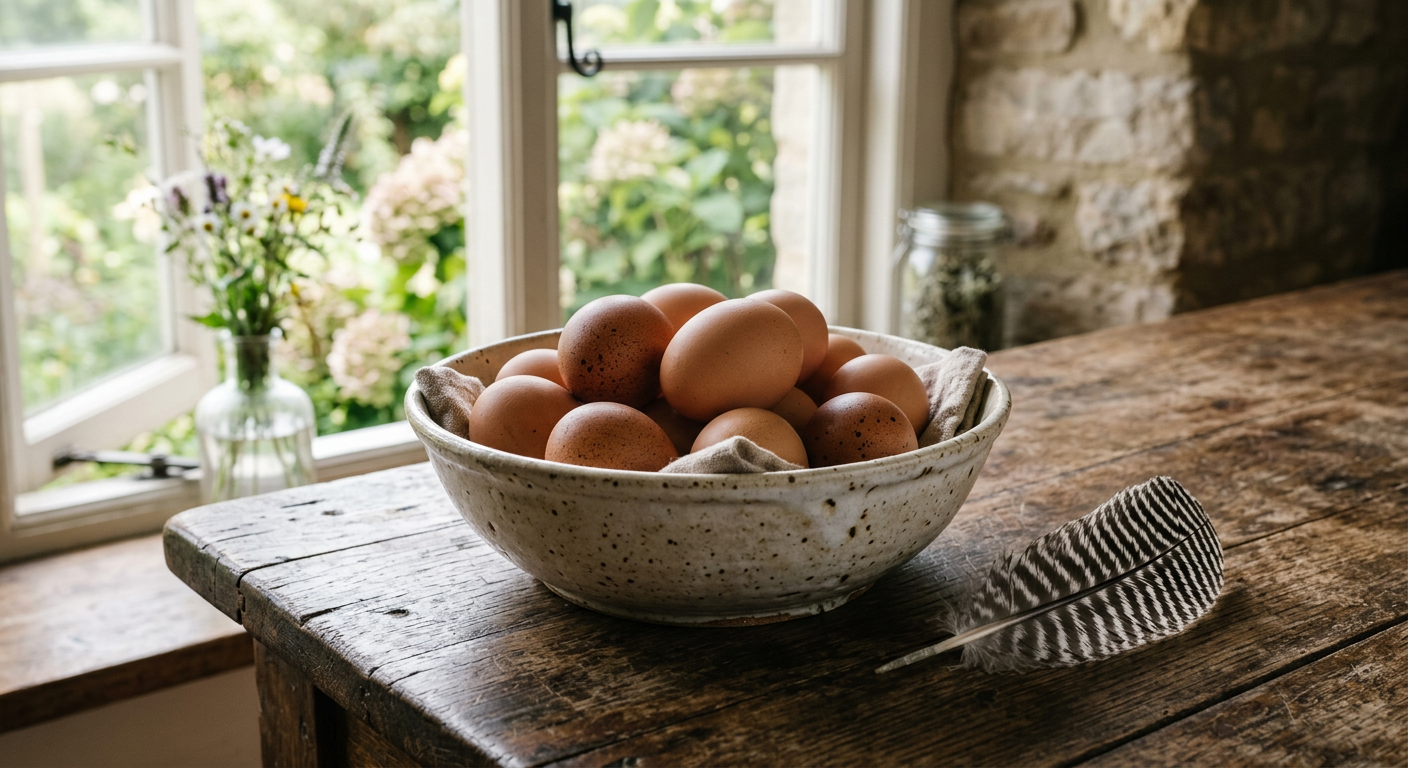
Barred Rocks lay brown eggs. Shell shade can vary by individual bird, but this isn't a novelty-color breed. If you're looking for blue, green, or olive, you'll want something like an Easter Egger instead.
How Big Are Barred Rock Eggs?
Generally large. That's one of the breed's useful household traits — a hen producing roughly 200 large eggs has very practical value even without matching commercial-layer output.
When Do Barred Rocks Start Laying?
Plymouth Rocks mature reasonably well for a traditional dual-purpose breed; The Livestock Conservancy specifically notes early feathering and relatively fast maturity compared with many older farm breeds.
For practical backyard planning, I'd expect many Barred Rock pullets to begin laying around 5–6 months, with normal individual and seasonal variation. Rather than treating a specific week as a deadline, look for the usual signs:
- comb becoming larger and redder
- interest in nesting boxes
- squatting behavior
- pelvic development
- changes in vocalization
For the full laying timeline, see When Do Chickens Start Laying Eggs? Age, Signs & What to Expect.
Barred Rock Temperament & Flock Compatibility
Temperament is one of the Barred Rock's strongest backyard traits. The Livestock Conservancy describes both males and females as generally sweet, calm, and docile, and notes that they tend to get along well with other breeds and make good family birds and 4-H projects. Oklahoma State similarly says Plymouth Rocks are generally docile, not extremely aggressive, and relatively easy to tame.
That doesn't make them sleepy chickens. They're still active enough to explore, forage, investigate, and follow people around. The overall personality is better described as confident but manageable.
Are Barred Rocks Friendly?
Usually. Many Barred Rocks become quite comfortable around people, and The Livestock Conservancy specifically notes that they may follow their keepers around and enjoy attention. That makes them appealing if you want a flock that's more interactive than distant.
Individual chickens still vary. One may walk straight up to you every morning; another may prefer a respectable chicken-sized personal bubble. Both can still fall within normal breed temperament.
Are Barred Rocks Good With Children?
They can be an excellent family breed. Their calm temperament, substantial but manageable size, and general lack of extreme flightiness make them easier for many children to interact with than nervous lightweight breeds.
Children still need to learn to approach calmly, avoid chasing, support chickens properly, respect when a bird wants space, and wash hands afterward. A calm breed makes good interactions easier. It doesn't remove the need for good handling.
What Are Barred Rock Roosters Like?
The breed generally has a favorable temperament reputation. But Oklahoma State makes an important point: Plymouth Rock males are large and active enough that an aggressive individual can still become a real problem.
Breed matters. Individual behavior matters more. Monitor mature males for charging, biting, spur use, territorial behavior, aggression toward children, and excessive mating pressure on hens. A well-tempered Barred Rock rooster can fit nicely into a farm flock. An aggressive 9½-pound rooster deserves to be taken seriously.
Can Barred Rocks Live With Other Chicken Breeds?
Yes — this is one of the breed's strengths. Their medium-large body size means they aren't usually physically overwhelmed by ordinary standard hens, while their calm temperament generally makes them less socially difficult than highly aggressive breeds.
They can fit well with Australorps, Buff Orpingtons, Rhode Island Reds, Easter Eggers, and Sussex. As always, individual birds determine the real flock dynamic.
Broodiness & Mothering Ability
Barred Rocks retain useful maternal traits. The Livestock Conservancy says Plymouth Rock hens are generally good sitters and mothers, and Oklahoma State likewise describes them as showing some broodiness and usually making good mothers.
Do Barred Rocks Go Broody?
Some do. I would classify their broodiness as moderate rather than extreme. They're not usually the first breed I'd recommend if your only goal is finding a natural incubator — a Silkie is much more famous for that. But compared with production hybrids bred almost entirely away from broodiness, a Barred Rock may still decide she'd rather sit on eggs than lay new ones.
Are Barred Rocks Good Mothers?
Generally, yes. If a hen commits to a clutch and is otherwise healthy, the breed has a long-standing reputation for good mothering. That's useful for homestead keepers who want natural incubation, natural chick raising, and less reliance on artificial brooders.
Does Broodiness Reduce Egg Production?
Yes. A broody hen isn't maintaining normal egg production while sitting, so an individual hen that goes broody frequently may lay substantially fewer eggs than the 200-per-year breed estimate suggests.
Barred Rock Lifespan & Long-Term Production
There isn't a strong reason to assign Barred Rocks one exact breed-specific lifespan. For planning purposes, roughly 6–8+ years is a reasonable expectation for a healthy, well-managed chicken, with individual birds living shorter or considerably longer lives.
What is more specifically documented for Plymouth Rocks is that egg production can continue for many years. The Livestock Conservancy notes that hens lay most strongly during their first few years, after which production gradually declines, although some may continue producing into their tenth year.
That doesn't mean a ten-year-old Barred Rock is still giving you five eggs a week. It means laying ability may continue long after peak production has passed.
Peak Production Isn't the Entire Lifespan
A hen may remain healthy, active, social, and useful as a forager for years after egg production begins dropping. If you're buying chickens primarily for eggs, think about what you'll do with older hens before you have them.
Housing, Roosts & Space Requirements
Barred Rocks are uncomplicated standard-size chickens. They don't need specialized housing. They need good housing.
Coop Space
Roosted's general backyard planning target is about 4 square feet of usable indoor space per standard hen, which works well for Barred Rocks. Four hens would put you around 16 square feet indoors. More room is always useful if the birds spend substantial time confined during winter, bad weather, predator events, or vacations.
For the complete calculation: How Much Space Do Chickens Need? Coop & Run Size Chart + Calculator
Run Space
Our standard planning target remains about 10 square feet per chicken. Barred Rocks are active enough to genuinely use additional outdoor space — The Livestock Conservancy specifically notes that Plymouth Rocks prefer free-ranging even though they tolerate confinement when given sufficient room. If your property allows, I'd build more run rather than less.
Roosts
Normal sturdy wooden roosts work well. Provide adequate perch length, comfortable width, secure mounting, moderate height, and easy access. Barred Rocks aren't poor flyers in the Silkie sense, but they're also not lightweight birds that need a six-foot sleeping perch. Normal chicken roosting infrastructure is appropriate.
Nesting Boxes
Standard nest boxes work well for 7½-pound hens, and you don't need one nest per chicken. For the full nesting setup: Chicken Nesting Boxes: Size, Dimensions, How Many You Need & Where to Put Them
Feeding Barred Rock Chickens
Barred Rocks don't require breed-specific feed. Feed according to age, growth stage, and production stage.
Feed by Life Stage
Chicks: complete chick starter.
Growing pullets: an appropriate grower ration.
Laying hens: complete layer ration or a properly managed flock ration.
All birds: constant access to fresh water.
That's enough. A chicken with an old-fashioned farm reputation still benefits from modern balanced poultry nutrition.
Don't Confuse Hardiness With Low Nutritional Needs
One reason old American farm breeds developed such strong reputations was their ability to perform under practical farm conditions. That does not mean poor nutrition is part of authentic heritage-chicken care. Give them complete feed. Let foraging supplement the diet. Don't reverse that equation.
Treats Should Stay Supplemental
Scratch grains, mealworms, fruit, and kitchen extras are optional. A productive laying hen needs a nutritionally balanced foundation, and treats should not displace enough feed to dilute the protein, vitamins, minerals, and calcium required for normal production. For safe options, see What Can Chickens Eat?
Cold Weather & Summer Heat
Barred Rocks are particularly well known for cold tolerance. The Livestock Conservancy identifies early feathering and cold hardiness as defining breed characteristics, and University of Minnesota Extension specifically lists Plymouth Rocks among heavier breeds that overwinter well.
Cold Weather
Provide dry bedding, unfrozen water, proper ventilation, shelter from wind and precipitation, and enough feed to maintain body condition.
The main cold-weather consideration is the single comb. Large exposed comb tissue can be more vulnerable during extreme cold than the low-profile pea comb of a Brahma or the rose comb of a Dominique. That doesn't make the breed poorly suited to winter — it means normal cold-weather management still matters.
See: Chicken Coop Ventilation: How Much Does Your Coop Need?
Summer Heat
Historic breed-comparison guidance from The Livestock Conservancy characterizes Plymouth Rocks as capable of doing well in both hot and cold climates. They still need shade, fresh water, ventilation, airflow, and sufficient outdoor room. No breed is exempt from heat stress.
Watch for panting, wings held away from the body, inactivity, reduced feed intake, and weakness. More hot-weather tactics: How to Keep Chickens Cool in Summer
Free-Ranging & Foraging
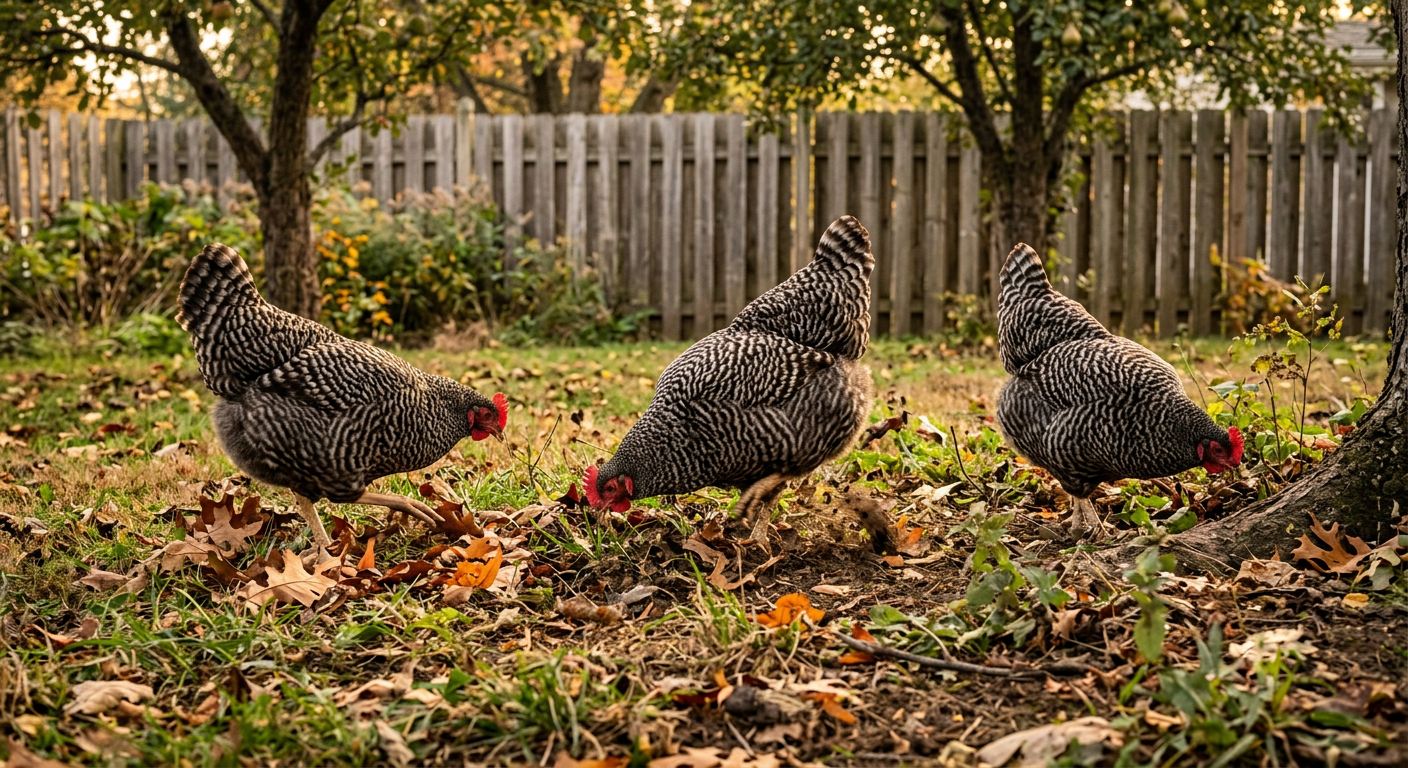
Barred Rocks were built as farm chickens, and foraging is part of that history. The Livestock Conservancy describes Plymouth Rocks as good foragers that prefer to free-range despite tolerating confinement.
That makes them a strong choice if you want chickens that will actually use a large run, a backyard, orchard space, or supervised pasture rather than spend the entire day waiting beside the feeder.
Do Barred Rocks Fly?
They're not known as strong flyers. The Livestock Conservancy describes them as birds that generally do not fly readily, which can make them easier to contain than lighter, more athletic breeds.
But don't confuse easy to contain with predator-proof. A fence that keeps the hens in may do absolutely nothing to keep a raccoon, fox, dog, or hawk out.
Barred Rock vs. Dominique
These breeds are frequently confused. Put a Dominique and a Barred Rock beside one another and an inexperienced keeper might simply see two black-and-white striped chickens. But they're distinct breeds.
The Easiest Difference: The Comb
Barred Rock: single comb.
Dominique: rose comb.
That difference was historically important. The Livestock Conservancy notes that in 1870, a poultry show ruling classified rose-combed barred birds as Dominiques and larger single-combed barred birds as Plymouth Rocks. That distinction later became formalized.
Size
Barred Rocks are also larger.
| Bird | Barred Rock | Dominique |
|---|---|---|
| Rooster | ~9.5 lb | ~7 lb |
| Hen | ~7.5 lb | ~5 lb |
Pattern
Both are barred, but Dominique patterning is traditionally described as more cuckoo-like, while Barred Plymouth Rocks are bred toward cleaner, more defined parallel barring.
Cold Weather
The Dominique's rose comb gives it less exposed comb tissue, making it particularly useful in very cold climates. Both breeds are considered cold hardy.
Barred Rock vs. Similar Chicken Breeds
The Barred Rock occupies an unusually balanced place among practical backyard breeds.
| Characteristic | Barred Rock | Rhode Island Red | Australorp | Buff Orpington |
|---|---|---|---|---|
| Main appeal | Balanced American farm breed | Strong practical laying | Excellent laying + gentle utility | Calm heavy family breed |
| Hen weight | ~7.5 lb | ~6.5 lb | ~6.5 lb | ~8 lb |
| Egg color | Brown | Brown | Tinted/light brown | Brown |
| Egg size | Large | Large | Medium–large | Large–extra large |
| Egg production | Very good, ~200/year heritage estimate | Good–excellent by line | Excellent | Moderate–good |
| Temperament | Calm/docile | Confident/active | Active yet gentle | Especially calm |
| Broodiness | Moderate | Variable | Variable | Fairly common |
| Foraging | Good | Good | Good | Moderate |
| Cold tolerance | Strong | Strong | Good | Strong |
| Main consideration | Single comb in extreme cold | Strain differences | Watch weight in confinement | Larger body, summer heat |
Barred Rock vs. Rhode Island Red
Both are classic American utility breeds. Choose the Barred Rock if you want a calmer average temperament, distinctive barred plumage, stronger traditional broodiness, and a slightly larger body. Consider the Rhode Island Red if stronger production potential is a major priority, you like a more active, confident flock, or you want the classic red American farm breed.
Read: Rhode Island Red Chickens: Eggs, Temperament & Complete Care Guide
Barred Rock vs. Australorp
Both are strong all-around backyard chickens. The Australorp's identity leans more heavily toward egg production; the Barred Rock feels slightly more like classic balanced farm utility. Both are beginner-friendly, generally calm, and good foragers. If you're choosing between them, pay close attention to the breeder line and simply decide which bird you enjoy more.
Read: Australorp Chickens: Egg Production, Temperament & Care
Barred Rock vs. Buff Orpington
The Buff Orpington is slightly heavier, softer-feathered, generally more laid-back, and often more broody. The Barred Rock tends to be more active, a stronger forager, somewhat more production-oriented, and slightly easier to manage in warmer weather because it carries less heavy feather volume. Both make excellent family flock birds.
Read: Buff Orpington Chickens: Egg Production, Temperament & Care
Are Barred Rocks Good for Beginners?
Yes. They're one of the easiest traditional breeds to recommend to a first-time keeper. The Livestock Conservancy specifically describes Plymouth Rocks as a good choice for first-time chicken owners, and its breed-comparison guide classifies them as novice-friendly.
Why? Because they give you a little bit of everything without demanding much specialized management.
Barred Rock Pros & Cons
| Pros | Cons |
|---|---|
| Very good brown-egg production | Not as productive as modern commercial hybrids |
| Large eggs | Single comb needs attention in severe cold |
| Calm, docile temperament | Some individual birds can still become assertive |
| Strong cold hardiness | Large enough to eat more than lightweight layers |
| Good foragers | Moderate broodiness can interrupt laying |
| Tolerate confinement | Still need meaningful run space |
| Good family birds | Not a novelty egg-color breed |
| Good natural mothers | Heritage and production lines may perform differently |
| Easy to identify | Similar appearance can be confused with Dominique |
Barred Rocks Are a Good Fit If You Want
- dependable brown eggs
- a calm family flock
- a traditional American breed
- useful dual-purpose size
- strong cold tolerance
- good foraging
- beginner-friendly chickens
- hens that may naturally raise chicks
Consider Another Breed If You Want
- maximum commercial egg efficiency
- blue or green eggs
- very small birds
- virtually no broodiness
- an extremely ornamental breed
- tiny combs specifically for severe cold climates
Recommended Setup for Four Barred Rocks
Four Barred Rock hens make a particularly practical beginner flock. Not sure four is right? See How Many Chickens Should I Get?
| Area | What I'd Provide |
|---|---|
| Coop | Dry, secure, well ventilated |
| Indoor space | Around 16 sq ft or more |
| Run | Around 40 sq ft minimum; larger is useful |
| Roosts | Stable wooden perches |
| Nest boxes | 1–2 standard boxes |
| Feeder | Enough access to reduce crowding |
| Water | Constant fresh water |
| Shade | Reliable warm-weather shade |
| Ground | Dry, well-drained scratchable material |
| Dust bath | Dry soil/sand area |
| Foraging | Regular opportunity to scratch and explore |
| Predator protection | Secure run and nighttime coop |
There's very little about a Barred Rock setup that needs to be breed-specific. That's part of the appeal — good ordinary chicken husbandry works extremely well for them.
Barred Rock Care Checklist
Daily: provide complete age-appropriate feed, keep clean fresh water available, collect eggs, observe flock behavior, and check predator security.
Regularly: check bedding moisture, clean feeders and waterers, monitor body condition, inspect feet and legs, watch mixed-flock dynamics, keep nesting boxes clean, and inspect fencing and coop structure.
During summer: provide shade, maintain plenty of water, increase safe airflow, watch for heat stress, and avoid overcrowding.
During winter: keep bedding dry, maintain ventilation, prevent water from freezing, monitor exposed single comb tissue, and keep direct drafts away from roosting birds.
During broodiness: decide whether you're allowing a hatch, ensure the hen eats and drinks, monitor body condition, provide a safe nesting area, and manage the broody cycle if chicks aren't wanted.
The Bottom Line: Are Barred Rock Chickens Right for You?
Barred Rocks are easy to overlook precisely because there's nothing extreme about them. They aren't the biggest. They aren't the smallest. They don't lay blue eggs. They aren't the highest-output commercial layer. They aren't covered in ornamental feathers.
Instead, they offer roughly 7½-pound hens, large brown eggs, very respectable production, calm temperament, cold hardiness, broodiness, good mothering, useful foraging, and traditional dual-purpose value. That combination made the Plymouth Rock one of the most successful chickens in American agricultural history.
If someone told me, "I don't need a weird chicken. I just want a really good chicken," the Barred Rock would be one of my first recommendations.
It's particularly strong for a beginner because nothing about the breed forces you into specialized care. Give it good housing, adequate space, complete feed, clean water, a dry coop, and predator protection, and it generally fits very naturally into backyard life.
Its strength is balance. More than 150 years after the breed appeared, that's still a pretty compelling argument.
Barred Rock Chicken FAQ
Is a Barred Rock the same as a Plymouth Rock?
A Barred Rock is the Barred variety of the Plymouth Rock breed. The Plymouth Rock breed also includes several other recognized color varieties.
How many eggs do Barred Rocks lay?
The Livestock Conservancy gives a practical estimate of roughly 200 large brown eggs per year for Plymouth Rock hens. Individual production varies by strain, age, season, and broodiness.
What color eggs do Barred Rocks lay?
They lay brown eggs, generally large in size.
Are Barred Rocks friendly?
Generally, yes. The Livestock Conservancy describes them as calm, docile, friendly with people, and suitable for family flocks.
Are Barred Rocks good for beginners?
Yes. They're specifically described as a good first-time-owner breed because of their temperament, hardiness, production, and straightforward management.
How big do Barred Rocks get?
Standard hens weigh approximately 7½ pounds, while roosters reach about 9½ pounds.
Are Barred Rocks cold hardy?
Yes. Early feathering and substantial body size make Plymouth Rocks good cold-weather birds, although their single comb still deserves attention during extreme cold.
Do Barred Rocks go broody?
Some do. Plymouth Rocks retain moderate broodiness and are generally considered good sitters and mothers.
Can Barred Rocks free-range?
Yes. They're good foragers and tend to prefer free-ranging while still handling confinement adequately when given enough room.
What is the difference between a Barred Rock and Dominique?
The easiest difference is the comb. A Barred Plymouth Rock has a single comb; a Dominique has a rose comb. Dominiques are also smaller, with hens around 5 pounds compared with roughly 7½ pounds for Barred Rock hens.
Why do male Barred Rocks look lighter than females?
The barred color pattern is controlled by a sex-linked gene. Males carry two copies while females carry one, which generally makes adult males appear lighter overall.
Want to estimate what your flock could produce? Try the Chicken Egg Production Calculator →
Raising a Barred Rock pullet? Estimate when she may lay her first egg →
Not sure whether this breed is right for you? Try the Chicken Breed Finder →
Keep Reading
Comparing another classic American breed? Rhode Island Red Chickens: Eggs, Temperament & Complete Care Guide
Looking for even stronger egg-production history? Australorp Chickens: Egg Production, Temperament & Care
Want a heavier, calmer family breed? Buff Orpington Chickens: Egg Production, Temperament & Care
Deciding how many hens to keep? How Many Chickens Should I Get? A Practical Flock Size Guide for Beginners
Planning your coop and run? How Much Space Do Chickens Need? Coop & Run Size Chart + Calculator
Sources & Further Reading
- The Livestock Conservancy — Plymouth Rock Chicken
- Oklahoma State University — Plymouth Rock Chickens
- American Poultry Association — Accepted Breeds & Varieties
- American Poultry Association — Standard Corrections: Barred Color Pattern
- The Livestock Conservancy — Dominique Chicken
- University of Minnesota Extension — Caring for Chickens in Cold Weather