Some chickens earn their place in the backyard because they're dependable egg layers. Others get chosen because they're beautiful.
Wyandottes manage to be both.
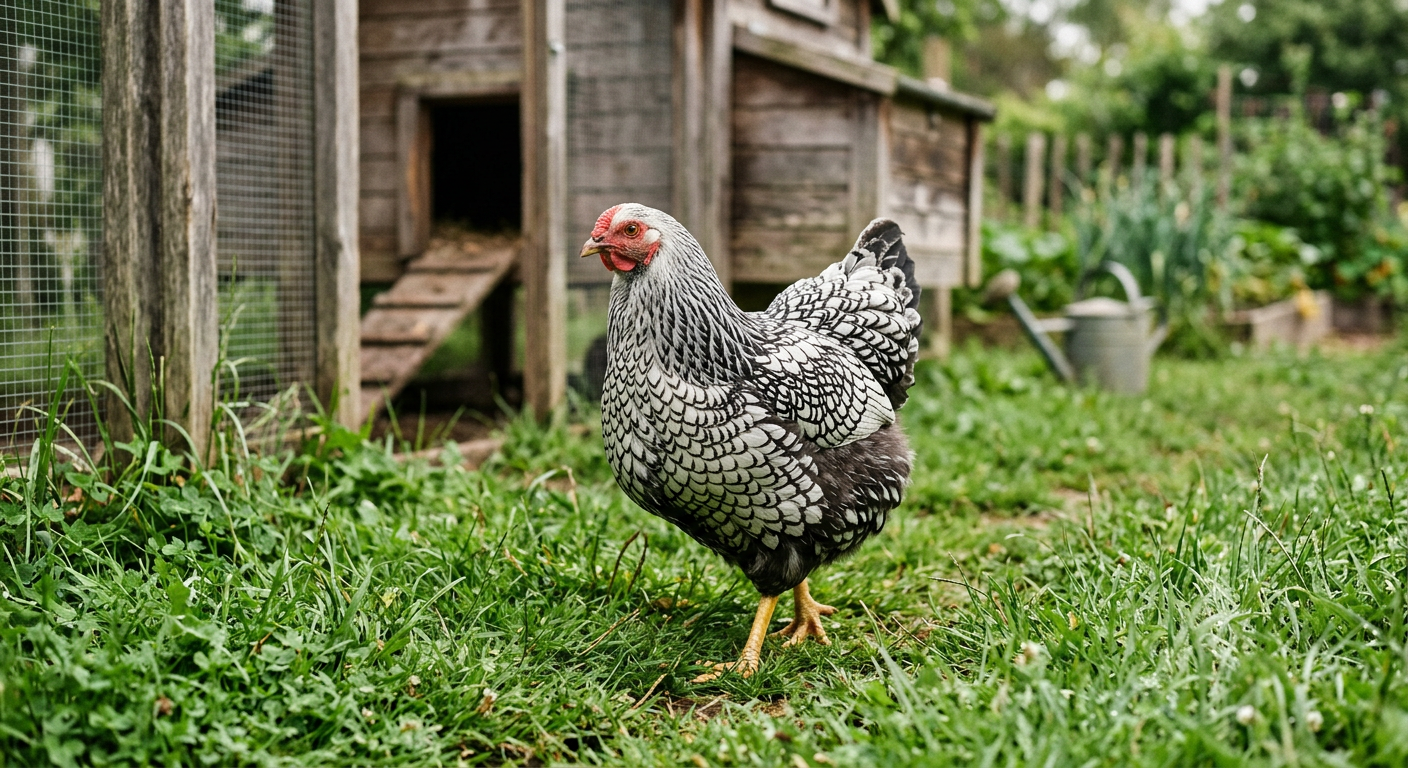
With their rounded bodies, striking feather patterns, and distinctive rose combs, Wyandotte chickens are among the most recognizable American poultry breeds. A Silver Laced Wyandotte looks almost as though someone carefully outlined every feather in black. A Golden Laced Wyandotte carries a similar pattern in rich gold and black.
But their appearance is only part of the appeal.
Wyandottes were developed as practical dual-purpose farm chickens, capable of producing brown eggs while handling the conditions of a traditional backyard flock. Their cold hardiness, generally calm disposition, and substantial body size continue to make them appealing to chicken keepers today.
The real question is whether they're the right fit for your backyard.
Wyandotte Chicken Quick Facts
| Trait | Wyandotte Chicken |
|---|---|
| Origin | United States |
| Breed type | Standardized dual-purpose breed |
| APA class | American |
| Primary use | Eggs, backyard flocks, ornamental exhibition, dual-purpose |
| Hen weight | Approximately 6.5 lb |
| Rooster weight | Approximately 8.5 lb |
| Egg color | Brown, sometimes lighter brown |
| Egg size | Generally medium to large; large in many lines |
| Egg production | Approximately 200–250 annually as a practical hatchery-based estimate |
| Starts laying | Often around 5–7 months |
| Temperament | Generally calm and manageable |
| Broodiness | Variable; some hens become good mothers |
| Cold hardiness | Very good |
| Heat tolerance | Adaptable with appropriate summer management |
| Comb type | Rose |
| Feathered feet | No |
| Foraging | Generally good |
| Beginner-friendly | Yes, for most backyard situations |
| Famous varieties | Silver Laced and Golden Laced |
| Main consideration | Egg production and temperament can vary by breeding line |
Wyandottes are not simply ornamental chickens that happen to lay eggs.
Their combination of appearance, body size, and practical usefulness is what originally made the breed successful.
Silver Laced vs. Golden Laced Wyandotte Chickens
If you've been researching Wyandottes, there's a good chance these are the two varieties that first caught your attention.
Both have the same general Wyandotte body type, rose comb, and brown-egg characteristics.
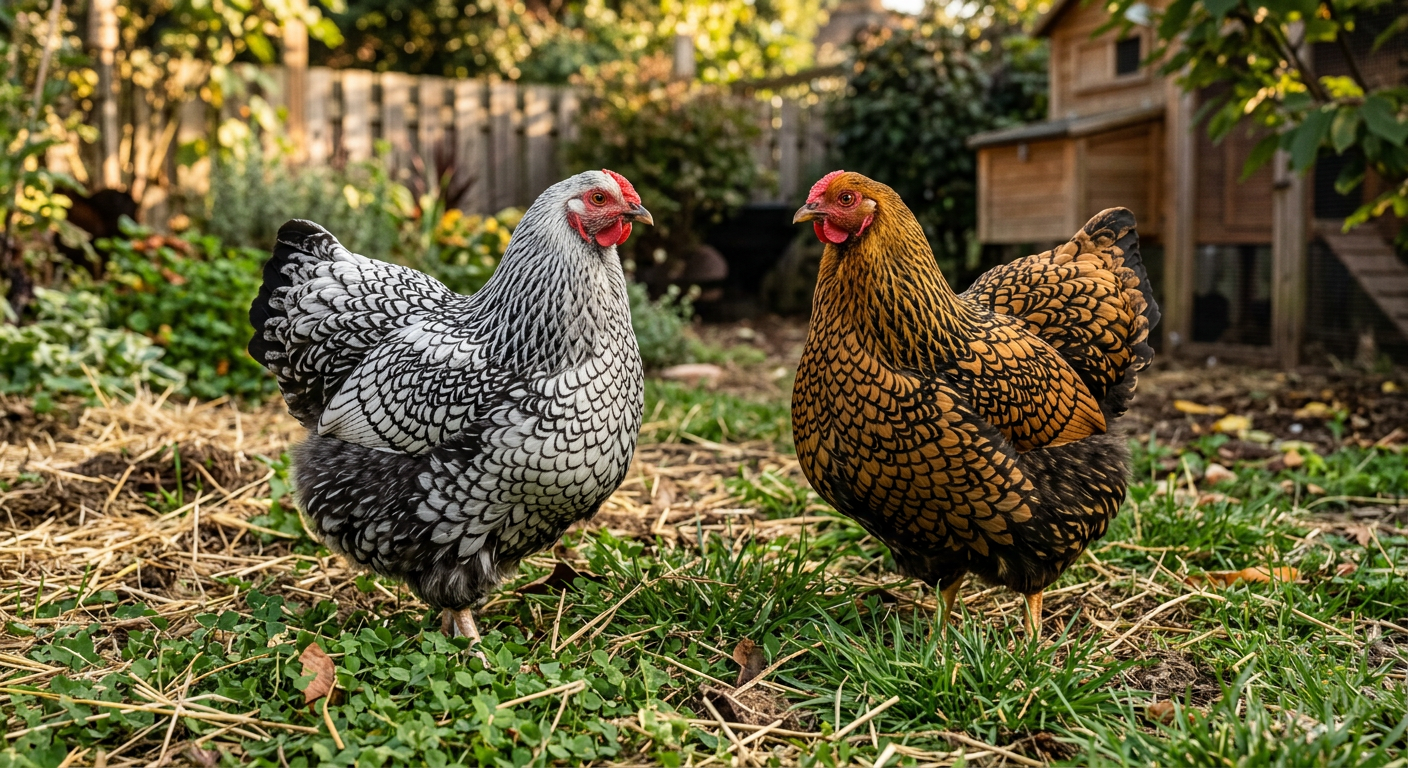
The most noticeable difference is their feather color.
Silver Laced Wyandottes
The Silver Laced Wyandotte is the original recognized variety of the breed.
Its plumage is predominantly silvery white, with individual feathers outlined in black. This creates a distinctive pattern across the body, almost resembling overlapping scales.
Typical characteristics include:
- Silvery-white feathers with black edging
- Broad, rounded body
- Low red rose comb
- Yellow legs
- Brown eggs
- Good cold-weather suitability
Silver Laced Wyandottes were admitted to the American Poultry Association's Standard of Perfection in 1883.
The variety helped establish the Wyandotte as a recognizable American chicken breed, and it remains one of the most familiar examples today.
Golden Laced Wyandottes
Golden Laced Wyandottes have the same distinctive feather pattern, but their feathers feature warm golden coloring outlined in black.
The result is a chicken with a rich, almost copper-and-black appearance.
Typical characteristics include:
- Golden feathers edged in black
- Rounded Wyandotte body shape
- Low rose comb
- Yellow legs
- Brown eggs
- The same general dual-purpose breed characteristics
They are especially attractive in natural sunlight, when the golden feather centers contrast with the darker lacing.
Silver Laced vs. Golden Laced: What's the Difference?
| Characteristic | Silver Laced Wyandotte | Golden Laced Wyandotte |
|---|---|---|
| Main feather color | Silver-white | Golden |
| Feather edging | Black | Black |
| Comb | Rose | Rose |
| Egg color | Brown | Brown |
| Body type | Standard Wyandotte | Standard Wyandotte |
| Cold hardiness | Very good | Very good |
| Main appeal | High-contrast black-and-white pattern | Warm golden-and-black pattern |
Neither color variety is automatically a better egg layer or a friendlier chicken.
Those characteristics depend more on the individual bird and its breeding line than on whether the feathers are silver or gold.
If you're choosing between the two, appearance is a perfectly reasonable deciding factor.
The practical considerations are largely the same.
What Colors Do Wyandotte Chickens Come In?
Wyandottes are available in more than just the two famous laced patterns.
The American Poultry Association recognizes nine large-fowl varieties:
| Variety | Appearance |
|---|---|
| Silver Laced | Silvery-white feathers outlined in black |
| Golden Laced | Golden feathers outlined in black |
| White | White plumage |
| Black | Predominantly black plumage |
| Blue | Blue-gray feather coloring |
| Buff | Warm buff or golden-tan plumage |
| Columbian | Predominantly white with black markings around the neck, wings, and tail |
| Partridge | Intricate brown, black, and reddish patterning |
| Silver Penciled | Fine dark penciling across silvery feathers |
These are varieties of the same breed rather than nine separate chicken breeds.
One important distinction is that lacing and penciling are not the same pattern.
Lacing creates a contrasting border around individual feathers.
Penciling creates finer, repeated dark markings within the feather.
You may also encounter Blue Laced Red Wyandottes from specialty breeders. These are popular among enthusiasts, but Blue Laced Red is not among the nine large-fowl Wyandotte varieties listed in the APA's accepted-varieties directory reviewed for this guide.
For someone keeping a backyard flock rather than showing poultry, the priority should still be healthy birds from a reputable source.
What Do Wyandotte Chickens Look Like?
Beyond their beautiful plumage, Wyandottes have a recognizable body shape.
They are broad, rounded chickens with full breasts, relatively short backs, and substantial feathering.
Their general appearance is often described as curvy or compact.
That rounded look makes them noticeably different from leaner breeds such as Leghorns.
Typical physical characteristics include:
- A broad, deep body
- Full, rounded chest
- Relatively short back
- Yellow legs and skin
- Clean, unfeathered legs
- Red face, wattles, and earlobes
- A low rose comb
- A full, rounded silhouette
Their body structure reflects their dual-purpose background.
They were developed to be useful farm chickens rather than lightweight birds selected only for maximum egg production.
What Is a Rose Comb?
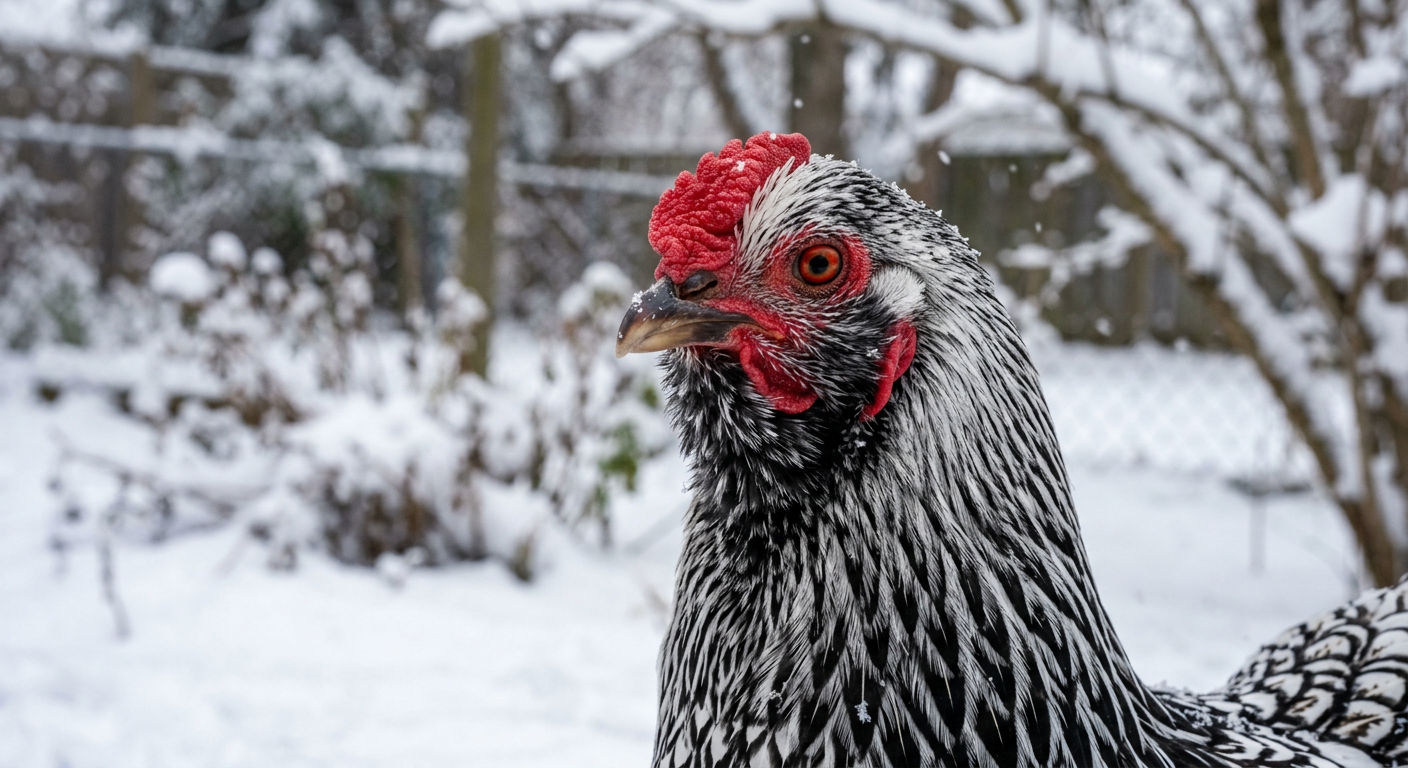
The rose comb is one of the Wyandotte's most important physical features.
Instead of the tall, upright points seen on a traditional single comb, a rose comb sits relatively low against the chicken's head.
It has a broad, textured surface with small rounded points and a rearward-pointing section.
This matters for more than appearance.
A low rose comb exposes less tissue to freezing temperatures, helping reduce frostbite risk compared with a large single comb.
It doesn't make a Wyandotte immune to frostbite, but it provides a meaningful advantage in cold climates.
How Big Do Wyandotte Chickens Get?
Wyandottes are substantial standard-size chickens, although they aren't giants.
According to the University of Wisconsin Extension's breed standards, typical weights are:
| Bird | Standard Weight |
|---|---|
| Adult rooster | 8.5 lb |
| Adult hen | 6.5 lb |
| Young cockerel | 7.5 lb |
| Young pullet | 5.5 lb |
These are standard breed weights, not guaranteed weights for every individual chicken.
That size places Wyandottes in a useful middle ground.
They're heavier than many lightweight egg-laying breeds but smaller than especially large chickens such as Brahmas and Jersey Giants.
Their weight also contributes to their traditional usefulness as dual-purpose birds.
Are Bantam Wyandottes Available?
Yes.
Wyandottes also exist in bantam form.
Bantam Wyandottes are smaller versions of the standard breed and are popular among poultry exhibitors and hobbyists.
If you're buying chicks for a backyard egg flock, make sure you know whether you're purchasing standard-size Wyandottes or bantams.
The differences in body size and egg size can be significant.
Are Wyandotte Chickens Cold Hardy?
Yes. Wyandottes are considered very good cold-weather chickens, thanks partly to their substantial bodies, feathering, and low rose combs.
Cold hardiness is one of the strongest practical reasons to consider this breed.
University of Minnesota Extension specifically identifies Wyandottes among the heavier chicken breeds that overwinter well.
University of Wisconsin Extension also notes that their rose combs are less susceptible to freezing than larger single combs.
That combination makes Wyandottes appealing in areas with long or harsh winters.
Why Wyandottes Handle Cold Weather Well
Three characteristics help explain their reputation.
1. Substantial body size
Wyandottes are not lightweight chickens.
Their larger bodies and overall feather coverage help make them suitable for colder conditions when their housing and nutrition are managed properly.
2. Rose comb
The low comb has less exposed tissue than many upright single combs.
This can reduce, though not eliminate, frostbite risk.
3. Traditional farm hardiness
Wyandottes were developed as practical chickens capable of living under varied farm conditions.
The breed wasn't created solely for exhibition.
Do Wyandottes Need Heat in Winter?
Don't assume that a cold-hardy breed can safely handle every winter condition without intervention.
Winter management still matters.
Focus on:
- Dry bedding
- Continuous ventilation without direct drafts across roosting birds
- Protection from precipitation and wind
- Accessible, unfrozen drinking water
- Adequate feed
- Properly sized roosts
- Monitoring birds for signs of cold stress or frostbite
Supplemental heat decisions depend on the temperature, housing, birds' condition, and your ability to provide heat safely.
Avoid assuming that sealing a coop tightly is the solution. Moisture buildup can create a worse environment and increase frostbite risk.
Our Chicken Coop Ventilation Guide explains how to manage airflow without creating direct drafts.
Do Wyandottes Lay Eggs in Winter?
They can, but cold hardiness does not guarantee year-round egg production.
Even chickens that tolerate low temperatures well may reduce laying when daylight hours become shorter.
Age, molting, nutrition, and individual genetics also matter.
A Wyandotte that stays comfortable through winter may still lay fewer eggs during the darkest months.
Those are two different things: surviving winter successfully and maintaining high egg production throughout it.
How Many Eggs Do Wyandotte Chickens Lay?
Wyandottes are generally considered good brown-egg layers, especially for a breed with substantial ornamental and dual-purpose qualities.
For many backyard utility lines, roughly 200–250 eggs per year is a useful starting estimate under favorable conditions.
However, it's important to understand where that estimate comes from.
Hatcheries publish noticeably different numbers.
For example:
- Cackle Hatchery estimates approximately 200 eggs annually for its Columbian Wyandotte line.
- Murray McMurray Hatchery estimates roughly 220–280 annually for its Silver Laced Wyandottes.
These are hatchery-specific estimates rather than a universal production standard for every Wyandotte.
That is why we'd use approximately 200–250 as a practical Roosted planning range, while recognizing that some lines may perform above or below it.
How Many Eggs Do Wyandottes Lay Per Week?
For a healthy hen in her productive years, around four to five eggs per week is a reasonable broad planning expectation.
But don't expect identical production every week.
Egg output changes with:
- Age
- Breeding line
- Daylight
- Season
- Molting
- Broodiness
- Nutrition
- Health
- Stress
One hen may lay regularly for several days and then take a break.
Another may produce fewer eggs while going broody.
For flock planning, use our Chicken Egg Production Calculator to estimate how many eggs your flock might produce based on breed, age, and seasonal conditions.
Are Wyandottes Better Layers Than Leghorns?
Generally, no.
Leghorns have been selected particularly strongly for egg production, while Wyandottes retain a broader balance of qualities.
A Wyandotte offers attractive plumage, dual-purpose body size, cold hardiness, and reasonable egg production.
A production-oriented Leghorn typically places greater emphasis on efficient egg laying.
Neither approach is inherently better.
It depends on what you want from your flock.
What Color Eggs Do Wyandotte Chickens Lay?
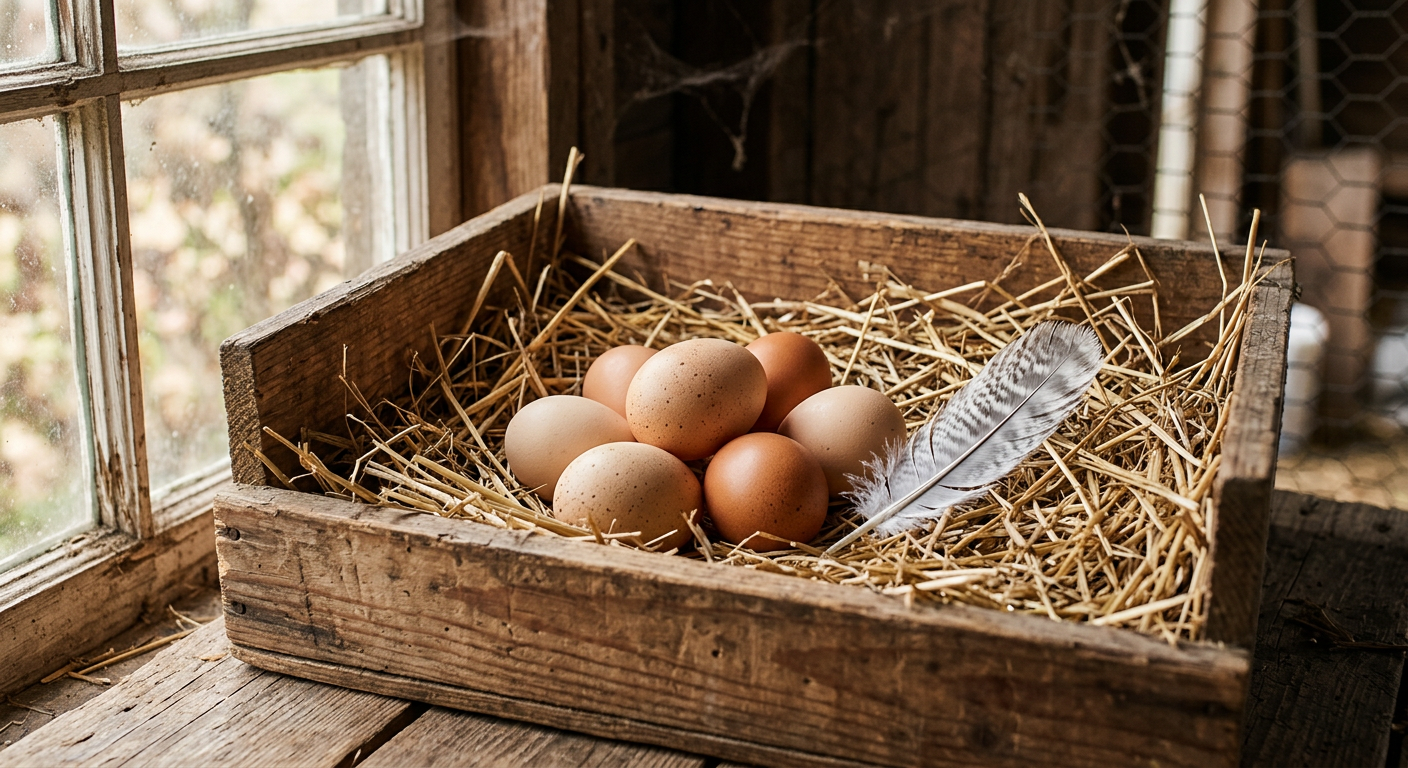
Wyandotte chickens lay brown eggs.
The exact shade varies by individual hen and breeding line, ranging from relatively light brown to more noticeable brown coloring.
The breed is not known for naturally producing blue or green eggs.
And importantly, feather color does not determine shell color.
A Silver Laced Wyandotte doesn't lay silver or white eggs because of its feathers.
A Golden Laced Wyandotte doesn't lay golden eggs.
Both are brown-egg varieties.
How Big Are Wyandotte Eggs?
Wyandotte eggs are generally described as medium to large, with many mature hens producing large eggs.
Egg size can vary with the hen's age and line.
Young pullets may begin with smaller eggs that gradually increase in size as they mature.
If you want chickens primarily for large brown eggs, Wyandottes are worth considering, although they aren't the only suitable breed.
When Do Wyandotte Chickens Start Laying Eggs?
Many Wyandotte pullets begin laying at approximately 5–7 months old, although some hatchery lines may mature earlier.
A useful expectation is that your birds may start producing during their first half-year, with slower-maturing individuals sometimes taking longer.
McMurray Hatchery notes that many breeds begin between five and seven months and emphasizes that several variables influence the timing.
A Wyandotte reaching maturity during fall or winter may also begin later because of decreasing natural daylight.
Signs Your Wyandotte Is Getting Ready to Lay
Watch for:
- A redder, more developed comb and wattles
- Increased interest in nesting boxes
- Squatting behavior when approached
- A more mature body shape
- Changes in vocalization and nesting behavior
A pullet checking the nesting boxes isn't proof that an egg will appear tomorrow.
But it may mean she's getting close.
Try our First Egg Calculator to estimate the laying window based on hatch date and breed.
For a broader explanation, read When Do Chickens Start Laying Eggs?.
Are Wyandotte Chickens Friendly?
Wyandottes generally have a reputation for being calm, manageable chickens.
The Livestock Conservancy describes them as friendly and calm, while University of Wisconsin Extension notes their generally good disposition.
That's encouraging for backyard keepers.
But breed temperament is a tendency, not a personality guarantee.
Some Wyandottes may be especially comfortable around people. Others can be more independent or assertive within the flock.
Do Wyandottes Like Being Held?
Some tolerate handling well, especially when they've been gently accustomed to people from a young age.
Others prefer to stay on the ground and interact on their own terms.
A calm chicken isn't necessarily a chicken that wants to be picked up.
If you're choosing birds for children, look for individually gentle chickens and supervise interactions.
Are Wyandottes Aggressive?
They are not generally characterized as an aggressive breed.
However, individual birds can behave differently.
Roosters should always be evaluated individually, regardless of breed.
A Wyandotte rooster may be perfectly manageable, but a breed's calm reputation should never be treated as a guarantee of safe behavior.
Are Wyandottes Noisy?
Wyandottes are not usually selected specifically as a quiet breed, and reliable measurements comparing their vocalizations with other chicken breeds are limited.
Expect normal chicken sounds, including egg announcements, contact calls, and flock communication.
If you're in a neighborhood with strict noise concerns, don't assume that choosing Wyandottes will eliminate noise.
A rooster will also crow regardless of whether he belongs to a supposedly quiet breed.
Do Wyandotte Chickens Go Broody?
Yes, some Wyandotte hens become broody and can make good mothers.
However, broodiness varies between individual hens and breeding lines.
This is another characteristic where poultry sources differ.
The Livestock Conservancy and University of Wisconsin Extension emphasize that Wyandotte hens can be good mothers.
McMurray Hatchery, meanwhile, describes its Silver Laced line as not especially likely to sit.
Those statements aren't necessarily contradictory.
A hen can be a capable mother when she becomes broody without becoming broody frequently.
What Does Broody Mean?
A broody hen develops a strong instinct to sit on eggs and attempt to hatch them.
You may notice her:
- Remaining in the nesting box for long periods
- Becoming defensive when approached
- Making distinctive clucking sounds
- Leaving the nest less frequently
- Temporarily reducing or stopping normal egg production
If you want a naturally broody backyard flock, ask about broodiness in the breeder's particular line rather than assuming all Wyandottes behave the same way.
Housing and Space Requirements for Wyandottes
Wyandottes don't require a specialized coop.
But their substantial body size makes proper space and layout important.
For an ordinary backyard flock of standard-size Wyandotte hens, Roosted's usual planning targets are:
- Approximately 4 square feet of usable indoor coop space per hen
- Approximately 10 square feet of outdoor run space per hen
These are comfortable backyard planning targets, not universal biological minimums.
Space for a Small Wyandotte Flock
| Number of Hens | Indoor Coop Space | Outdoor Run Space |
|---|---|---|
| 3 | 12 sq ft | 30 sq ft |
| 4 | 16 sq ft | 40 sq ft |
| 6 | 24 sq ft | 60 sq ft |
| 8 | 32 sq ft | 80 sq ft |
| 10 | 40 sq ft | 100 sq ft |
For six Wyandotte hens, I'd start with approximately 24 square feet of usable indoor space and 60 square feet outdoors.
More run space is welcome, particularly if the birds won't free-range regularly.
Use our Chicken Coop Size Calculator to plan your exact flock.
Roosting Bars
Provide sturdy, accessible roosts suitable for standard-size chickens.
Wyandottes are fairly substantial birds, so stable roosts and safe landing areas matter.
Avoid placing unnecessarily high roosts above hard flooring.
Nesting Boxes
Standard nesting boxes work well for most Wyandotte hens.
For a small flock of four to six hens, one or two well-positioned boxes may be sufficient, depending on layout and flock behavior.
Keep them clean, dry, and comfortably accessible.
Can Wyandottes Free-Range?
Yes.
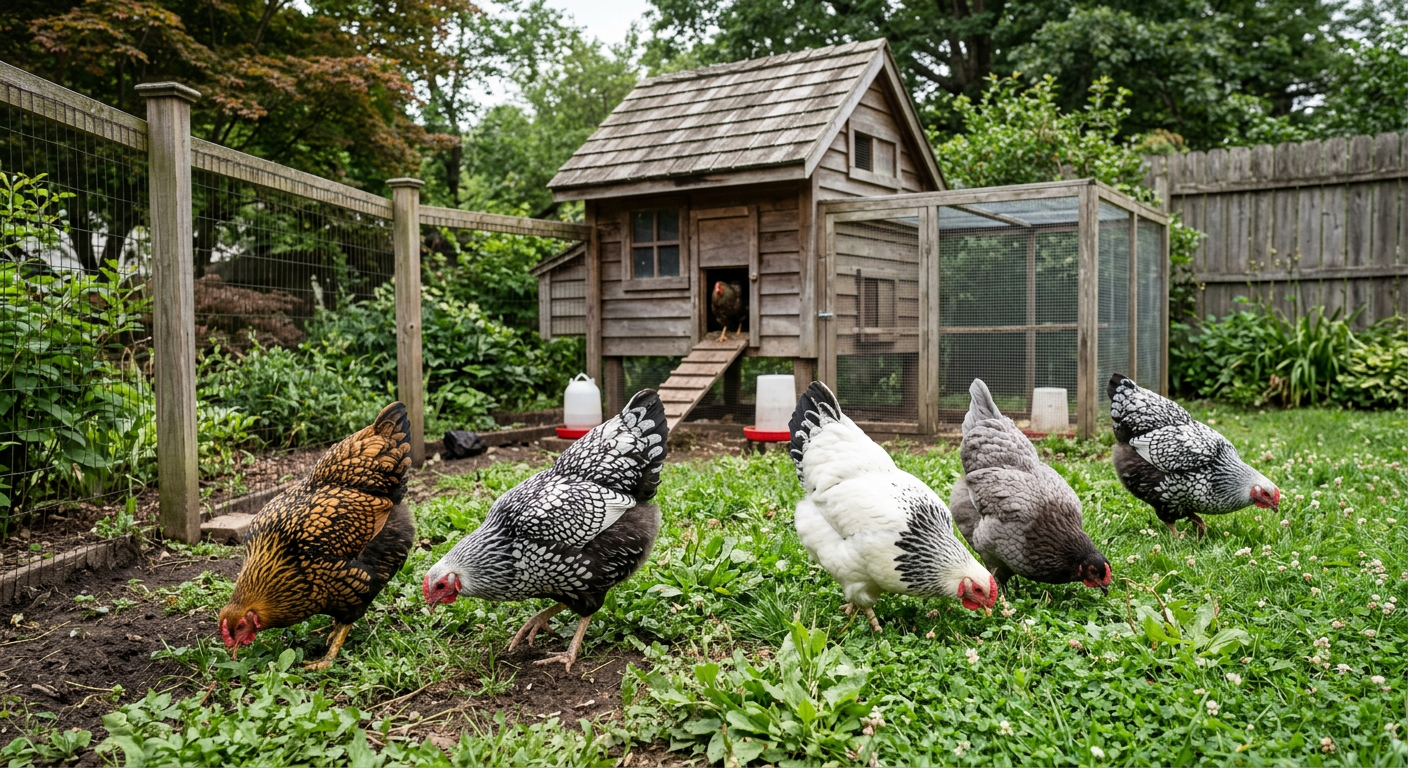
Wyandottes can make useful backyard foragers, exploring the ground for insects, seeds, and other natural food sources.
The Livestock Conservancy also notes that they are not especially strong flyers.
That doesn't mean they should be left without appropriate fencing or predator protection.
A chicken that doesn't fly very well can still be vulnerable to dogs, hawks, raccoons, and other predators.
A secure run is especially valuable when you're away from home.
Feeding Wyandotte Chickens
Wyandottes have ordinary nutritional needs for standard dual-purpose chickens.
A balanced commercial poultry ration should form the foundation of their diet.
Feed should match the bird's life stage.
| Life Stage | Feeding Approach |
|---|---|
| Chicks | Complete chick starter |
| Growing pullets | Appropriate grower ration |
| Laying hens | Complete layer feed or appropriately managed all-flock diet with calcium support |
| All ages | Continuous access to clean water and suitable grit when needed |
University of Minnesota Extension notes that an approximately six-pound hen may consume around three pounds of feed weekly.
That is a broad backyard-chicken reference, not a precise Wyandotte-specific feed requirement.
Actual intake depends on body size, activity, weather, diet, and production.
For flock-level feed estimates, use the Roosted Chicken Feed Calculator.
Don't Overdo the Treats
Wyandottes may happily eat scratch grains, mealworms, kitchen scraps, and other extras.
But those foods should remain supplemental.
A balanced diet supports healthy growth, feather condition, and egg production.
And no matter how enthusiastically a hen asks for another handful of treats, enthusiasm is not a nutritional recommendation.
Can Wyandottes Handle Hot Weather?
Wyandottes are best known for cold hardiness, but they can also be kept successfully in warmer climates with appropriate management.
Their body size and feather coverage make summer housing especially important.
In hot weather, provide:
- Reliable shade throughout the day
- Continuous access to cool, clean water
- Good coop ventilation
- Airflow through the run
- Dry ground and bedding
- Enough space to avoid crowding
- Opportunities to rest during the hottest hours
Watch for open-mouth panting, wings held away from the body, unusual lethargy, or other signs of heat stress.
Being adaptable doesn't make any chicken immune to extreme heat.
For practical summer management, read How to Keep Chickens Cool in Summer.
Are Wyandotte Chickens Good for Beginners?
Yes. Wyandottes are a reasonable choice for many first-time backyard chicken keepers.
Their appeal comes from a combination of manageable size, useful egg production, generally calm behavior, and cold hardiness.
They also don't need unusual equipment or highly specialized housing.
A beginner can care for Wyandottes using the same core practices recommended for other standard backyard chickens.
That means a predator-secure coop, proper nutrition, clean water, adequate room, appropriate ventilation, and regular observation.
The main thing I'd emphasize to a new keeper is understanding that beautiful feathers don't tell you everything about a chicken.
Two Wyandottes can have different personalities.
And two breeding lines can have different production potential.
Are Wyandottes Good With Children?
They can be.
Their generally calm reputation makes them reasonable candidates for a family flock.
However, children should be taught to approach chickens gently, avoid chasing them, and respect birds that don't want to be handled.
Supervision is important, especially around roosters.
Wyandotte vs. Other Backyard Chicken Breeds
Wyandottes are often compared with Barred Rocks, Rhode Island Reds, and Buff Orpingtons.
All four are recognized traditional breeds with useful backyard qualities, but each has a slightly different emphasis.
| Characteristic | Wyandotte | Barred Rock | Rhode Island Red | Buff Orpington |
|---|---|---|---|---|
| Main appeal | Laced colors and cold hardiness | Balanced farm utility | Strong brown-egg production | Calm family-friendly personality |
| Hen weight | ~6.5 lb | ~7.5 lb | ~6.5 lb | ~8 lb |
| Egg color | Brown | Brown | Brown | Brown |
| Egg production | Good | Good | Good to excellent by line | Moderate to good |
| Temperament | Generally calm | Generally calm | Often confident and active | Generally very calm |
| Cold hardiness | Very good | Very good | Good | Very good |
| Comb | Rose | Single | Single or rose | Single |
| Main consideration | Variation between lines | Single-comb frostbite risk | Some birds more assertive | Larger body and summer heat |
Wyandotte vs. Barred Rock
Both are traditional American dual-purpose breeds with useful brown-egg production and good cold-weather suitability.
The Wyandotte's greatest distinctions are its many decorative varieties and low rose comb.
Barred Rocks have the familiar black-and-white barred pattern and a single comb.
If winter frostbite concerns are a major part of your decision, the Wyandotte's rose comb may be an advantage.
Read our Barred Rock Chicken Guide.
Wyandotte vs. Rhode Island Red
Rhode Island Reds have a particularly strong reputation for practical egg production.
Wyandottes offer a somewhat different balance, combining useful egg production with ornamental plumage and a cold-friendly comb.
If your main priority is maximizing brown eggs, compare actual breeder lines rather than relying on the breed name alone.
Read our Rhode Island Red Chicken Guide.
Wyandotte vs. Buff Orpington
Buff Orpingtons are larger, with a particularly strong reputation for calm behavior and family suitability.
Wyandottes are somewhat smaller and offer more distinctive feather-pattern choices.
Both are reasonable cold-climate options.
If you particularly want a gentle, heavy-bodied family chicken, an Orpington may be appealing.
If you want beautiful laced plumage and a rose comb without giving up practical eggs, the Wyandotte deserves consideration.
Read our Buff Orpington Chicken Guide.
Wyandotte Chicken Pros and Cons
| Pros | Cons |
|---|---|
| Beautiful laced and other color varieties | Egg production varies between breeding lines |
| Very good cold hardiness | Not necessarily the highest-producing egg breed |
| Low rose comb | Still needs careful winter housing |
| Generally calm temperament | Some individuals can be assertive |
| Good brown-egg production | Broodiness is unpredictable |
| Practical dual-purpose size | Needs adequate standard-size housing |
| Suitable for many beginners | Heat management remains important |
| Can make useful backyard foragers | Individual personality varies |
Who Should Choose Wyandotte Chickens?
I'd put Wyandottes near the top of the list for someone who wants a beautiful, practical backyard flock.
They're particularly worth considering if:
- You want attractive chickens without sacrificing useful egg production.
- You live somewhere with cold winters.
- You prefer brown eggs.
- You want a traditional American chicken breed.
- You like the appearance of Silver Laced or Golden Laced feathers.
- You want a manageable standard-size chicken.
Who Might Prefer Another Breed?
Consider other breeds if your strongest priority is:
- Maximum annual egg production
- White, blue, or green eggs
- Very small bantam chickens
- Especially lightweight, active foragers
- Highly predictable broodiness
- The calmest possible companion chicken
No breed checks every box.
The best backyard flock is the one that matches your priorities, property, and experience.
You can compare different options using our Chicken Breed Finder.
The Bottom Line: Are Wyandotte Chickens Worth Raising?
Wyandottes have remained popular for good reasons.
They offer something that many backyard chicken keepers appreciate: beautiful birds that also do useful work.
Their Silver Laced and Golden Laced varieties are particularly striking, but their appeal extends beyond appearance.
Wyandottes provide dependable brown eggs, substantial dual-purpose bodies, generally manageable temperaments, and a rose comb that helps make them well suited to colder climates.
They're not guaranteed to be the friendliest chicken in your flock or the most productive layer in your coop.
And they don't need to be.
If you want a traditional backyard chicken that balances appearance, hardiness, and practical usefulness, the Wyandotte is a breed worth serious consideration.
Wyandotte Chicken FAQ
How many eggs do Wyandotte chickens lay?
Many utility-oriented Wyandotte lines can produce approximately 200–250 brown eggs annually under favorable conditions. Some hatcheries advertise higher totals, while individual hens and different breeding lines may produce less.
What color eggs do Wyandotte chickens lay?
Wyandottes lay brown eggs. Shell color can range from light brown to more noticeable brown shades, depending on the individual hen.
Are Wyandotte chickens friendly?
Wyandottes generally have calm, manageable temperaments. Some individuals may be more independent or assertive than others, so friendliness is not guaranteed.
Are Wyandottes good for beginners?
Yes. Their generally calm dispositions, reasonable egg production, and straightforward care make them suitable for many first-time backyard chicken owners.
Are Wyandotte chickens cold hardy?
Yes. Wyandottes are considered very good cold-weather chickens. Their substantial bodies and low rose combs help make them suitable for colder climates, although dry, ventilated housing remains essential.
How big do Wyandotte chickens get?
Standard adult Wyandotte hens weigh approximately 6.5 pounds, while roosters weigh around 8.5 pounds according to established breed standards.
What is the difference between Silver Laced and Golden Laced Wyandottes?
The main difference is feather color. Silver Laced Wyandottes have silvery-white feathers outlined in black, while Golden Laced Wyandottes have golden feathers outlined in black. Both are varieties of the same breed and lay brown eggs.
When do Wyandottes start laying eggs?
Many Wyandottes begin laying around five to seven months of age. Breeding line, individual maturity, nutrition, season, and daylight can affect when the first egg appears.
Do Wyandotte chickens go broody?
Some do. Wyandottes can be good mothers, but the tendency to become broody varies considerably between individual hens and breeding lines.
How many Wyandotte color varieties are recognized?
The American Poultry Association lists nine recognized large-fowl varieties: Silver Laced, Golden Laced, White, Black, Blue, Buff, Columbian, Partridge, and Silver Penciled.
Do Wyandotte chickens lay eggs in winter?
They can, but cold hardiness doesn't guarantee consistent winter laying. Shorter daylight, age, molt, and other conditions can reduce egg production even when birds are handling the temperature well.
Are Wyandotte chickens good for small backyards?
Yes, provided they have sufficient coop and run space. Their generally manageable temperament and standard body size make them reasonable backyard chickens, but they still need room to forage, scratch, dust bathe, and avoid overcrowding.
Want to estimate what your flock could produce? Try the Chicken Egg Production Calculator →
Raising a Wyandotte pullet? Estimate when she may lay her first egg →
Not sure whether this breed is right for you? Try the Chicken Breed Finder →
Want an ornamental breed with a dramatic crest? Polish Chickens: Crest Care, Egg Production, Temperament & Complete Guide
Keep Reading
If you're planning your backyard flock, these Roosted resources can help:
- Chicken Breed Finder — Compare breeds based on your climate, egg goals, family, and available space.
- Chicken Egg Production Calculator — Estimate how many eggs your flock could produce.
- Chicken Coop Size Calculator — Plan indoor and outdoor space.
- First Egg Calculator — Estimate when your pullets might start laying.
- How Much Space Do Chickens Need? — Understand coop and run recommendations.
- Chicken Coop Ventilation Guide — Keep the coop dry and properly ventilated.
Sources & Further Reading
- University of Wisconsin Extension — Chicken Breeds & Varieties — Breed standards, recognized varieties, body weights, eggshell color, rose combs, and disposition.
- The Livestock Conservancy — Wyandotte Chicken — Breed history, traditional uses, temperament, cold hardiness, and physical characteristics.
- Oklahoma State University — Wyandotte Chickens — Breed origin, size, varieties, and characteristics.
- American Poultry Association — Accepted Breeds & Varieties — Recognized large-fowl and bantam Wyandotte varieties.
- University of Minnesota Extension — Raising Chickens for Eggs — Backyard breed selection, nutrition, feeding, and housing.
- University of Minnesota Extension — Caring for Chickens in Cold Weather — Winter management and cold-hardy breeds.
- Murray McMurray Hatchery — Silver Laced Wyandottes — Hatchery-specific laying estimates, maturity, and breed traits.
- Cackle Hatchery — Columbian Wyandottes — Additional breeding-line-specific production and temperament information.